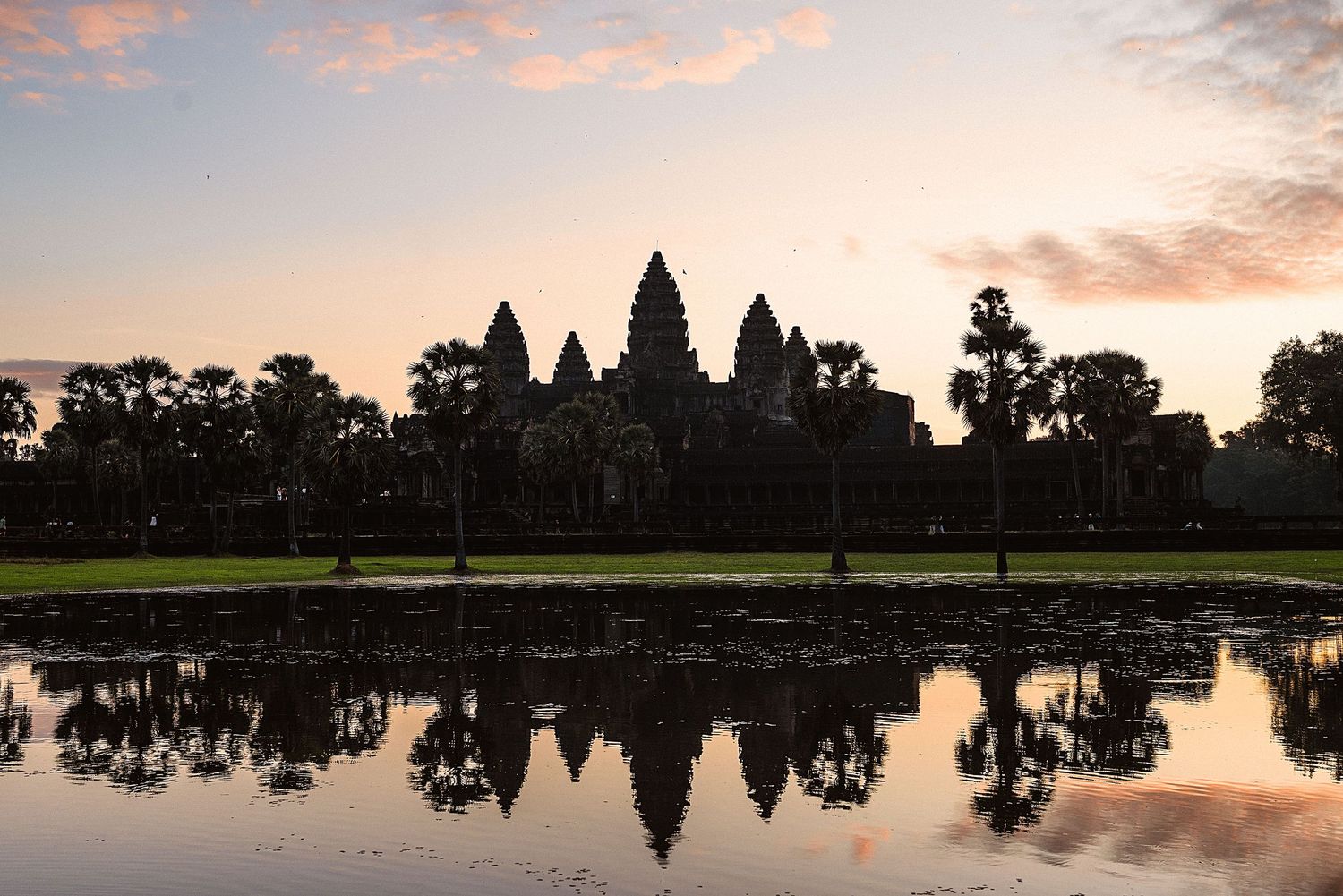
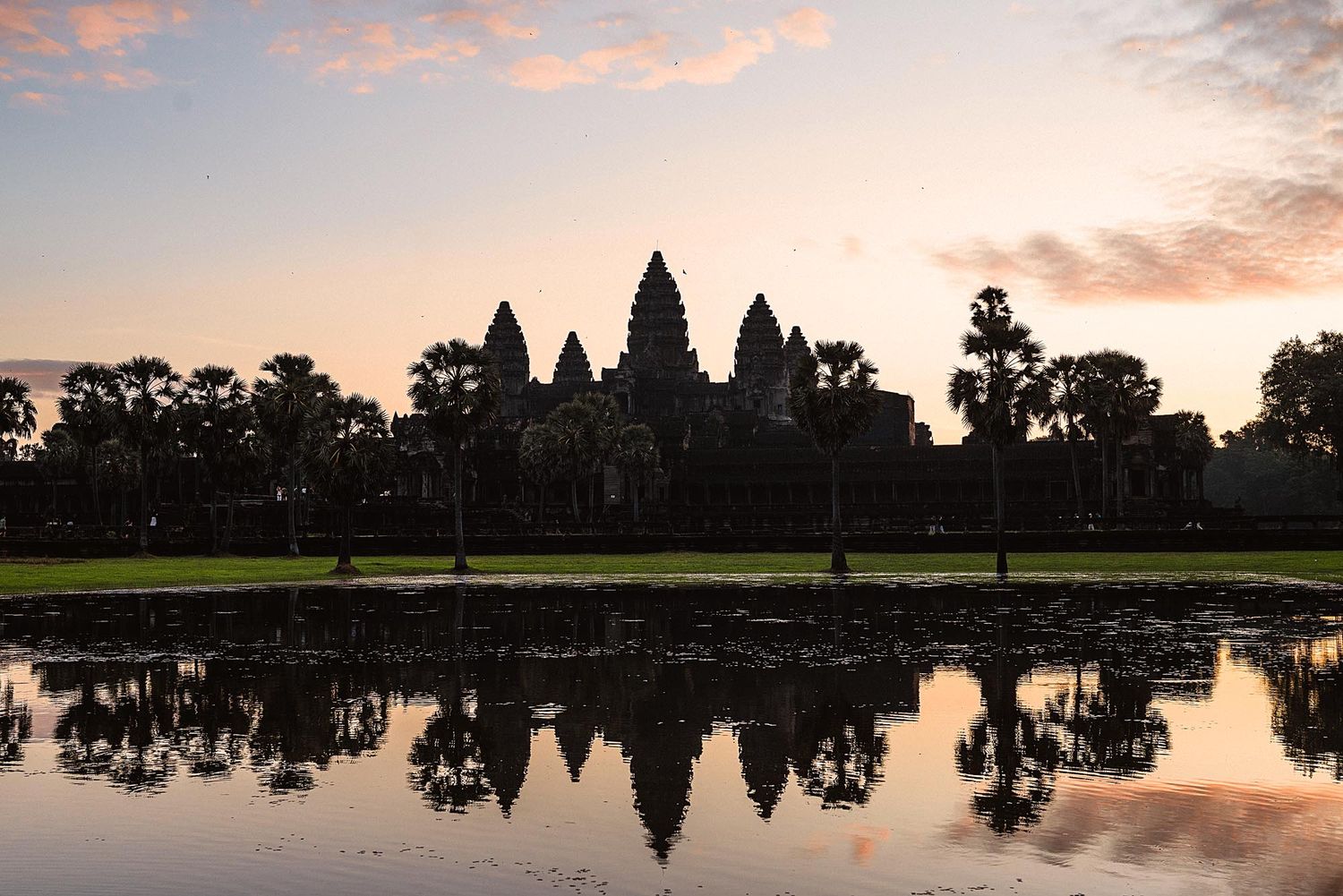
Watching sunrise at Angkor Wat is often described as a once-in-a-lifetime experience and for many travellers to Cambodia, it’s right at the top of the bucket list. As the sky slowly brightens, the silhouette of Angkor Wat rises behind the palm trees, reflected in the moat as the first light of day hits the ancient stone. It’s undeniably beautiful, highly photogenic, and one of the most famous sunrise spots in Southeast Asia.
But is sunrise at Angkor Wat actually worth setting your alarm for 4am?
While the soft morning light and peaceful atmosphere can feel almost magical, the reality is a little more complicated. Large crowds, constant noise, and the scramble for the “perfect” photo spot can quickly break the illusion of serenity. For some people, the experience is unforgettable. For others, it’s exhausting, overcrowded, and not quite what the photos promise.
In this guide, I’ll share exactly what you can expect from sunrise at Angkor Wat. The good, the bad, and the overhyped. From crowds and ticket prices to the best time of year to visit and whether you really need a tour, this will help you decide if waking up before dawn is the right choice for your trip.
Sunrise at Angkor Wat – Quick Facts
- Best arrival time: 60–90 minutes before sunrise
- Typical wake-up time: Around 4:30am
- Best months: November to February
- Entry ticket required: Yes
- 1-day pass price: $37 USD
- Best ticket option: Digital ticket (buy online)
- Crowds: Very busy near the moat at sunrise
- Is it worth it? Yes for photographers, maybe not for crowd-averse travellers
Quick answer to is Sunrise at Angkor Wat Worth it
Sunrise at Angkor Wat can be worth it if you don’t mind crowds and early starts, especially for photographers and first-time visitors. If you value quiet experiences or dislike large crowds, visiting after sunrise may be a better choice.
Why Sunrise at Angkor Wat Is Worth It for Some Travellers
The Best Time to Capture Photos
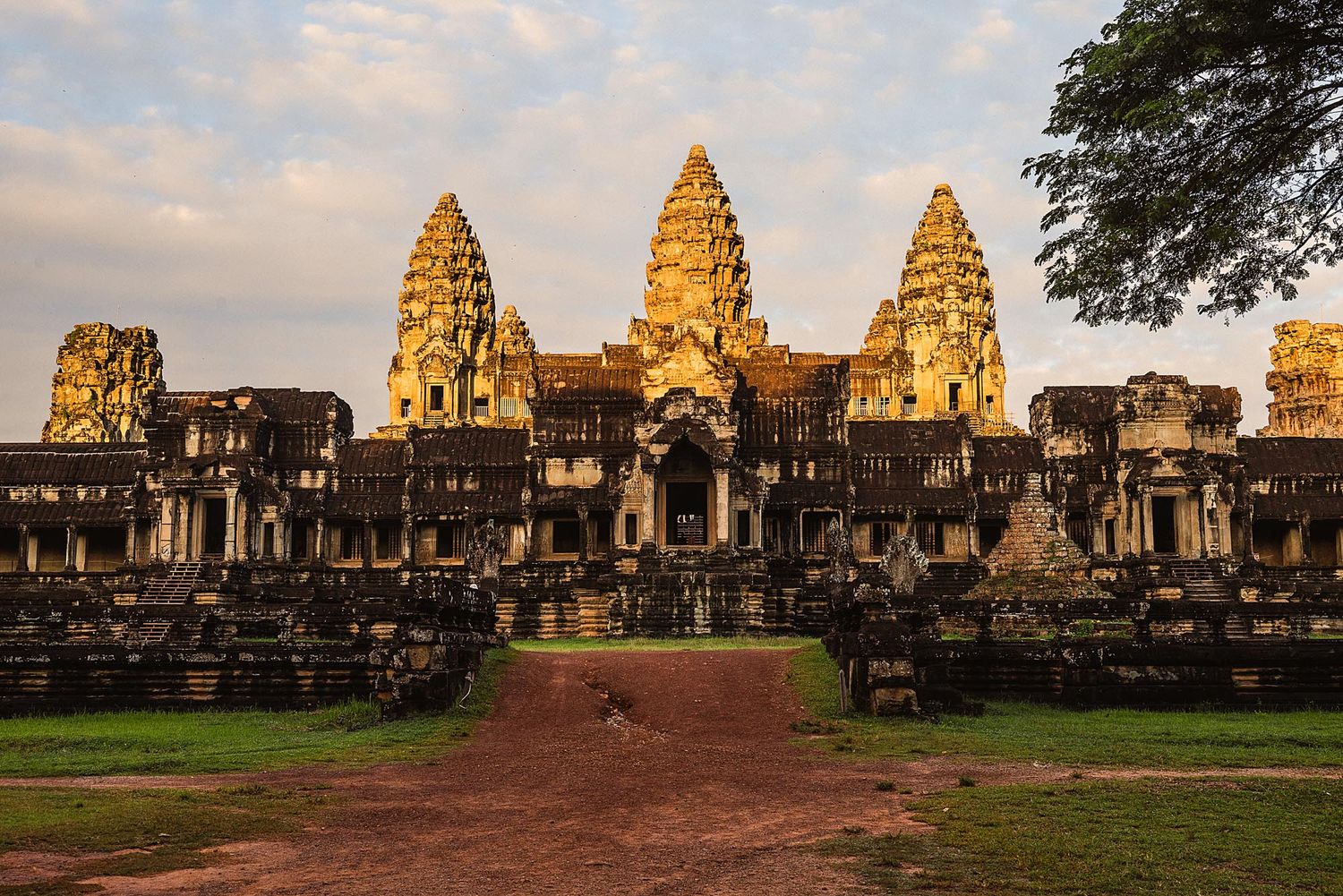
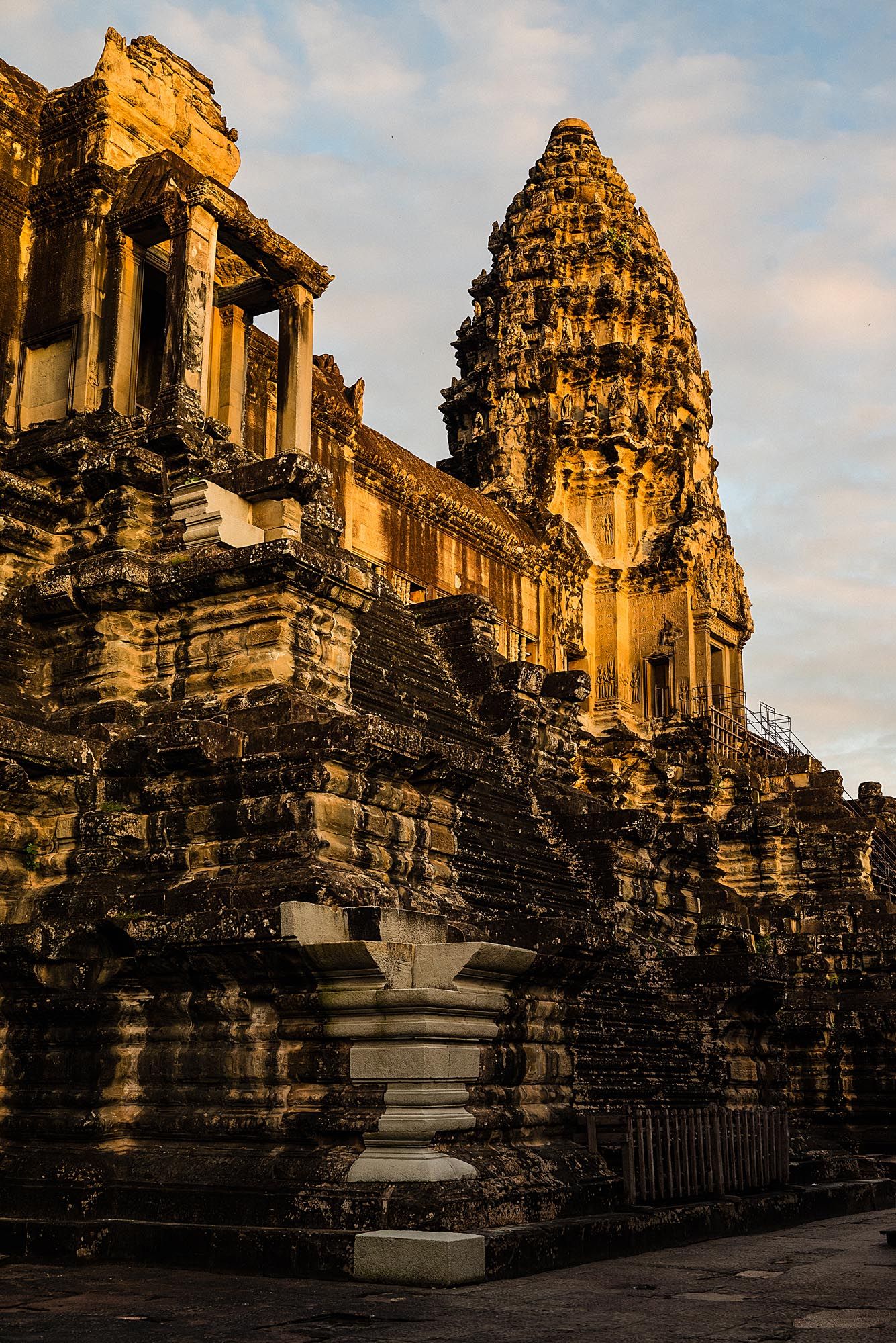
Sunrise provides the perfect light for photographers, with the first rays of the sun illuminating the intricate carvings of the temple and casting long shadows on the stonework. If you're into photography, this is a golden opportunity to capture Angkor Wat in its most magical light.
Avoiding the Crowds (after the sunrise)
While Angkor Wat is a popular tourist destination, arriving early for sunrise allows you to enjoy the beauty of the temple before the crowds descend. This means you'll have more time to appreciate the temple’s architecture and take in the atmosphere without feeling rushed.
A "Spiritual" Experience
Angkor Wat is not just a tourist attraction—it's a sacred site for many. Watching the sun rise over this ancient temple, which was originally constructed as a Hindu temple before becoming a Buddhist one, is a deeply spiritual experience. It’s a moment of connection to the past, to the history of the Khmer Empire, and to the sacred traditions of the region.
Angkor Wat at sunrise is a once-in-a-lifetime experience. The vast temple complex is bathed in soft, golden light, creating an atmosphere of peace and awe. The reflection of the temple in the surrounding moat adds to the drama of the moment, making it one of the most photographed sites in the world. Arriving early means you'll also experience the temple in relative tranquility, before the crowds arrive.
Why Sunrise at Angkor Wat May Not Be Worth It
Crowds and Early Morning Rush
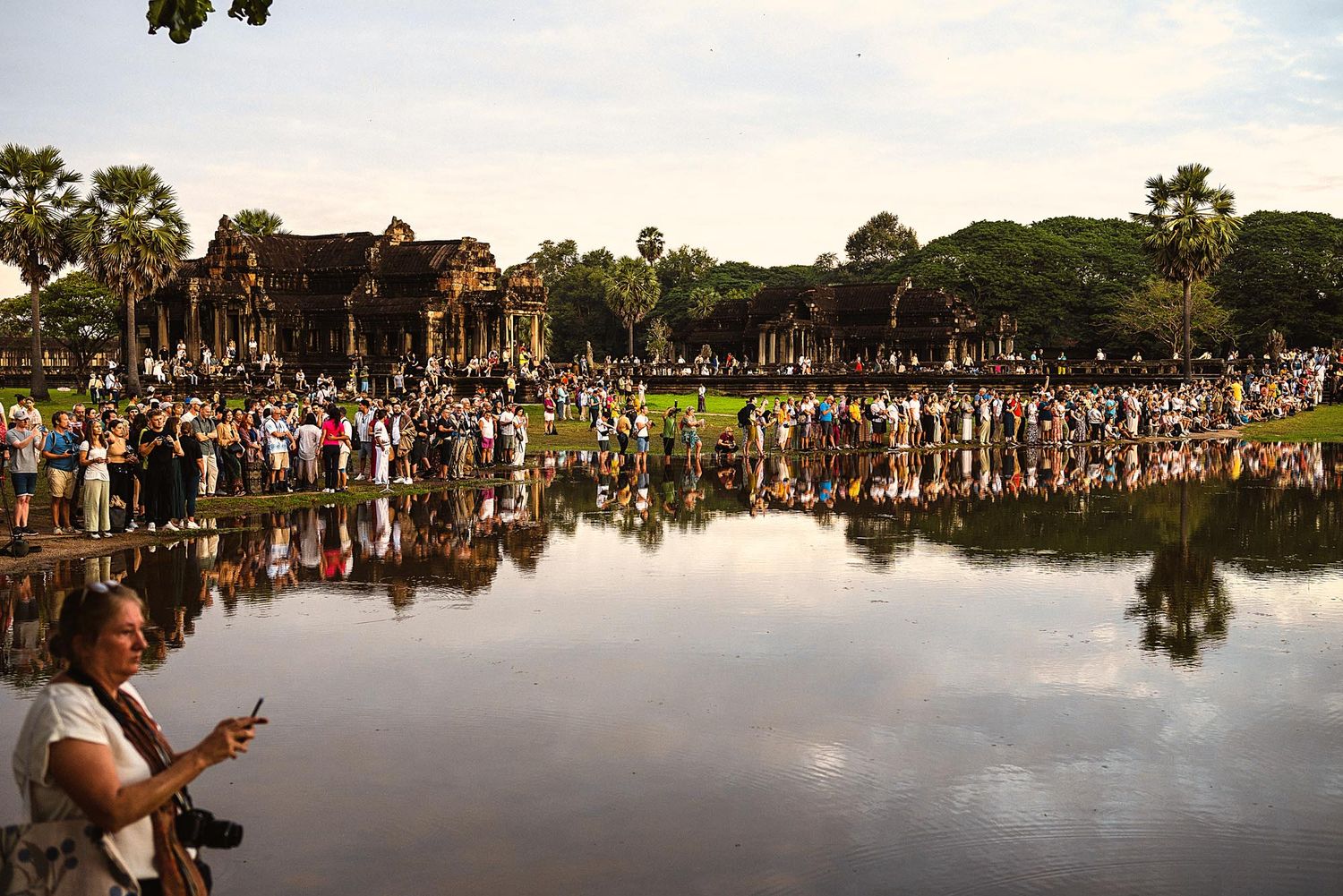
Despite arriving early, you’re still likely to be surrounded by large crowds. Angkor Wat is one of the most visited sites in Southeast Asia, and sunrise tends to attract throngs of tourists—often hundreds at a time. While the temple can seem peaceful at first light, it doesn't take long for the area near the moat to fill up with people vying for the perfect photo spot. If you prefer solitude or a less crowded experience, sunrise at Angkor Wat might not be ideal.
Sleep Deprivation and Early Wake-Up Time
To catch sunrise, you’ll need to wake up well before dawn—often around 4:30 or 5:00 AM. For some, this early start can feel exhausting, especially if you’re not a morning person. The need to be up at such an early hour can lead to sleep deprivation, which might leave you feeling drained for the rest of the day, especially if you're traveling through a time zone that differs greatly from your own.
Weather Conditions and Visibility
Cambodia's weather can be unpredictable, particularly in the rainy season (from May to October). The chance of overcast skies, fog, or rain could completely obscure the sunrise view, leaving you with less-than-ideal conditions. Even during the dry season, some mornings can be cloudy, meaning you might not get the iconic golden glow that’s typical of sunrise photos. If you’re traveling a long distance or putting in effort to see the sunrise, poor visibility can lead to disappointment.
Lack of Facilities at Dawn
If you’re someone who likes to have a full breakfast or access to proper restrooms before your day starts, the early morning conditions at Angkor Wat may feel uncomfortable.
The “Sunrise Hype” Doesn’t Live Up to Expectations
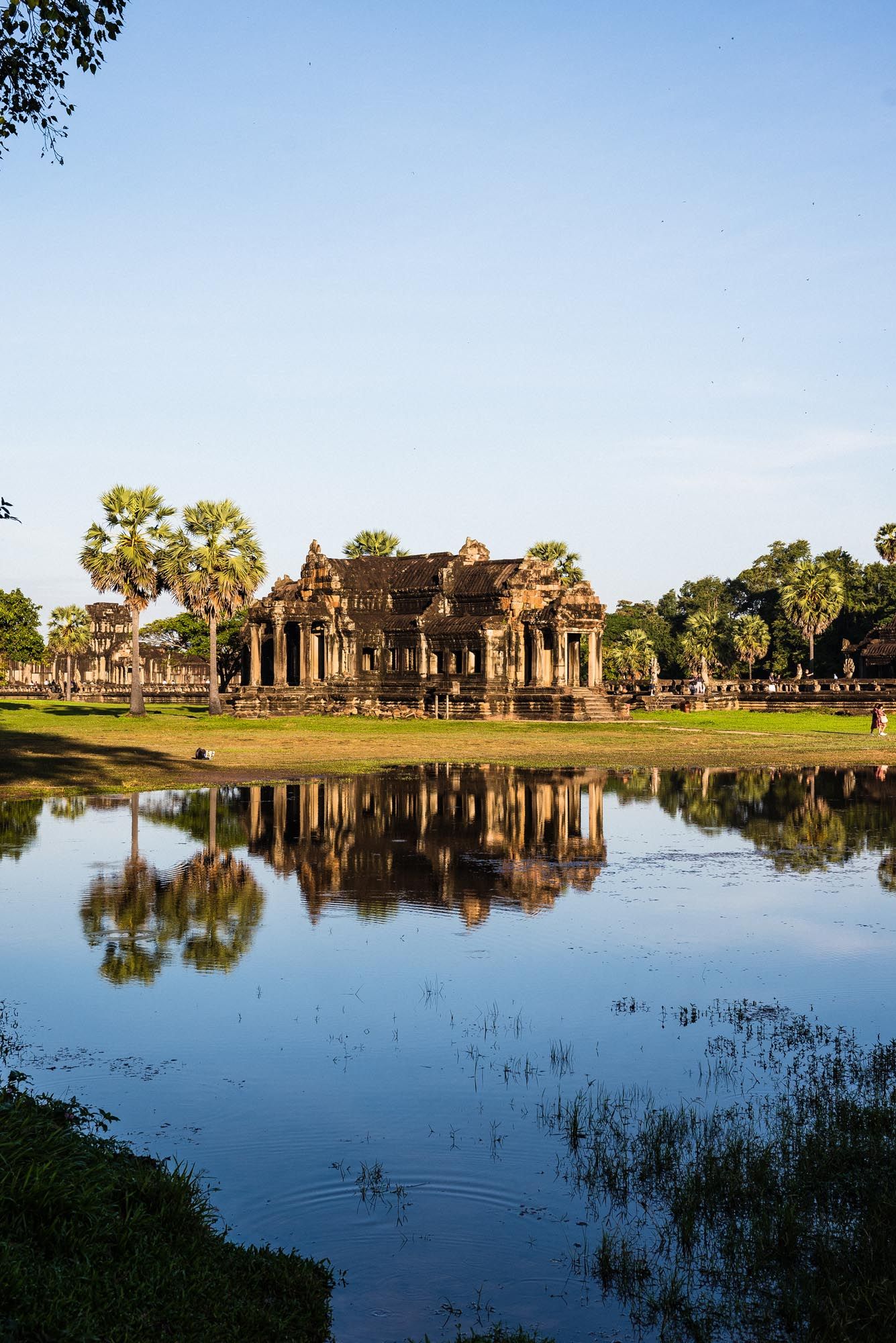
While sunrise at Angkor Wat is undeniably a beautiful experience, it’s not guaranteed to be as magical as the photos might suggest. The sun rises behind the temple, which means the best photo angles are often looking directly into the light. If you’re expecting the perfect reflection in the water or a solitary view of the temple, you may be disappointed by the reality of crowds and logistics.
While sunrise at Angkor Wat is undeniably a popular and awe-inspiring experience, it’s not for everyone. Here are some reasons why you might want to skip the sunrise visit to this iconic site:
How to See Sunrise at Angkor Wat on Your Own
Seeing sunrise at Angkor Wat doesn’t require a tour guide, though having one can enhance your experience. however if you are like me you might prefer to explore on your own, here’s what you need to do:
Arrive Early
Plan to arrive at least 60 minutes before sunrise to secure a good spot and experience the changing colors of the sky before the sun breaks the horizon. This gives you time to settle in and prepare for the spectacle.
Bring a Headlamp or Flashlight or just use your phone light.
It can still be dark when you arrive, so having a headlamp or flashlight is helpful, especially for navigating the pathways around the temple.
Respect the Sacredness of the Site
Remember, Angkor Wat is a sacred site. Keep noise to a minimum. Avoid climbing on the temple structures and always follow the guidelines provided by the authorities.
Hire a Tuk-Tuk or Rent a Bike
Most visitors opt to hire a tuk-tuk to take them to the temple at dawn. This is a convenient option, as tuk-tuk drivers often know the best routes and timing for seeing the sunrise. If you’re feeling adventurous, renting a bike is a great option for a more independent experience. Personally I hired a tuk-tuk.
My Personal Experience Watching Sunrise at Angkor Wat
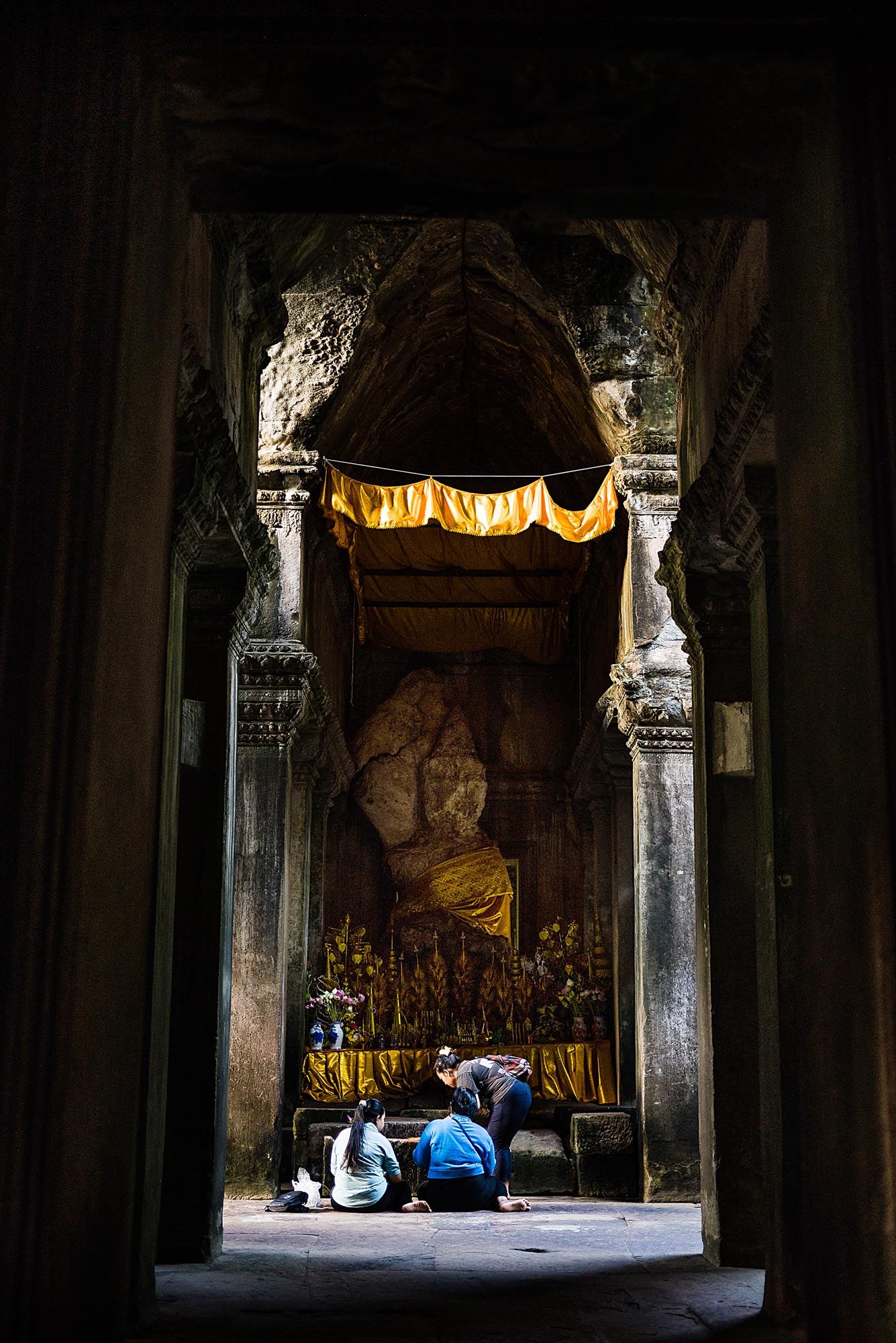
For me, seeing the sunrise at Angkor Wat felt like the main event of my time in Siem Reap and something that was worth the effort. I was still struggling with jet lag, so getting up early wasn’t really an issue. The hardest part was actually falling asleep in the first place.
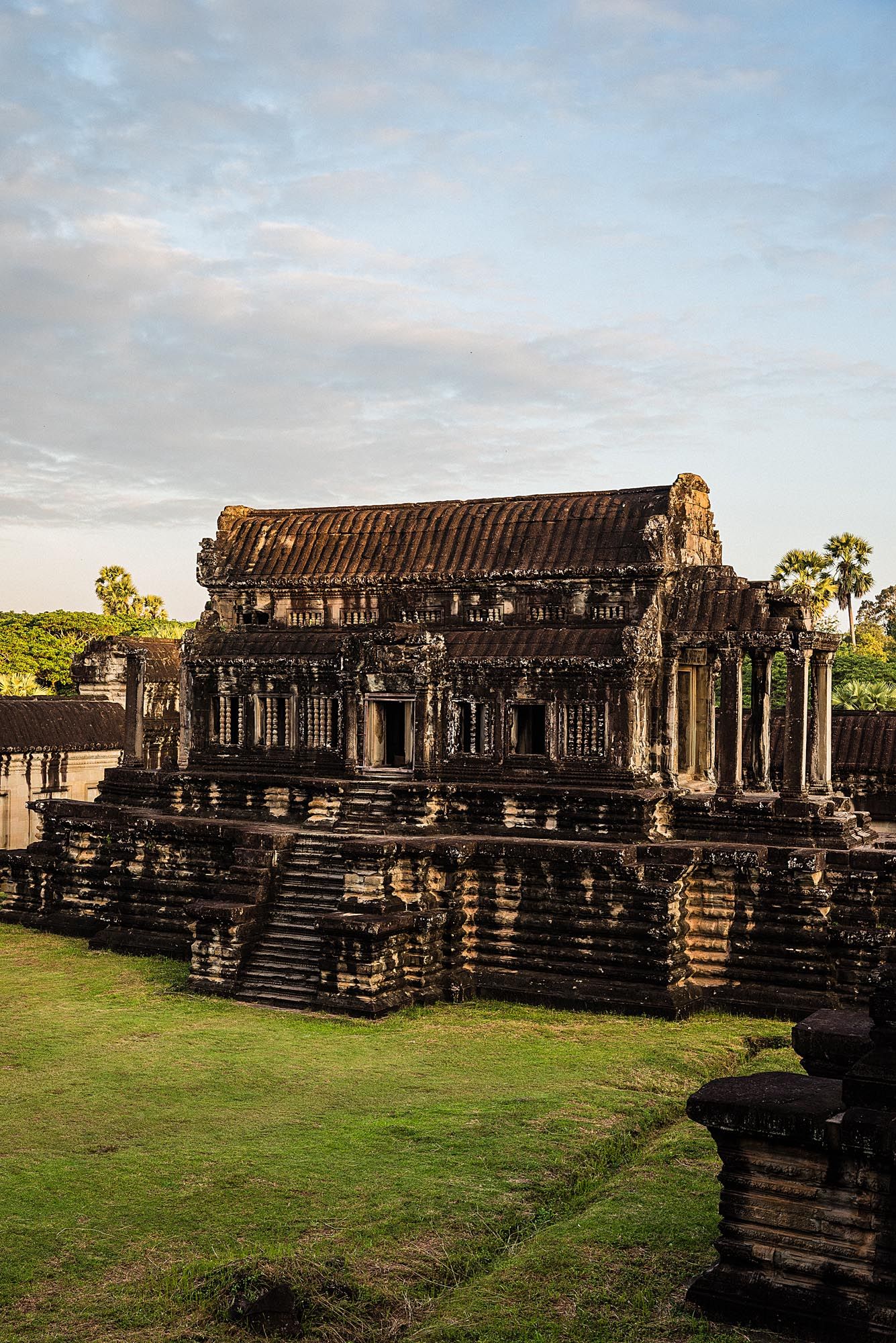
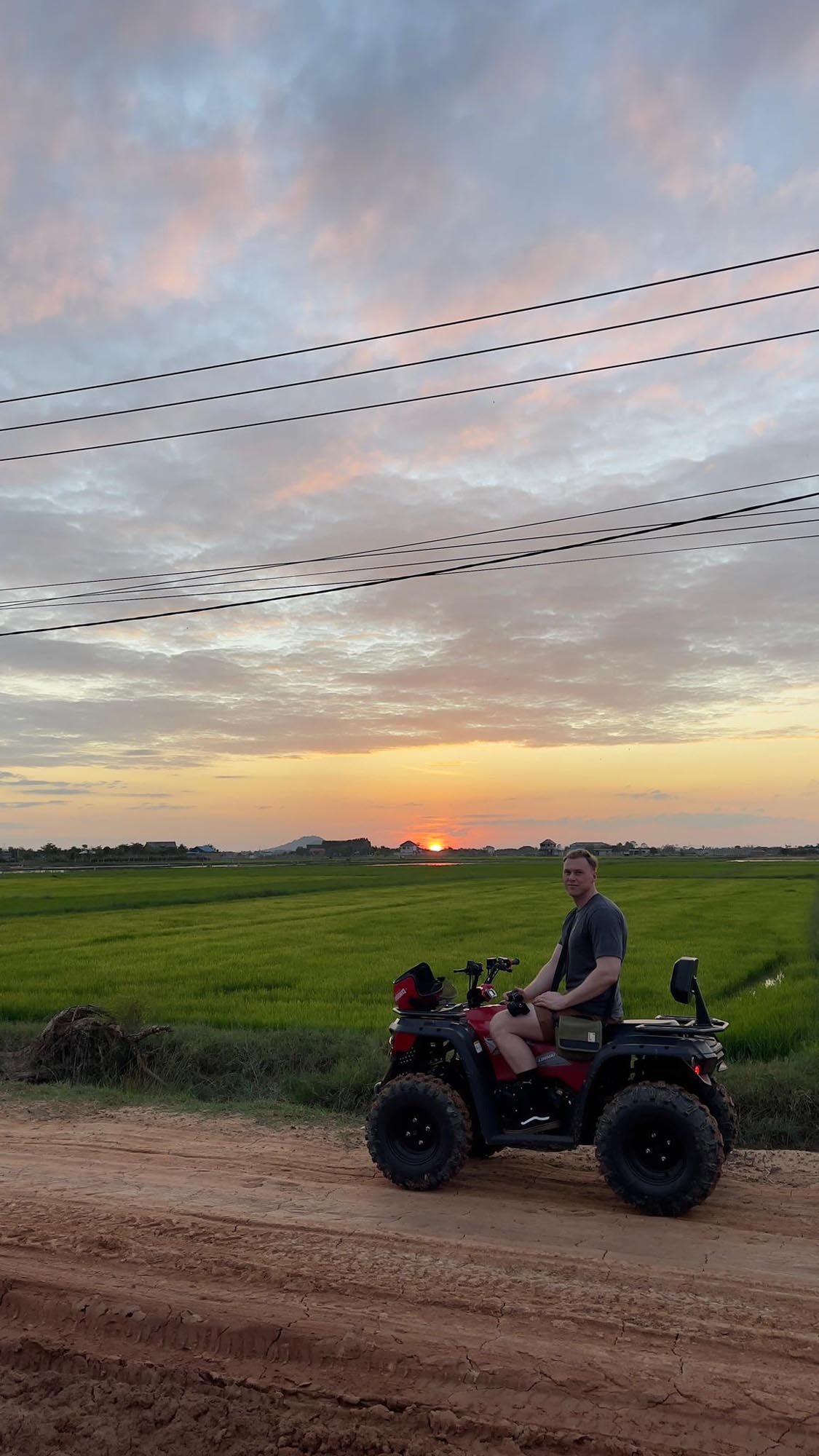
Before arriving in Cambodia, I’d been tempted to book an Angkor Wat sunrise tour through Viator. In the end, I decided against it. I already had a quad bike tour and a floating village tour booked, and I like to mix things up by combining the convenience of organised tours with exploring on my own. With hindsight, I think I made the right call. The quad bike tour was something I wouldn’t have been able to do independently, and the floating village tour saved time and let me squeeze more into the trip.
It wasn’t until my taxi ride from the airport that I properly started planning how I’d see Angkor Wat. As I exited the arrivals hall and stepped into the quiet, sparsely populated area outside the terminal, I was approached by a taxi driver. I probably owe him an apology for how stand-offish I was at first. As a general rule — and one I still think you should stick to — be wary of anyone approaching you at an airport, and avoid using taxis that approach you directly, as airport taxis are often the quickest way to get ripped off.
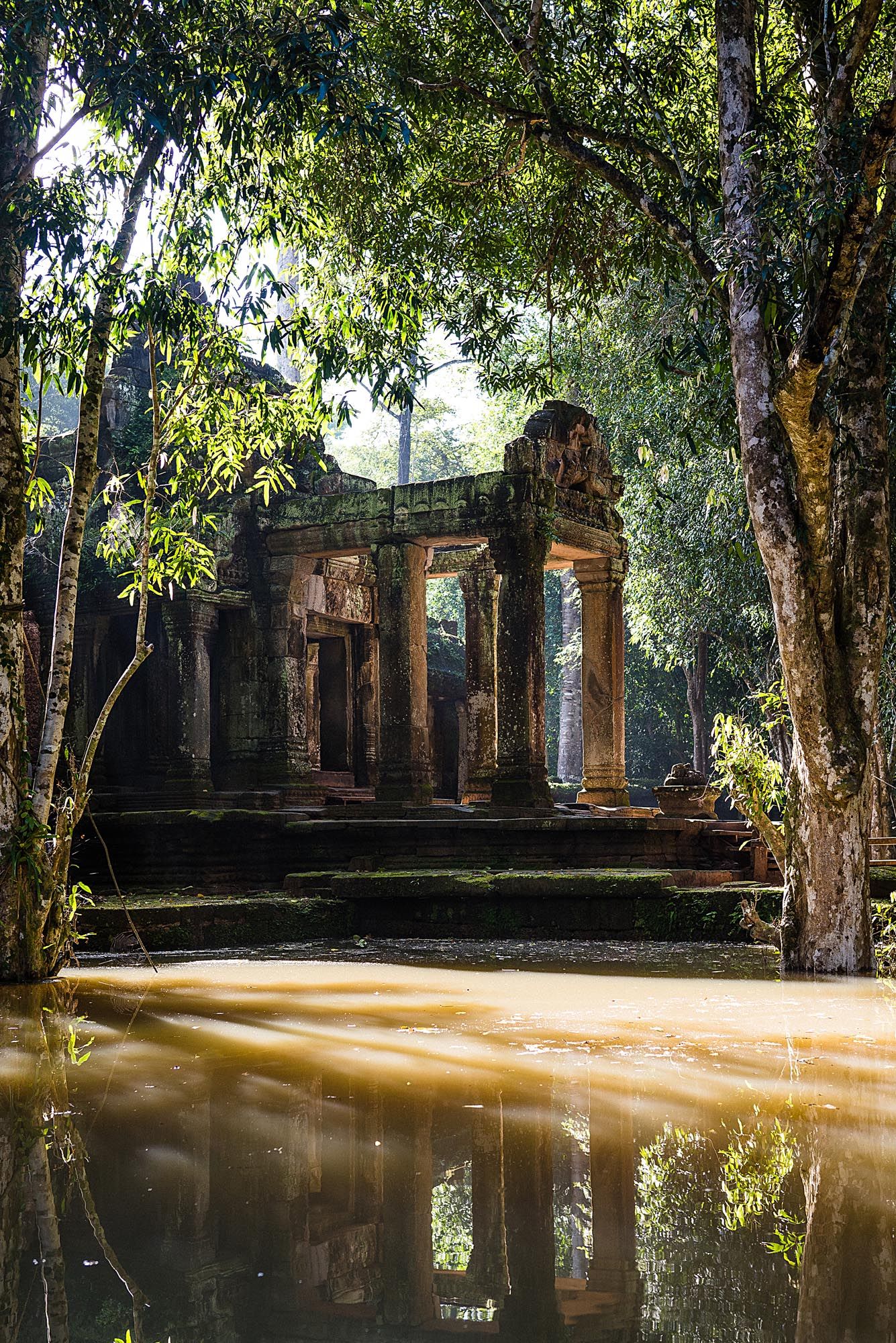
That said, Southeast Asia does offer a bit of financial protection in this regard even a “scam” usually isn’t going to cost you a huge amount. This particular driver offered a flat rate from the airport to Siem Reap, and despite my initial reluctance, I agreed. He turned out to be a great resource throughout my stay, and I warmed to him a lot. We arranged for him to pick me up from my hotel at 4am the next morning to see sunrise at Angkor Wat.
I feel a bit uneasy about sharing his number publicly here, but if you message me directly, I’m happy to pass it on. His name is Lang.
The next morning, Lang was ready and waiting outside my hotel in his remork (a Cambodian-style tuk-tuk), and we set off towards Angkor Wat. Sitting in the back of the remork, I really appreciated the space and solitude. Experiencing Siem Reap at that time of day was interesting, but I definitely wasn’t in the mood to be social — another reason I was glad I hadn’t booked a group tour.
When we arrived at the western gate, Lang parked up and told me he’d wait for as long as I needed. He pointed me in the direction I needed to walk, disappearing into the darkness. I’d already bought my entrance ticket online, which I’d strongly recommend, as it makes getting in much quicker.
I followed the dark path towards the sunrise viewing area. Every now and then, someone offered me a guided tour, but the sales approach was relaxed and not annoying in any way. When I reached the Rainbow Bridge, where other tourists were already gathered, we were stopped — we were a bit early and had to wait around before being allowed into the main area.
After about 30 minutes, everyone was let in, and there was an immediate rush to secure the best spot for sunrise. The phrase “hurry up and wait” felt very appropriate. Once people had claimed their places, there was more waiting. This was the point where the experience started to drift into something I actively try to avoid.
Unless you’re visiting Siem Reap during the rainy season, it’s almost guaranteed that you’ll be sharing sunrise at Angkor Wat with a lot of other people. I didn’t enjoy being packed in so closely, and the constant chatter and noise took away a lot of the atmosphere. It’s probably unfair to expect everyone to stand in silence, but it did affect the experience for me.
As the sun finally began to rise, I found myself mostly focused on getting a good photo — just like everyone else. The sunrise itself wasn’t as dramatic as I’d hoped, and I felt slightly disappointed with the photos I took (the main image at the top of this blog is one of mine). I could have edited them to make the scene more dramatic, but I try not to overly edit my photos.
So, was the main event — seeing sunrise at Angkor Wat — as magical as I’d imagined? Not quite. But I’d still argue that it’s absolutely worth doing.
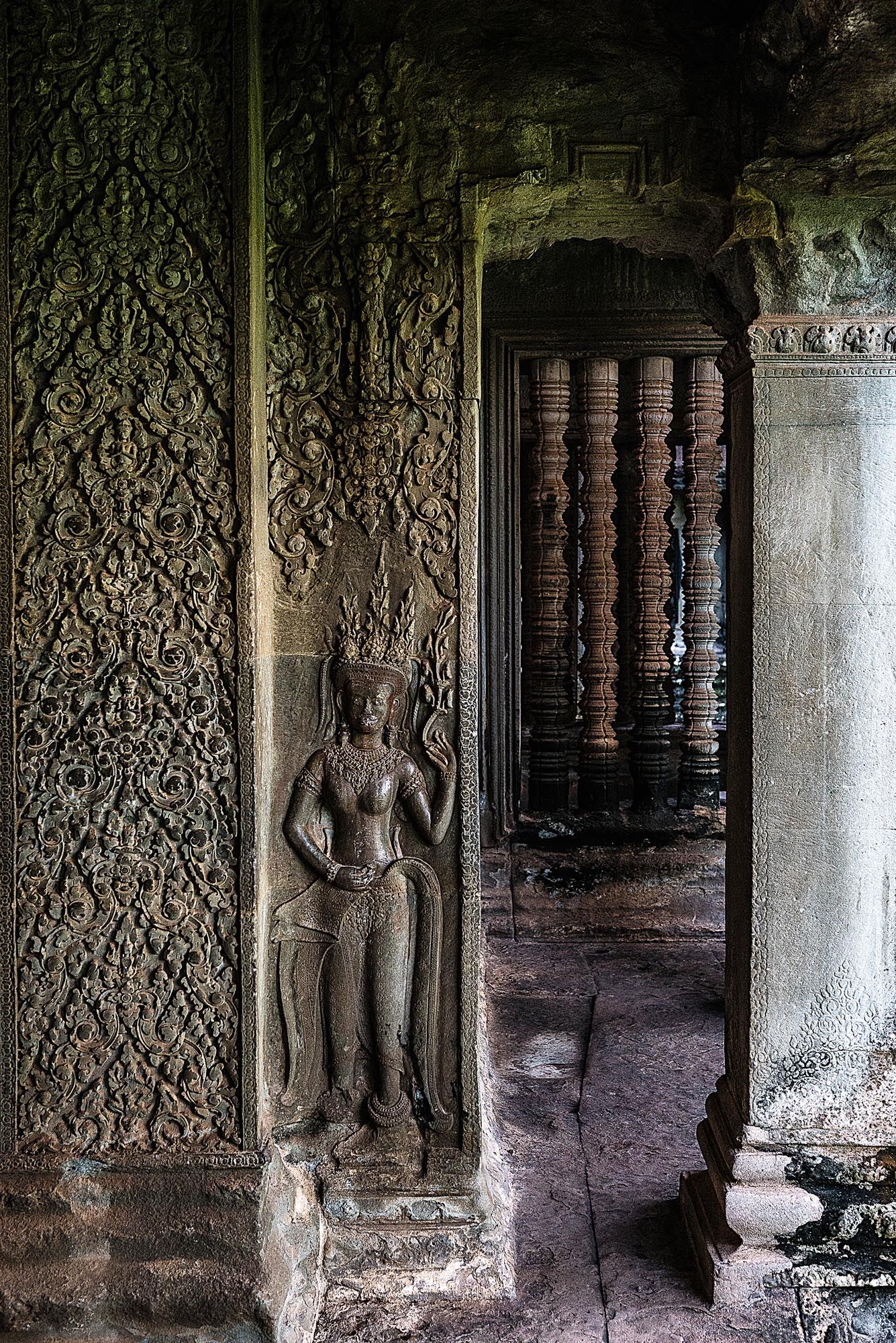
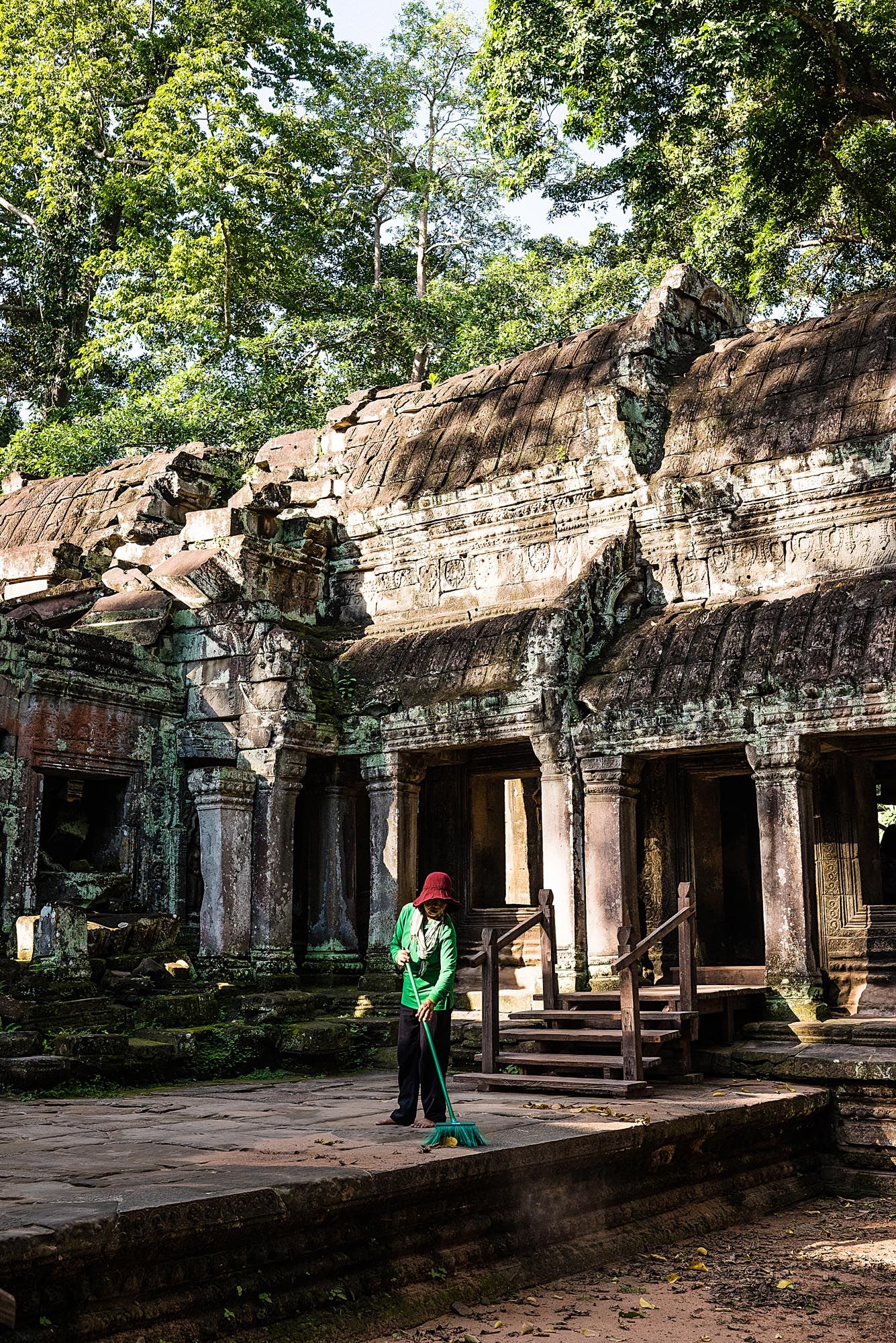
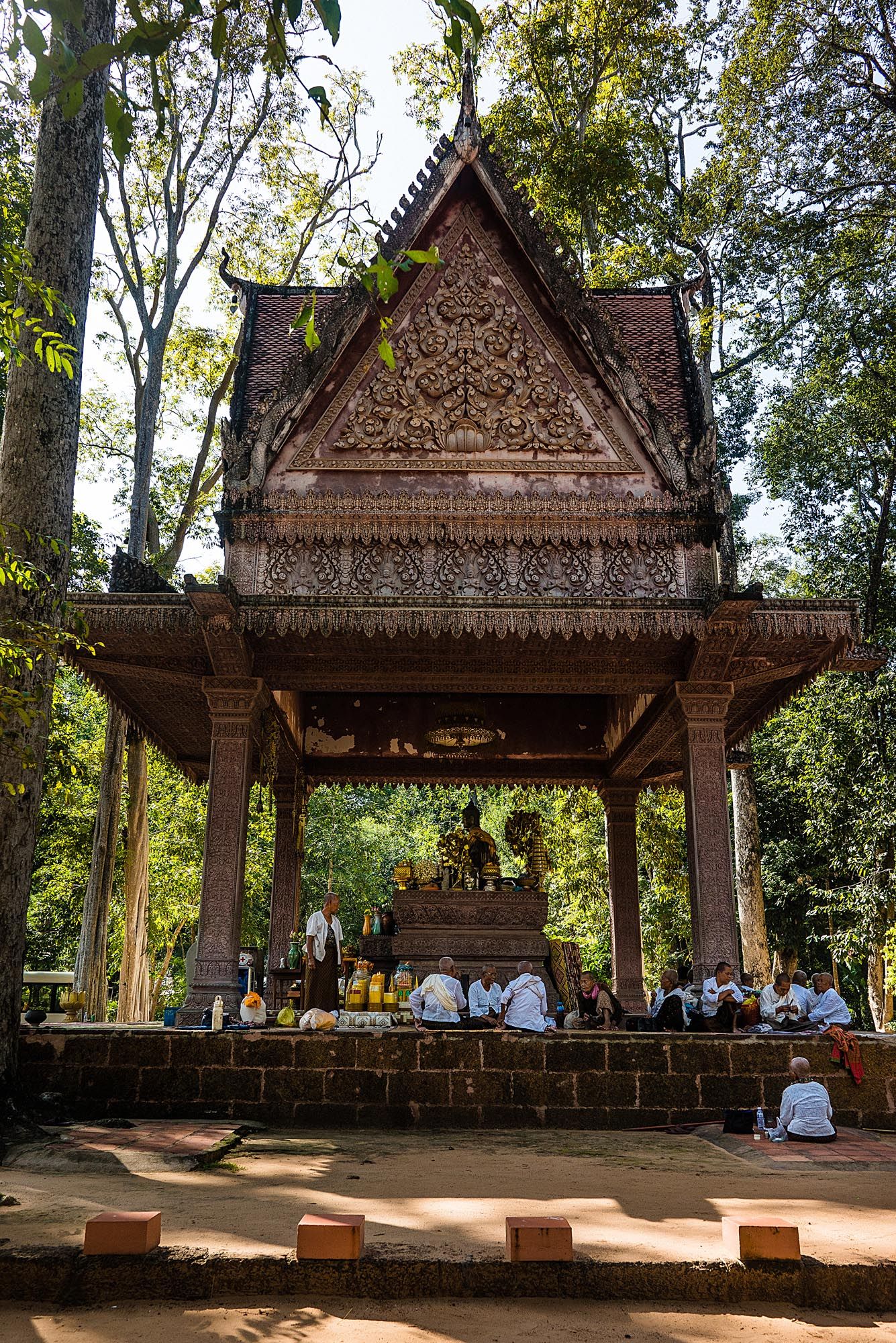
The moment my experience truly improved was when I left the crowded sunrise area and started exploring the wider Angkor complex. What followed was one of the most interesting and enjoyable days of my trip. Wandering the temples at my own pace, with very few other people around, is where Angkor Wat really comes into its own.
The complex is huge, with an incredible amount to see and so much space to explore. If you want to get lost and feel like you’re discovering this ancient site on your own, you absolutely can — and for me, that was the most rewarding part of the entire experience.
How to Purchase Tickets in Advance for Angkor Wat
The temples of Angkor, including Angkor Wat, are part of a UNESCO World Heritage site and require an entry ticket. To avoid long lines and to make the most of your early morning visit, it’s highly recommended that you purchase your tickets in advance. The earliest you can purchase tickets on the official website is one month in advance.
1-Day Pass: $37 £29
3-Day Pass: $62 £48
7-Day Pass: $72 £56
Where to Buy Tickets:
Tickets can be purchased at the Angkor Archaeological Park ticket office, which is located near the main entrance. The office opens at 5:00 AM, but be aware that there may be lines early in the morning. To avoid waiting, you can buy your ticket the day before, as the ticket is valid from the time of purchase (not just for one calendar day).
Digital Tickets: (Best option)
You can also purchase your tickets online through the official Angkor ticket website https://www.angkorenterprise.gov.kh/, which allows you to avoid the queues at the ticket office. Be sure to bring your passport when purchasing tickets, as it is required for identification.
What is the Best Time to Visit Angkor Wat?
The best time to visit Angkor Wat is during the dry season, from November to February. This period offers cooler temperatures, lower humidity, and far more comfortable conditions for exploring the temples. Early mornings are especially pleasant, making it an ideal time for sunrise visits or long walks around the Angkor complex without the intense heat.
March and April can still be a good time to visit Angkor Wat, but temperatures rise sharply and the midday heat can be exhausting. If you visit during these months, starting early in the morning and taking breaks during the hottest part of the day becomes essential.
The rainy season, which runs from May to October, divides opinion. While there’s a higher chance of cloud cover and rain—particularly in the afternoons—the temples are noticeably quieter, and the surrounding landscapes are lush and green. Sunrise is less predictable during this time, but if you prefer fewer crowds and don’t mind the occasional downpour, this can be a rewarding time to visit.
Regardless of the season, early morning is the best time of day to visit Angkor Wat. Temperatures are cooler, the light is softer, and once the sunrise crowds disperse, the complex becomes far more peaceful. If you’re choosing between sunrise and midday, sunrise almost always offers the better overall experience.
Other Temples to Visit in the Angkor Complex
Bayon Temple
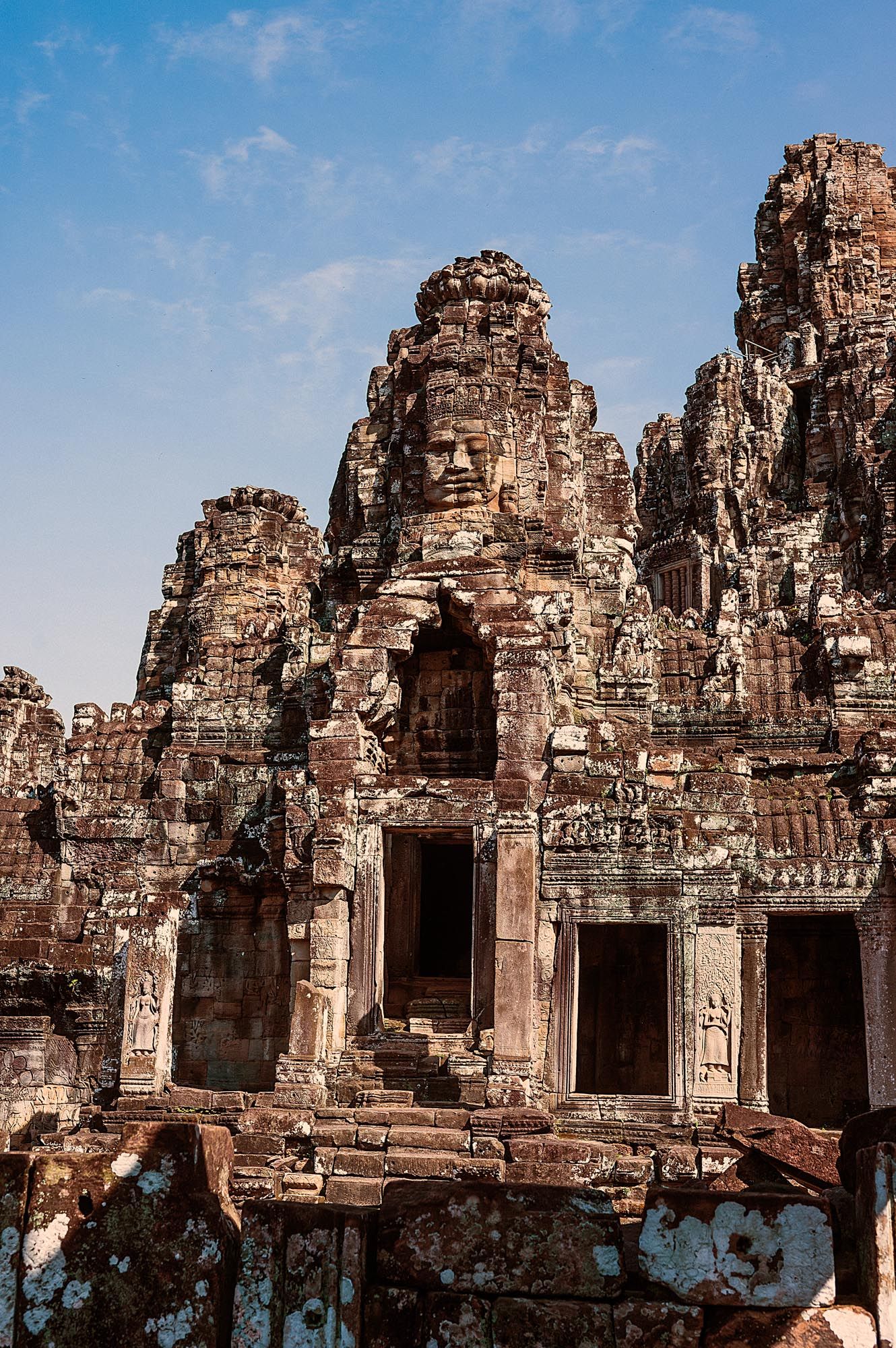
Known for its massive stone faces, Bayon is one of the most iconic temples in the Angkor complex. The smiling faces seem to gaze out in all directions, creating a surreal and haunting atmosphere.
Ta Prohm
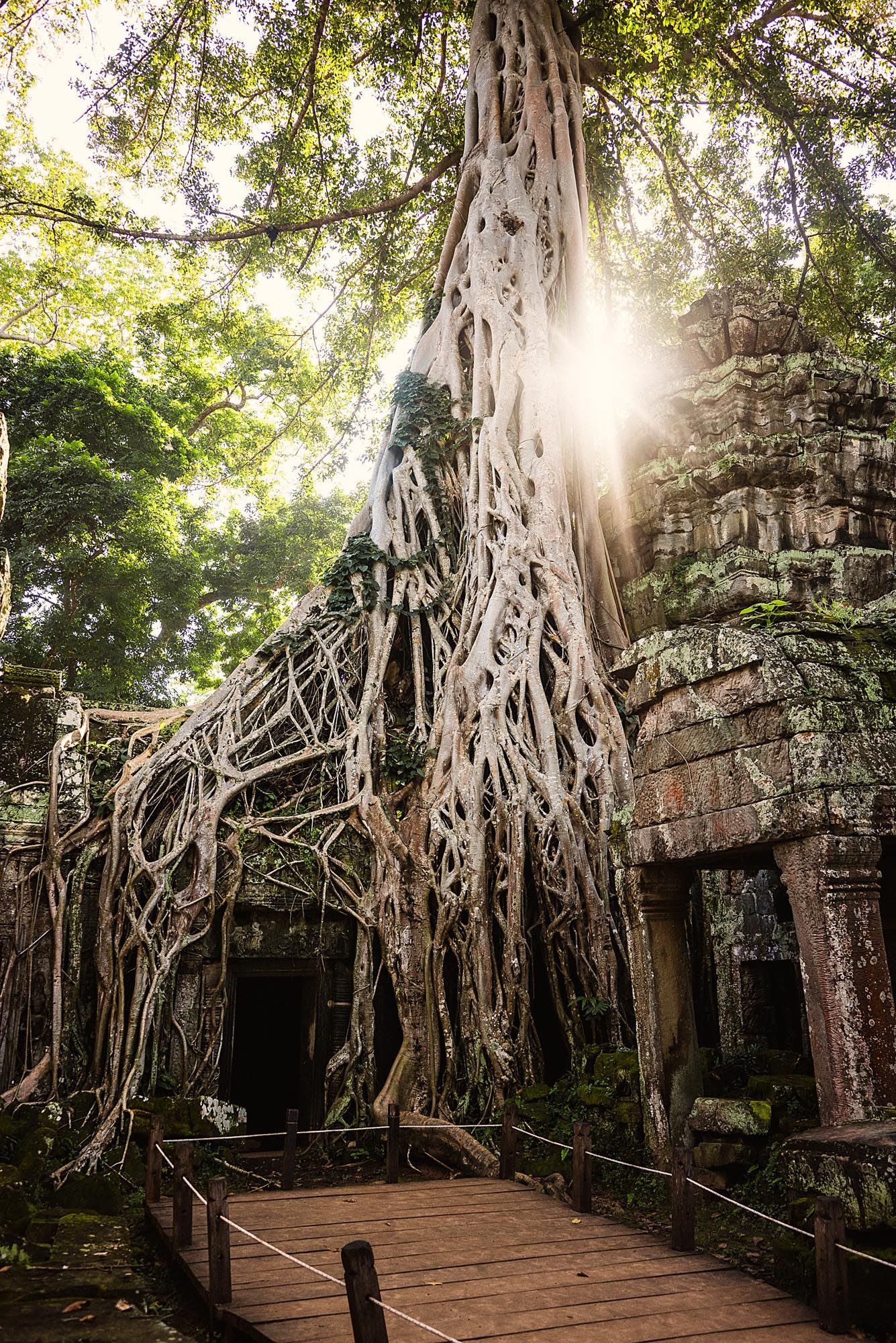
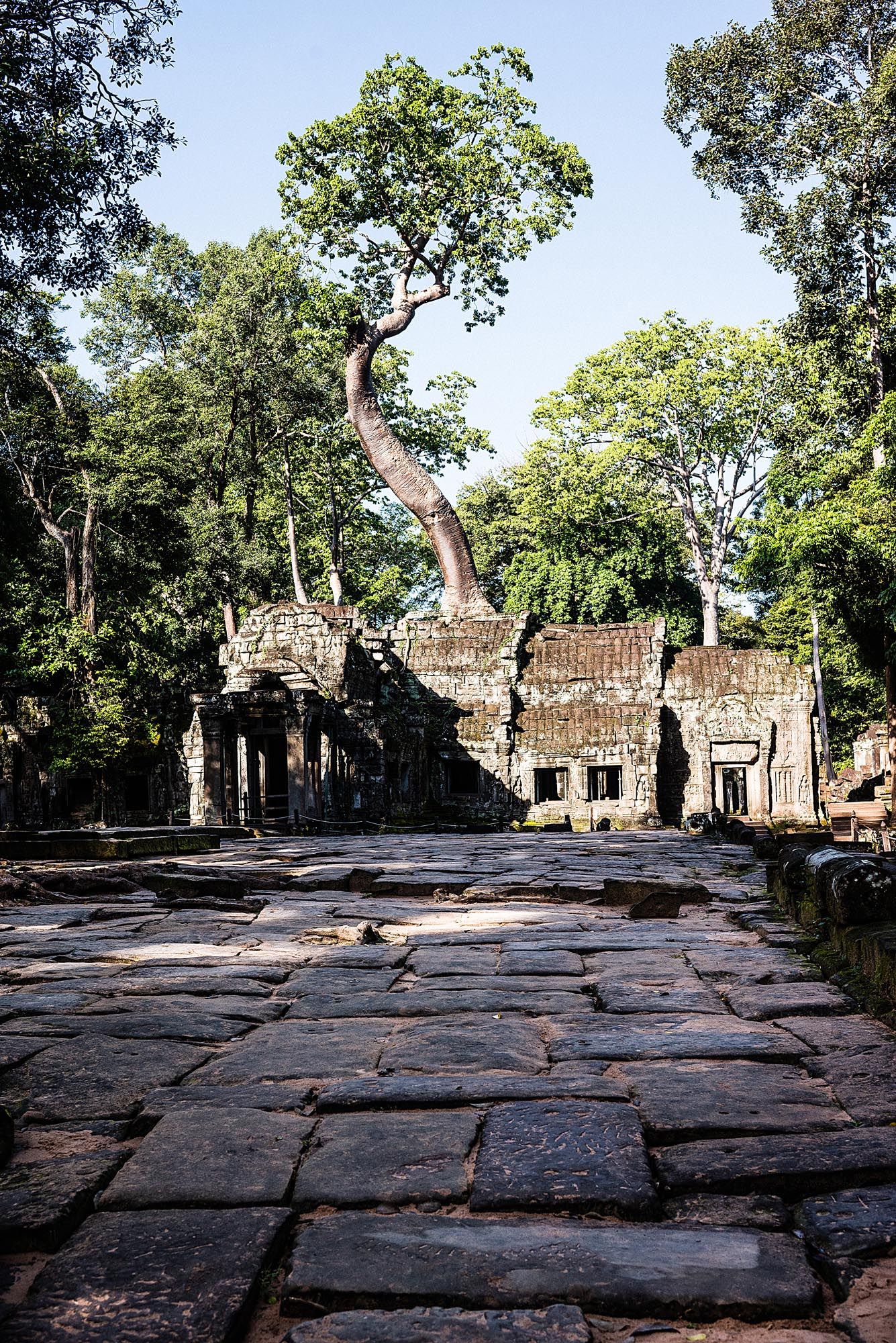
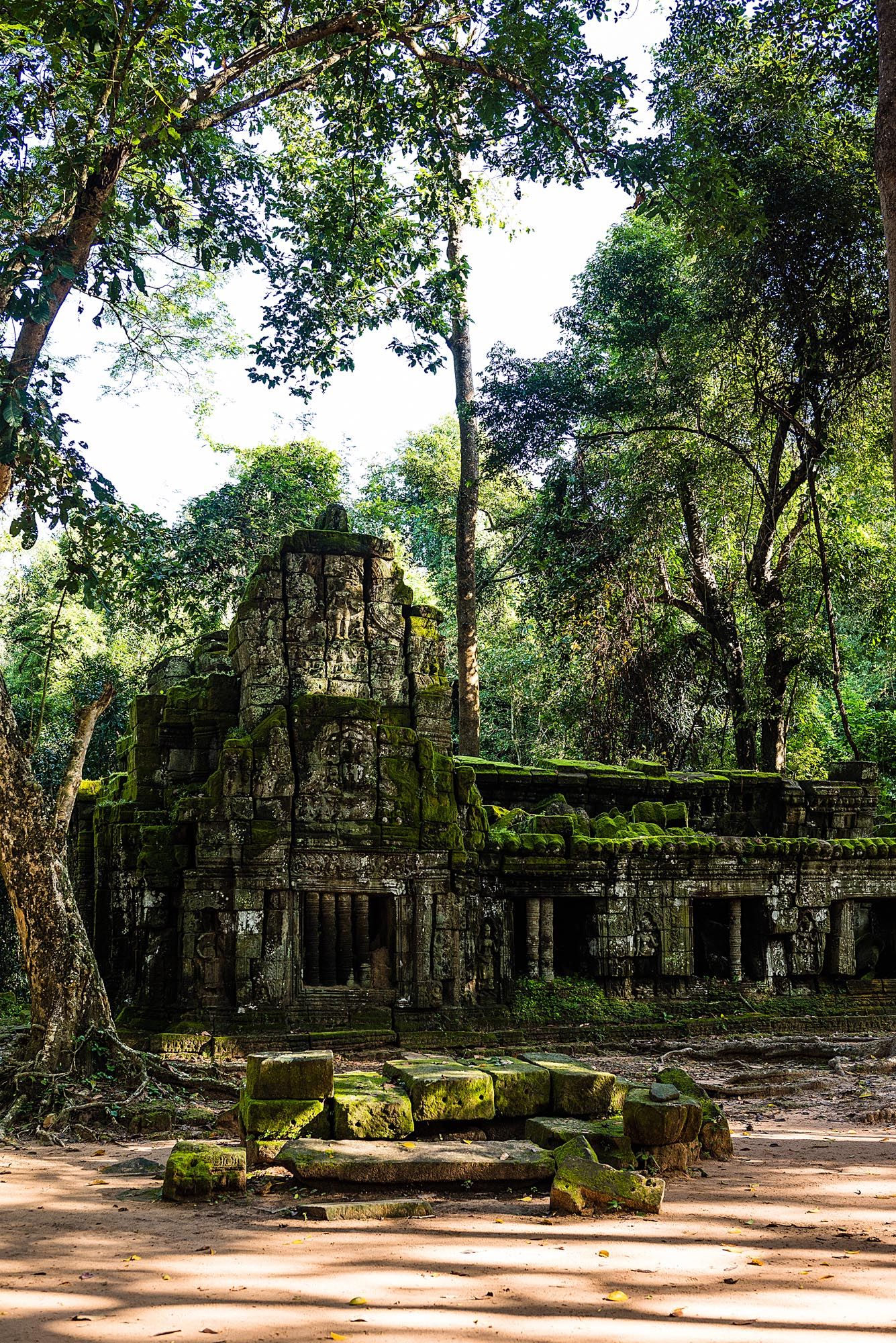
Made famous by the movie Tomb Raider, Ta Prohm is a temple overtaken by giant trees and vines. The ruins, combined with nature’s reclamation of the site, make it one of the most visually stunning places in Angkor.
Angkor Thom
A massive walled city that includes the Bayon Temple, Angkor Thom is an ancient capital of the Khmer Empire. It's an excellent place to explore after sunrise, with its monumental gates and towering stone faces.
Preah Khan
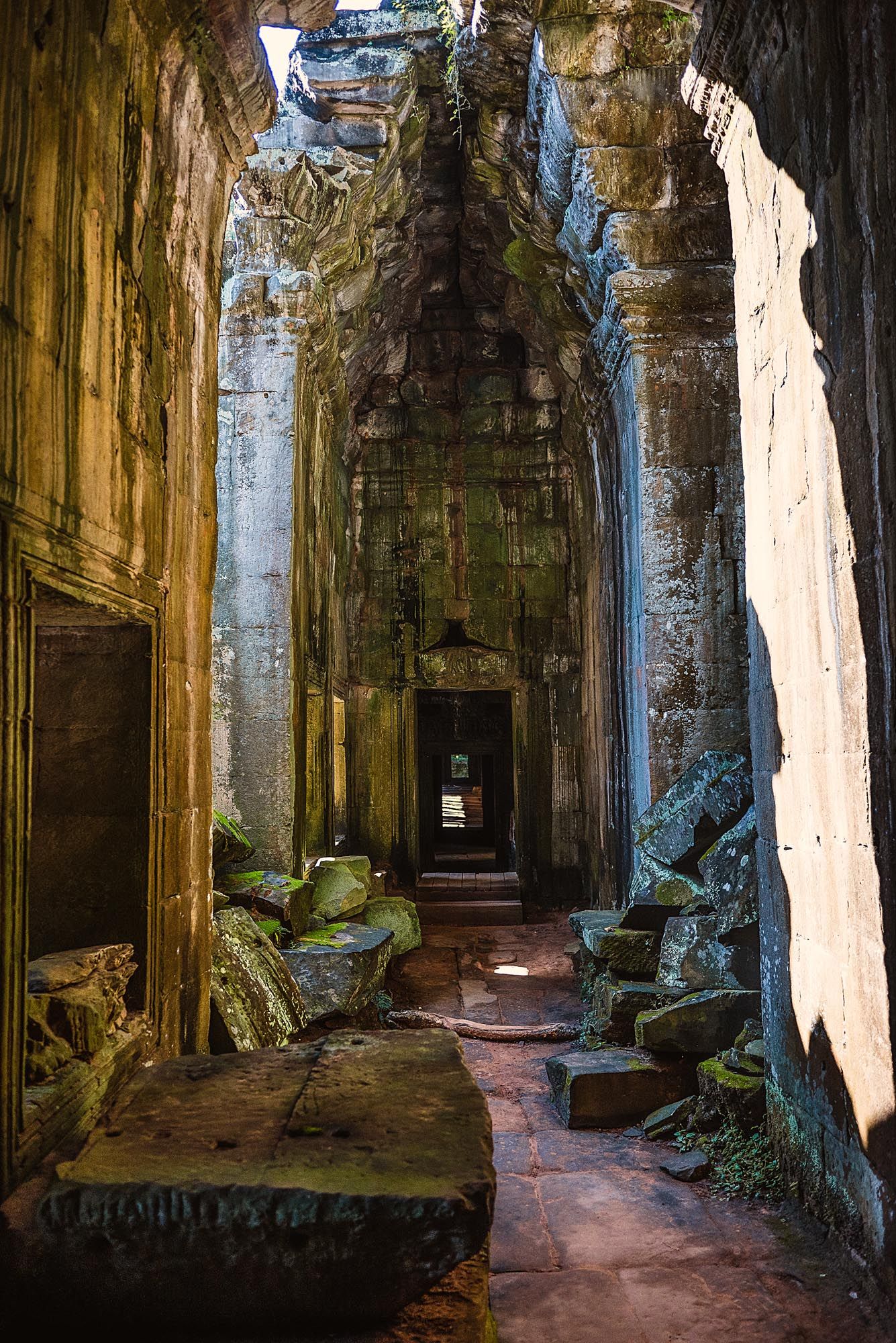
A beautiful and less crowded temple, Preah Khan is an excellent spot for those seeking a more tranquil experience. The temple is vast, and the intricate carvings are incredibly detailed.
Is Sunrise at Angkor Wat Worth It? What Other Travellers Say
Opinions on sunrise at Angkor Wat are mixed, but there are some clear patterns in what travellers consistently mention.
Many people agree that while sunrise is undeniably touristy, Angkor Wat is a busy site at any time of day. Several travellers pointed out that the complex is so vast that it rarely feels dangerously crowded or claustrophobic. While the main sunrise viewing areas near the moat can get busy, once people spread out into the wider temple grounds, it’s easy to find space and quieter corners.
Some visitors described arriving early and being surprised by how calm the atmosphere felt, especially compared to their expectations. A few travellers mentioned that even with plenty of people around, there was still a relaxed, almost chilled-out early morning vibe. Others felt that the cool morning temperatures alone made sunrise worthwhile, particularly when compared to the intense heat and humidity later in the day.
That said, not everyone felt the early wake-up was justified. A number of travellers admitted that waking up at 4:30am only to find cloudy skies or a less dramatic sunrise was disappointing. Several people pointed out that there’s never a guarantee you’ll actually see the iconic golden sunrise shown in photos — sometimes it’s simply dark, then suddenly light. For those travellers, the crowds combined with the uncertainty made sunrise feel overhyped.
Guided tours also divided opinion. Some travellers loved having a guide, especially those interested in history, symbolism, and hidden details carved into the temple walls. Guides were often praised for knowing quieter viewing spots, helping with photography, and providing context that many felt they would have missed on their own. Others preferred visiting independently, enjoying the freedom to move at their own pace and avoid being tied to a group schedule. Several people noted that even a knowledgeable tuk-tuk driver can offer useful insights without committing to a full tour.
Alternative sunrise spots within the Angkor complex were also mentioned. Temples like Phnom Bakheng came up as quieter options at certain times of year, although experiences varied depending on season and popularity at the time of visit. The general consensus was that Angkor is large enough that, with a bit of flexibility, you can usually find a sunrise experience that suits your style.
One piece of advice that came up repeatedly was to worry less about photos. A few travellers recommended simply sitting near the moat and watching the temple slowly emerge from the darkness rather than fighting for the perfect shot. Those who did this often described the experience as peaceful, awe-inspiring, and surprisingly quiet despite the number of people present.
Overall, most travellers agreed on one thing: even if sunrise itself isn’t perfect, Angkor Wat remains one of the most impressive places they’ve ever visited. Many felt that if there’s a low chance of returning to Cambodia, it makes sense to experience sunrise at least once — even if only to decide for yourself whether it lives up to the hype.

Is Sunrise at Angkor Wat Worth It?
Yes — but it depends on you.
Sunrise at Angkor Wat can be a truly memorable experience. Seeing the temple slowly emerge from the darkness, surrounded by cool morning air, is undeniably special. For photographers, early risers, and first-time visitors to Cambodia, it’s often worth the early alarm — especially if you’re unlikely to return.
However, the experience isn’t as serene as the photos suggest. Sunrise is the busiest time of day at Angkor Wat, particularly around the main viewing areas by the moat. Expect crowds, noise, and a fair amount of waiting. There’s also no guarantee of a dramatic sunrise — cloud cover can turn the moment into little more than darkness followed by daylight.
Where Angkor Wat truly shines is after sunrise. Once the crowds thin out, the vast temple complex becomes a joy to explore. Cooler temperatures, fewer people, and the freedom to wander at your own pace often end up being the highlight of the day — sometimes more so than the sunrise itself.
If you love quiet moments, dislike crowds, or struggle with early starts, you won’t be missing out by skipping sunrise and arriving later in the morning. But if you’re curious, flexible, and want to experience Angkor Wat at its most iconic — even with its flaws — sunrise is still worth doing at least once.
In short:
Sunrise at Angkor Wat isn’t perfect, but for many travellers, it’s still worth the effort.
Siem Reap Floating Village
Worth It?
The floating villages of Siem Reap, such as Kampong Phluk, offer a fascinating glimpse into the way of life on one of Southeast Asia's largest freshwater lakes, Tonle Sap. A sunset tour of Kampong Phluk's stilt homes is one of the most popular ways to experience the magic of this unique destination.