Chapultepec Park The Complete Visitor Guide
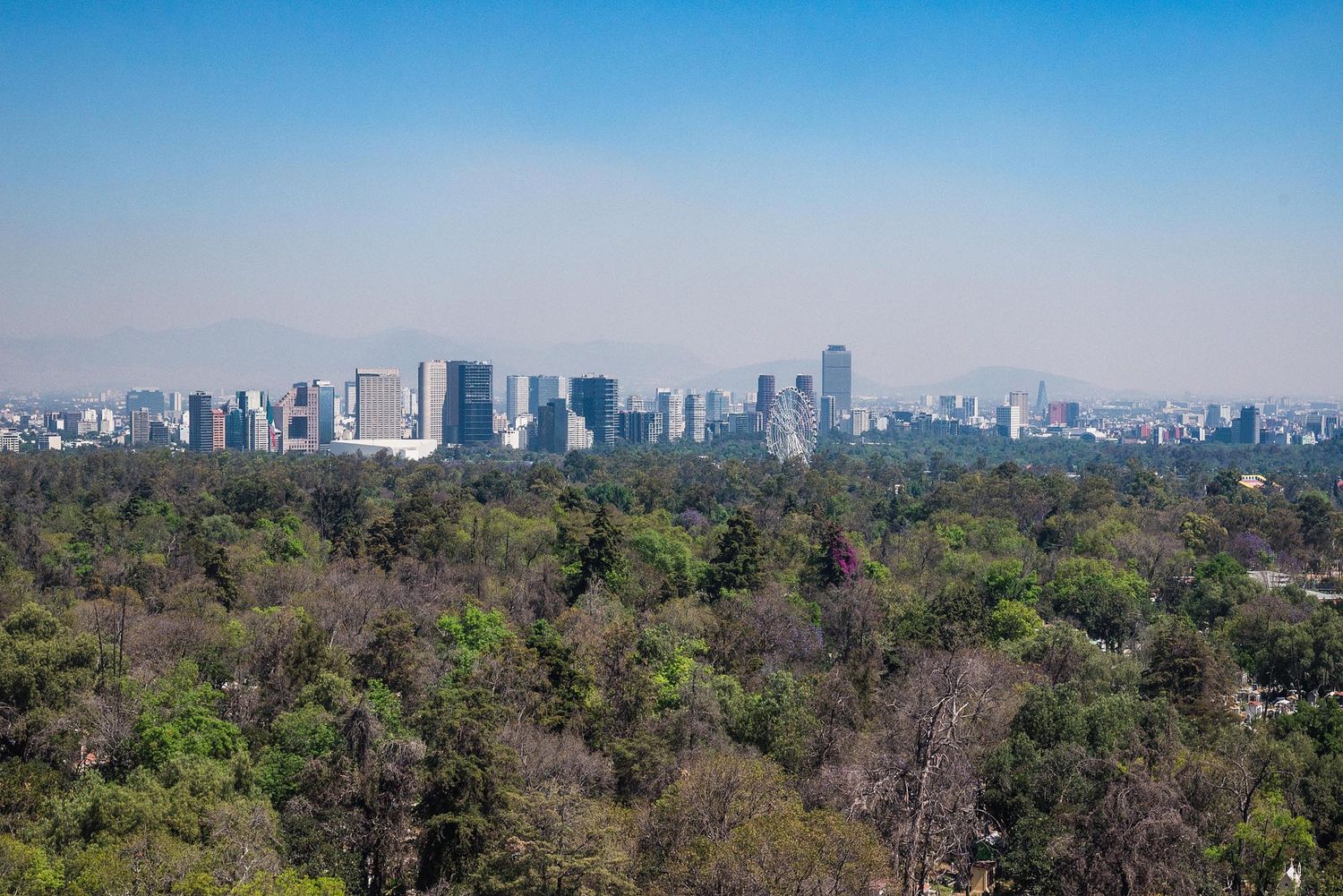
In tribute to one of the world’s largest city parks, I’ve tried to make the most comprehensive guide I could. Chapultepec Park is one of the most important green spaces in Mexico City, covering nearly 700 hectares In this guide, I’ll cover the best things to do in Chapultepec Park, where to eat, bike rentals, toilets, prices, and practical tips to help you plan your visit.
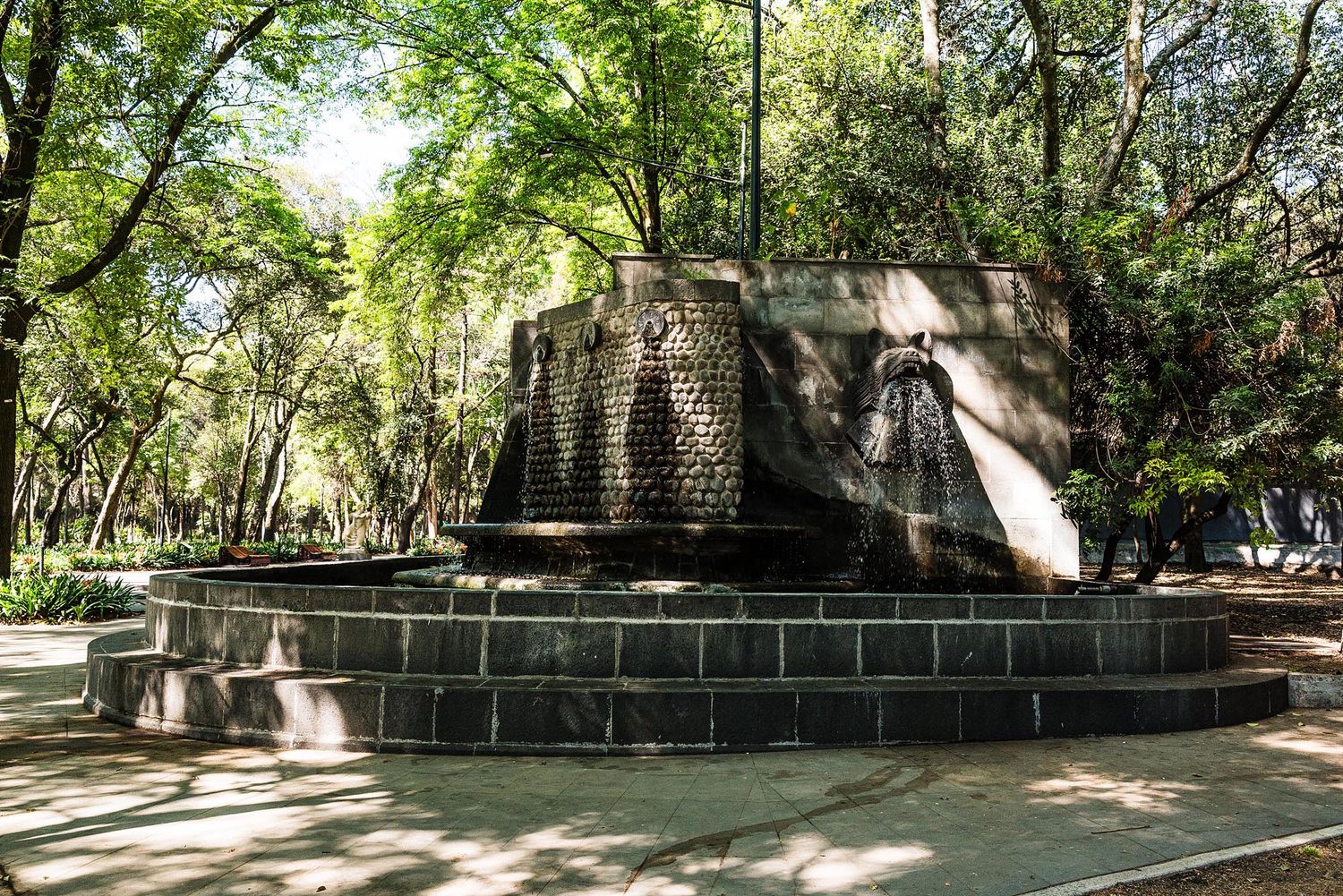
Things To Do
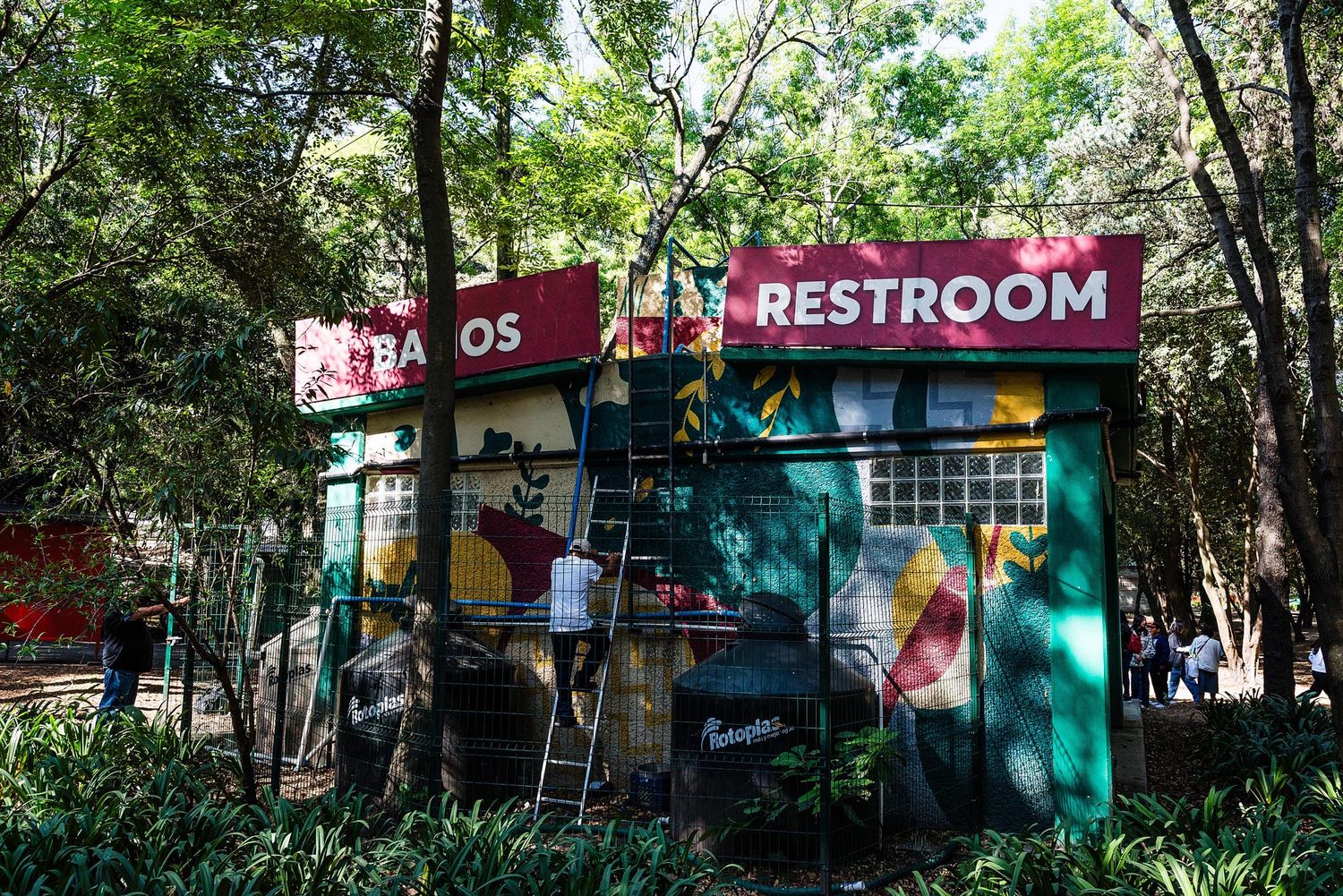
Restrooms
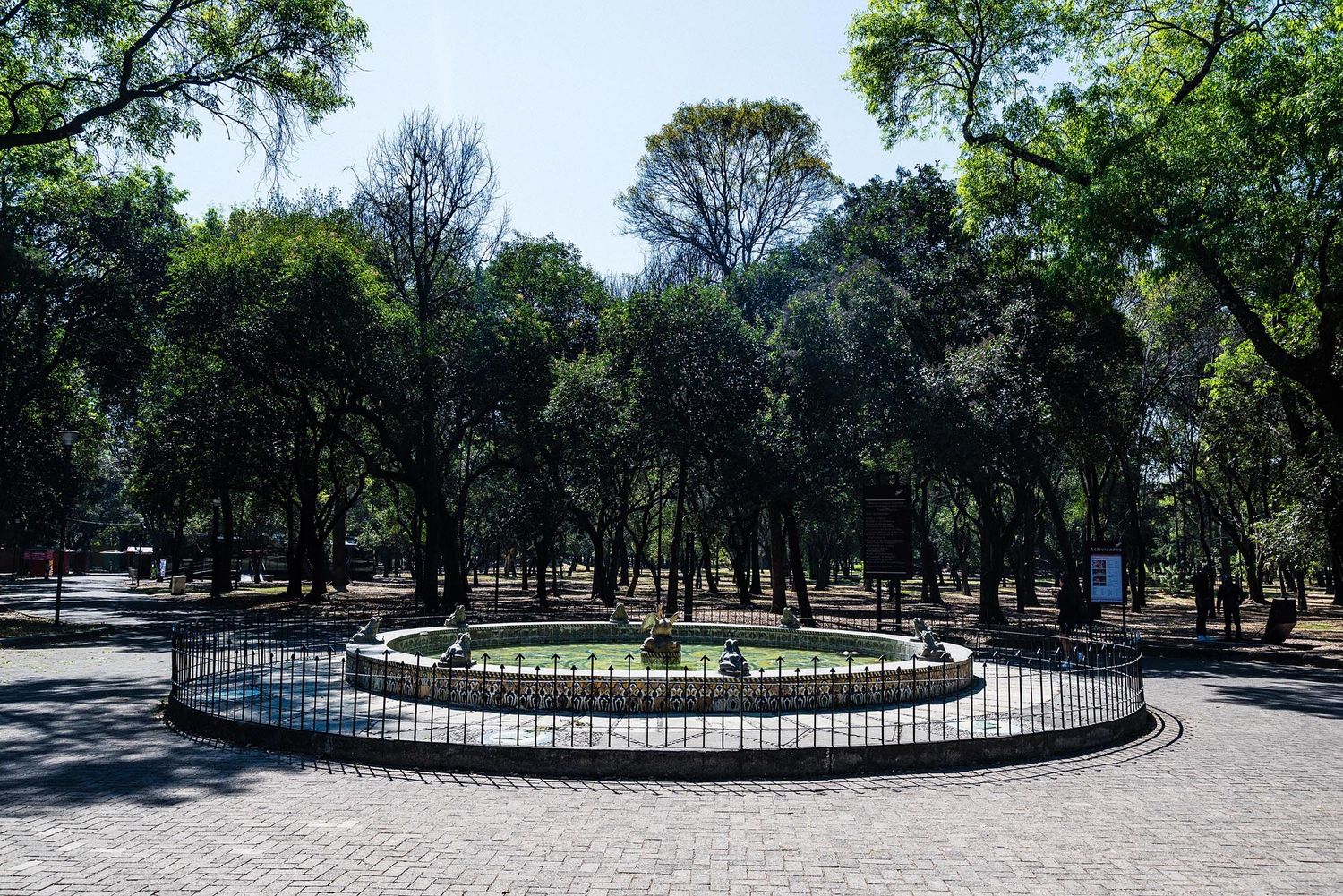
History
Table of Content
- The History of Chapultepec Park
- The Four Sections of Chapultepec Park
- Top Things to Do in Chapultepec Park
- Chapultepec Castle
- National Museum of Anthropology
- Renting a Boat
- Bike Rental in Chapultepec Park
- Explore the Botanical Garden
- Visiting Chapultepec Zoo
- Visit the Museum of Modern Art
- Take the Cable Car
- Discover the Park’s Monuments
- Where to Eat in Chapultepec Park
- Toilets in Chapultepec Park
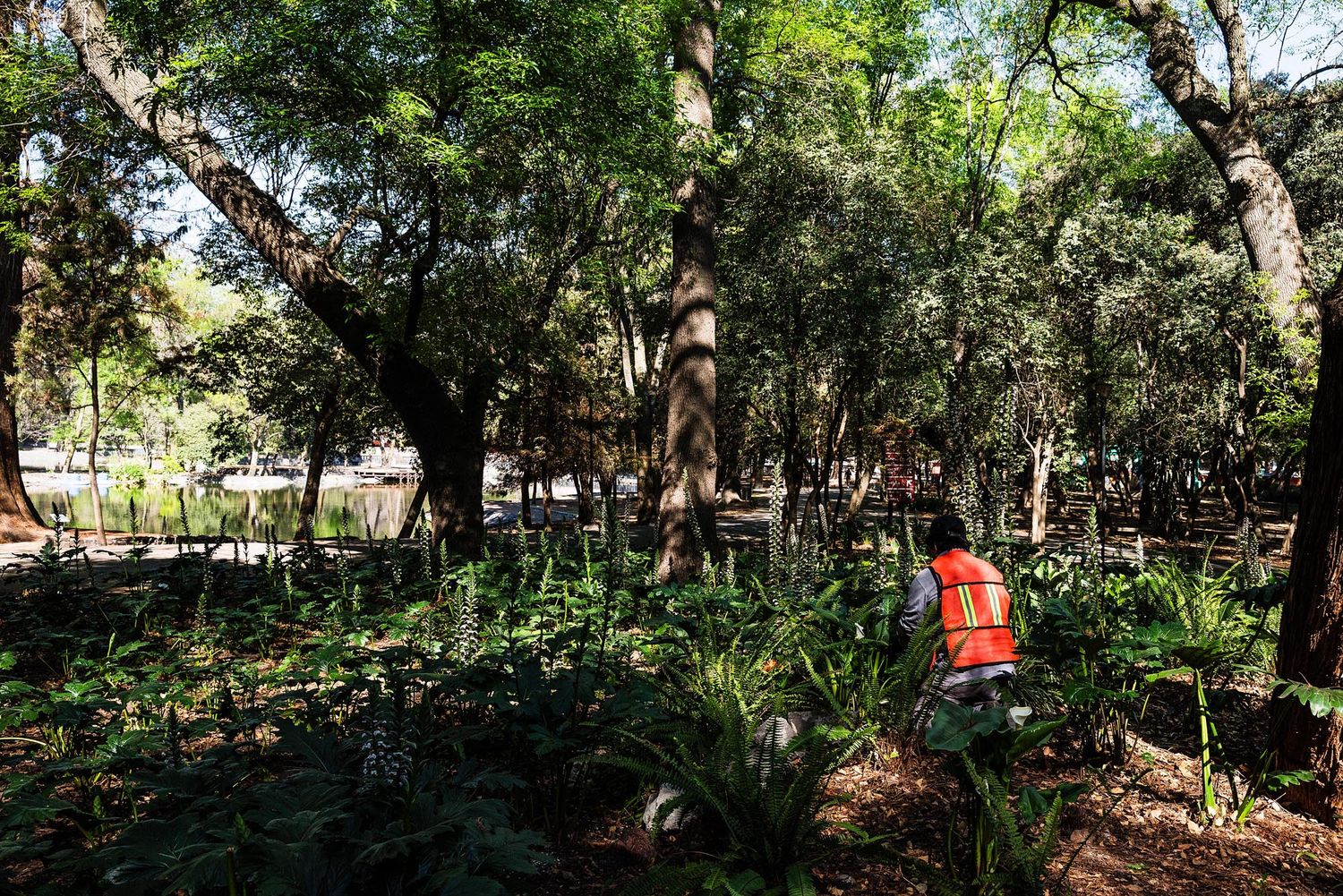
Toilets/Restrooms in Chapultepec Park
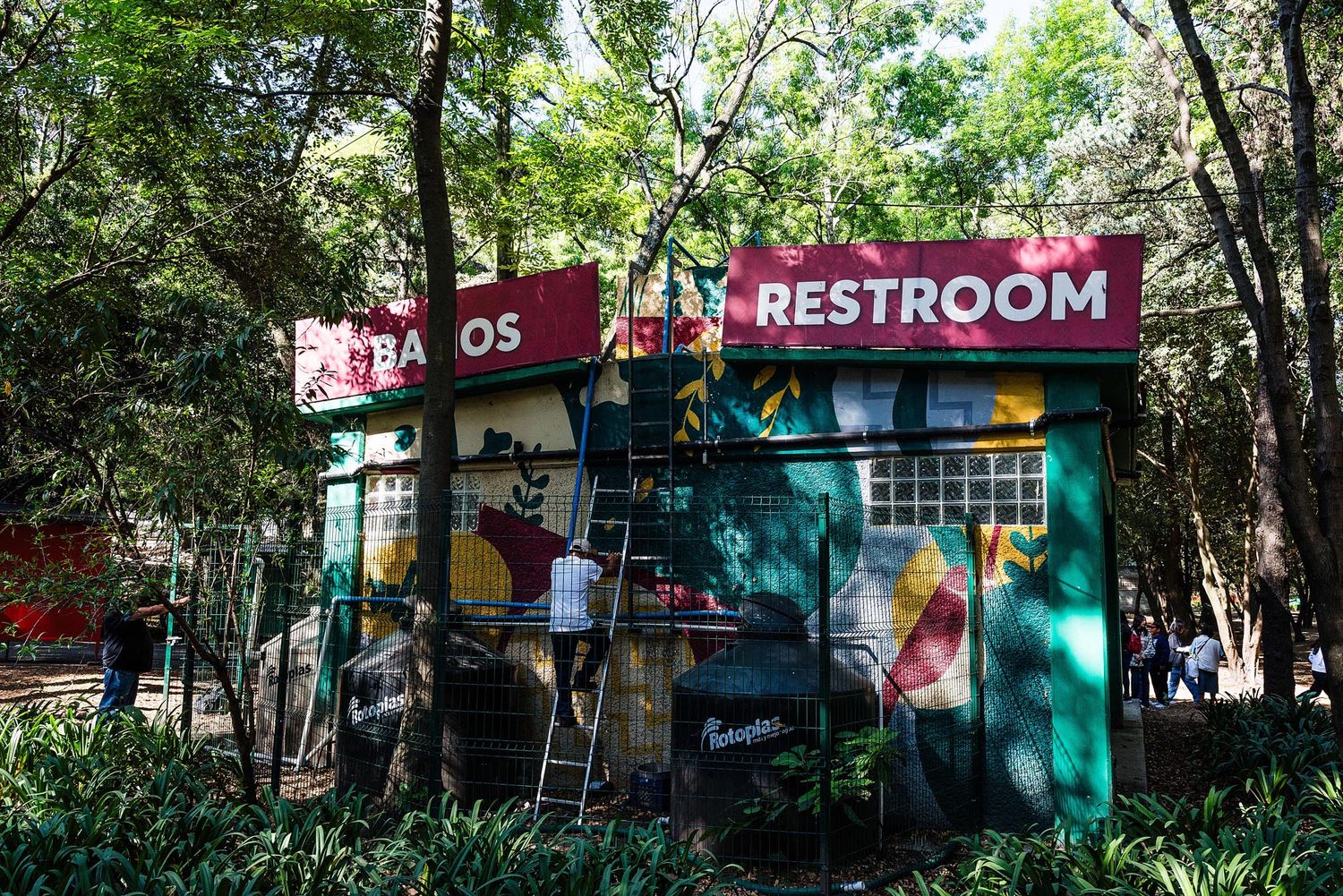
Public toilets are available throughout Chapultepec Park, but they’re not always obvious unless you know where to look. Most facilities are located near major attractions, museums, and busy visitor areas.
Unlike many parks around the world, most bathrooms in Chapultepec require a small fee. At the time of writing, the typical cost is 7 MXN (about $0.40 USD / £0.30 GBP). Because of this, it’s worth carrying a few coins when exploring the park.
Below are some of the main places where you can reliably find toilets inside Chapultepec Park, along with links to help you locate them on Google Maps.
Puerta de los Leones (Main Park Entrance)
This is the main entrance to Chapultepec from Paseo de la Reforma, and because it’s one of the busiest access points, there are public restrooms nearby.
Google Maps:
https://maps.google.com/?q=Puerta+de+los+Leones+Chapultepec
Monumento a los Niños Héroes (Altar a la Patria)
The large plaza around the Niños Héroes monument attracts a lot of visitors, and there are public restrooms nearby.
Google Maps:
https://maps.google.com/?q=Monumento+a+los+Niños+Héroes+Chapultepec
Chapultepec Castle Entrance Area
Near the ticket booth and base of the path leading up to the castle, you’ll find visitor facilities including bathrooms. Once inside the castle museum there are also restrooms available.
Google Maps:
https://maps.google.com/?q=Chapultepec+Castle
National Museum of Anthropology
This is one of the cleanest and most reliable places to use the bathroom in the park. The museum has multiple restrooms inside.
Google Maps:
https://maps.google.com/?q=National+Museum+of+Anthropology+Mexico+City
Museum of Modern Art
Visitors can use the restrooms inside the museum building when entering the museum.
Google Maps:
https://maps.google.com/?q=Museo+de+Arte+Moderno+Chapultepec
Chapultepec Zoo
The zoo has multiple restroom blocks throughout the grounds, which is helpful because the zoo itself is very large.
Google Maps:
https://maps.google.com/?q=Zoologico+de+Chapultepec
Lago Mayor (Main Lake Area)
Around the boat rental area and food stalls near the main lake, you’ll find several public bathrooms due to the large number of visitors.
Google Maps:
https://maps.google.com/?q=Lago+Mayor+Chapultepec
Los Pinos Cultural Complex
At the western end of Chapultepec Park, Los Pinos has modern visitor facilities including bathrooms.
Google Maps:
The History of Chapultepec Park
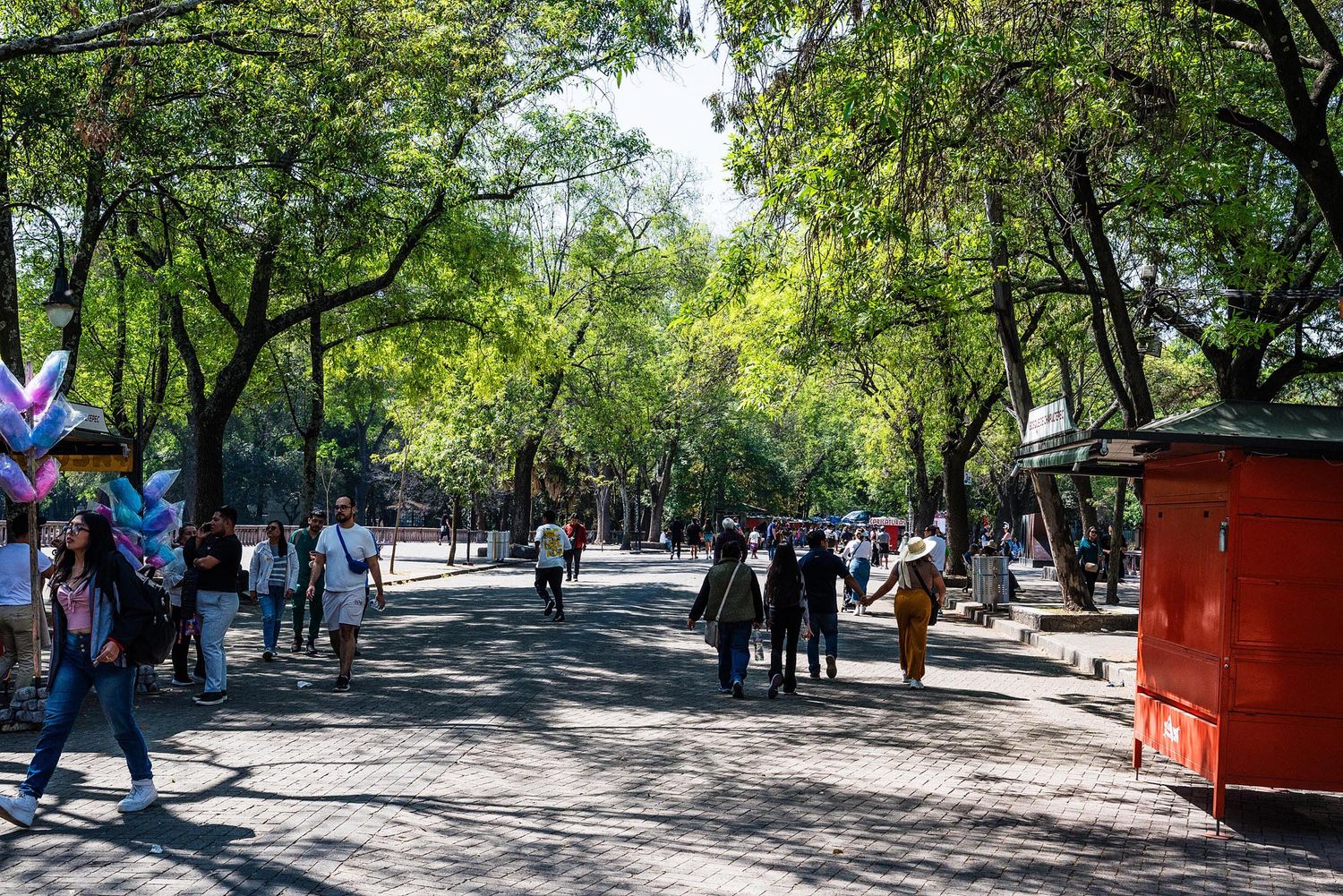
Chapultepec Park isn’t just a large green space in the middle of Mexico City — it’s a place that has played an important role in the city’s history for centuries. Long before the park became the recreational area we see today, this hill and surrounding forest were already significant to the civilizations that lived here. From Aztec rulers to Spanish viceroys and even European emperors, Chapultepec has been connected to many chapters of Mexico’s past.
Aztec Origins
The name Chapultepec comes from the Nahuatl language spoken by the Aztecs and means “Hill of the Grasshopper.” For the Mexica people, this hill was considered both a strategic and sacred place.
Chapultepec was important because of its natural springs, which provided a reliable source of fresh water for the growing city of Tenochtitlán, the Aztec capital that once stood where Mexico City is today. The Aztecs built a system of aqueducts that carried water from Chapultepec across the lake to the island city, an impressive engineering achievement for the time.
Because of its elevation and water supply, the hill was also used by Aztec rulers as a royal retreat and ceremonial site, surrounded by forests and gardens.
The Spanish Colonial Era
After the Spanish conquest of the Aztec Empire in 1521, the importance of Chapultepec didn’t disappear. Instead, the area became a retreat for Spanish colonial leaders, particularly the viceroys who governed New Spain on behalf of the Spanish crown.
The wooded hill and fresh air made Chapultepec a pleasant escape from the busy colonial city below. Over time, the area was developed with paths, gardens, and leisure spaces, gradually evolving into a place associated with relaxation and prestige.
Chapultepec Castle One of the most recognisable landmarks in the park today is Chapultepec Castle, which sits at the top of the hill. Construction of the castle began in 1785, originally intended to be a residence for the Spanish viceroy.
However, the castle became most famous during the Second Mexican Empire, when it was transformed into the residence of Emperor Maximilian I of Mexico and his wife, Empress Carlota in the 1860s. Their time in the castle was short-lived, but it left a lasting mark on the building’s history.
In later years, the castle also served as the official residence for several Mexican presidents before eventually becoming the National Museum of History, which it remains today.
From Royal Grounds to Public Park
Chapultepec gradually transformed into the public park we know today during the late 19th century. As Mexico City expanded, the government began developing the area into a recreational space for residents.
Paths, monuments, lakes, and cultural institutions were added over time, turning Chapultepec into a place where nature, history, and culture all come together. Today, the park is home to museums, a zoo, historic monuments, lakes, and kilometres of walking trails.
While millions of visitors now come here each year to relax, exercise, or explore the museums, the deep history of Chapultepec — from Aztec engineering to imperial residences — still gives the park a unique sense of place within Mexico City.
Is Chapultepec Park Safe?
In general, Chapultepec Park is considered one of the safest large public parks in Mexico City, especially in the main areas most visitors explore. The park is heavily visited by locals and tourists alike, and places like Chapultepec Castle, the National Museum of Anthropology, the lake area, and the zoo are usually busy throughout the day.
During my time visiting the park, I personally felt very safe walking around. Families, joggers, cyclists, and tourists are constantly moving through the main paths, which helps create a lively and secure atmosphere. There are also police patrols and park staff present in many of the busier sections.
Public Bins, Signs, and Other Useful Information
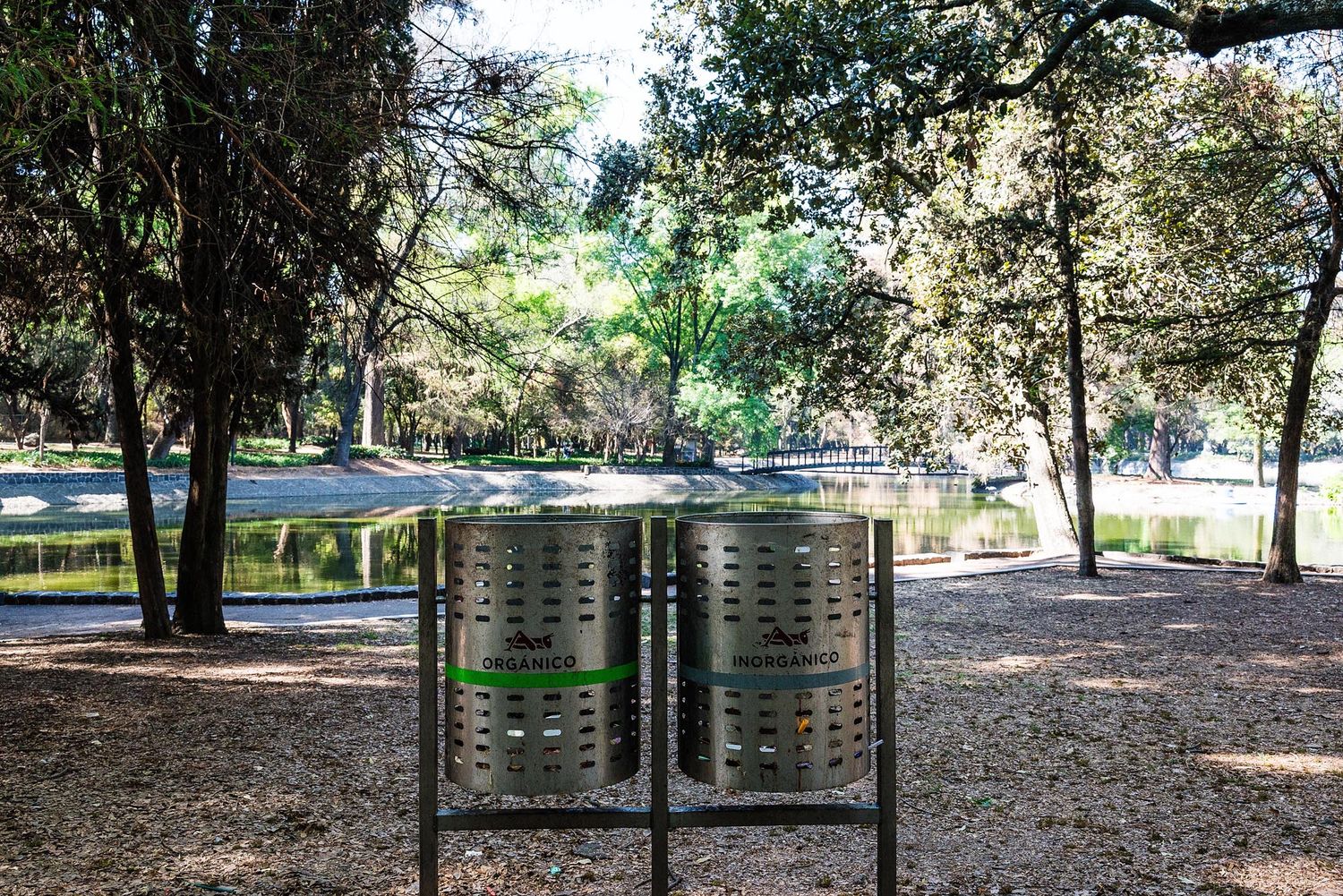
Considering how large Chapultepec Park is and the number of visitors it receives each day, the park is surprisingly well organised and easy to navigate. There are several useful facilities scattered throughout the park that help make exploring it a little easier, especially if you plan to spend a few hours walking between attractions.
Public bins can be found throughout the park, particularly in the busier areas such as around the lakes, near food stalls, outside museums, and close to the zoo. Because street food is very popular in Chapultepec, bins are often placed near vendors and picnic spots. Overall, the park is kept fairly clean, and staff regularly maintain the main areas. However, during busy weekends and public holidays, some sections can get a little messy simply due to the large number of people visiting.
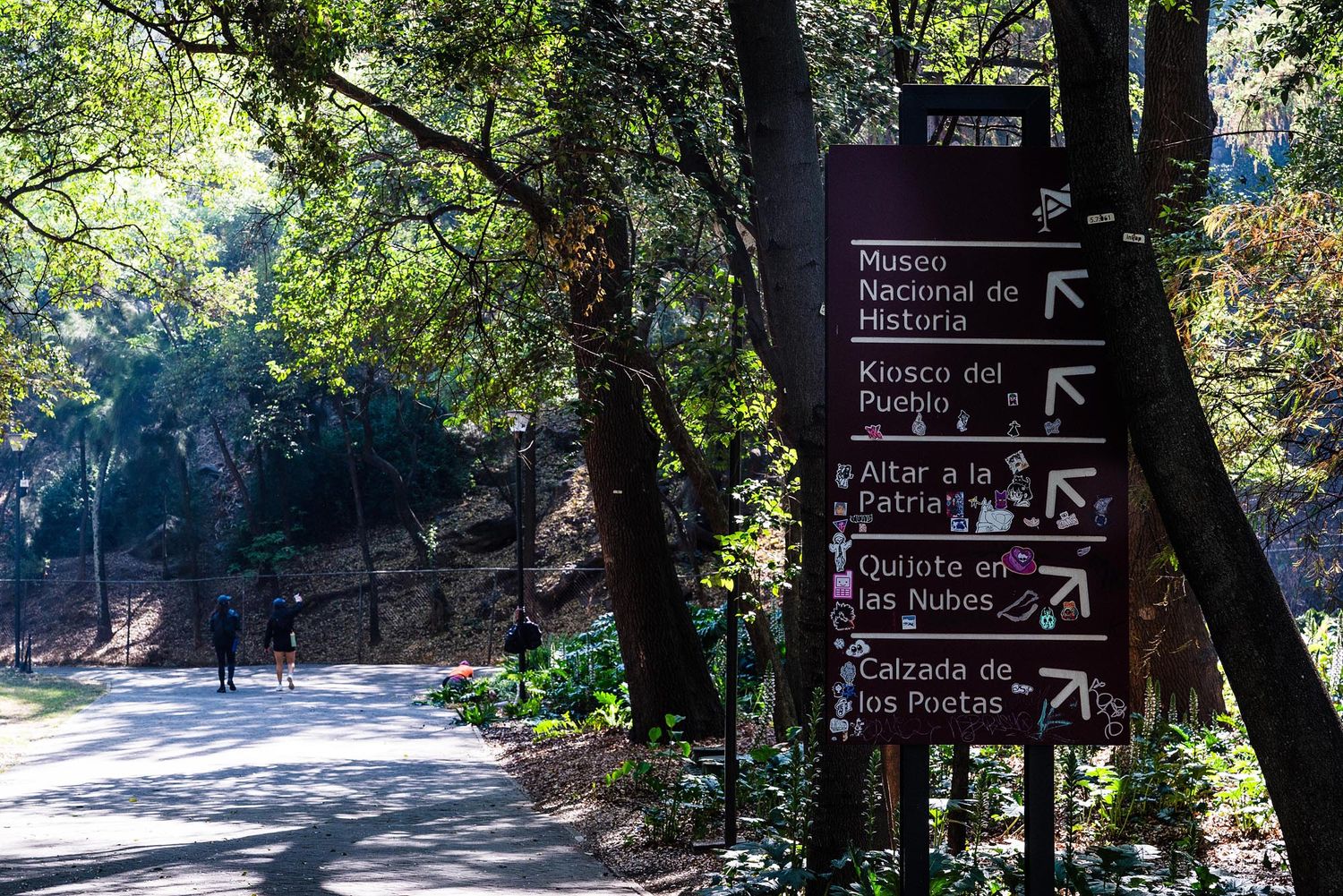
Despite its size, Chapultepec is also well signposted, which makes navigating the park much easier than you might expect. At many entrances and intersections you’ll find large map boards showing the layout of the park and the locations of major attractions such as Chapultepec Castle, the National Museum of Anthropology, the lakes, and Chapultepec Zoo.
Directional signs along the main pathways also help guide visitors between different parts of the park without needing to constantly check Google Maps.
If you want something more detailed, you can usually buy a printed map at the entrance to Chapultepec Zoo for around 10 MXN (about $0.60 USD / £0.45 GBP), which can be useful if you plan to explore the zoo or a larger part of the park.
Unlike some parks in other cities, public drinking fountains are quite rare in Chapultepec, so it’s a good idea to bring water with you. Fortunately, there are plenty of small vendors selling bottled water, drinks, fruit, snacks, and ice cream throughout the park, especially around the lakes and main walking routes.
You’ll also find a few additional facilities in certain areas of the park. For example, Chapultepec Zoo has lockers available if you’re carrying food or bags that aren’t allowed inside certain exhibits. Many of the museums and larger attractions also have restrooms and seating areas.
Most of the main paths through the park are wide and paved, making them accessible for cyclists, strollers, and wheelchairs. The terrain is mostly flat, although the walk up to Chapultepec Castle involves a gradual uphill path.
Because Chapultepec Park is so large, distances between attractions can sometimes be longer than they appear on the map. Planning a rough route before you start exploring can make it much easier to see several of the park’s highlights without spending the entire day walking from one end to the other.

The Four Sections of Chapultepec Park
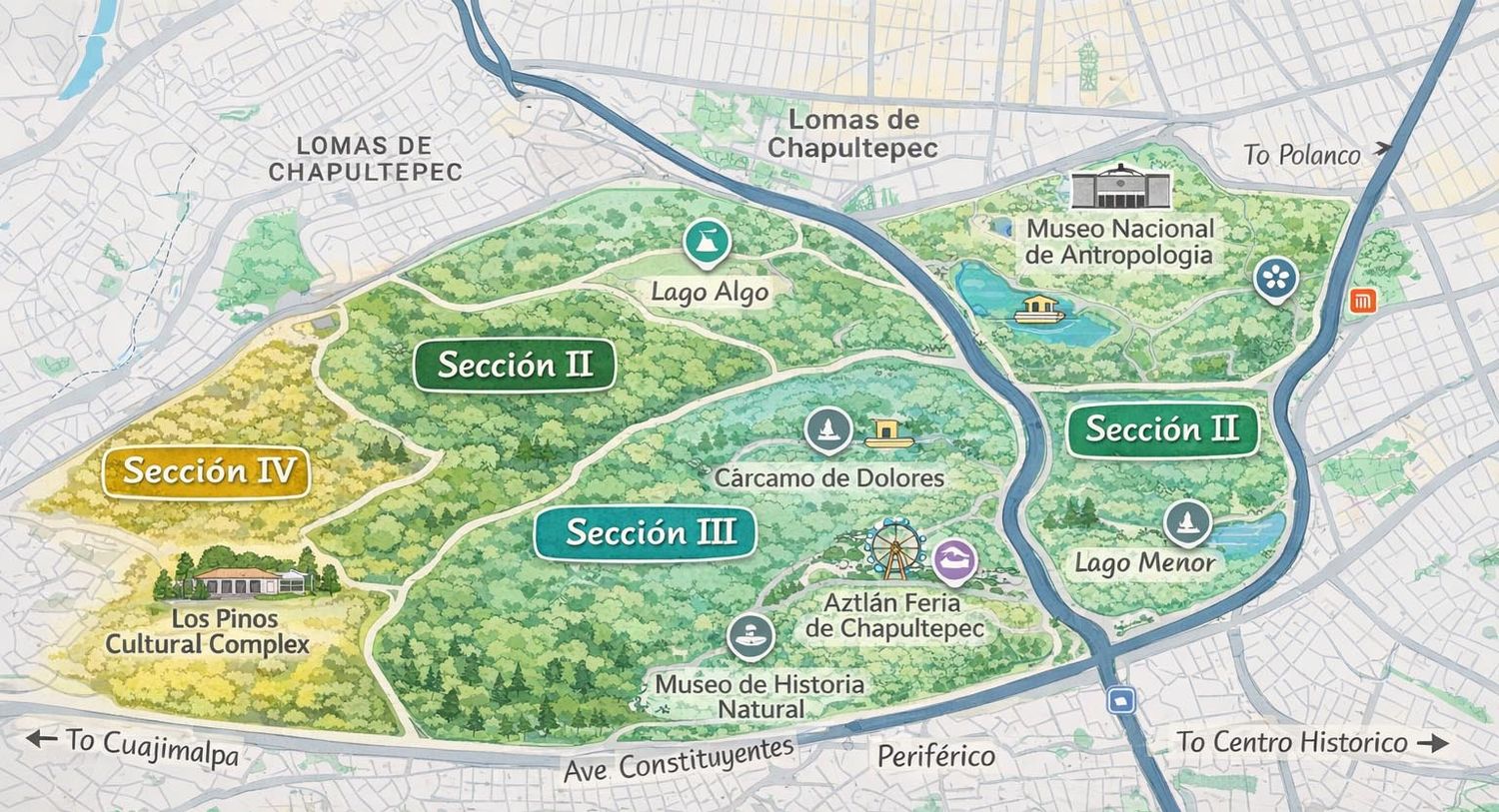
Chapultepec Park is huge, covering nearly 700 hectares (around 1,695 acres), so it’s divided into four sections. Each area has a slightly different atmosphere, although most visitors spend their time in the first section.
The First Section (Sección Primera) is the most famous and busiest part of the park. This is where you’ll find many of the main attractions including Chapultepec Castle, the National Museum of Anthropology, the Museum of Modern Art, Chapultepec Zoo, and the main lakes. If it’s your first visit to the park, this is where you’ll likely spend most of your time.
The Second Section (Sección Segunda) is a little quieter but still has lakes, restaurants, and recreational areas. It’s popular with locals who come here to walk, cycle, or relax away from the busiest parts of the park.
The Third Section (Sección Tercera) is much more natural and less developed, with large forested areas and fewer attractions. It’s mainly used for walking and enjoying nature.
The Fourth Section (Sección Cuarta) is the newest part of the park and includes the Los Pinos Cultural Complex, the former residence of Mexican presidents, which is now open to the public and hosts cultural events and exhibitions.
Where to Eat in Chapultepec Park
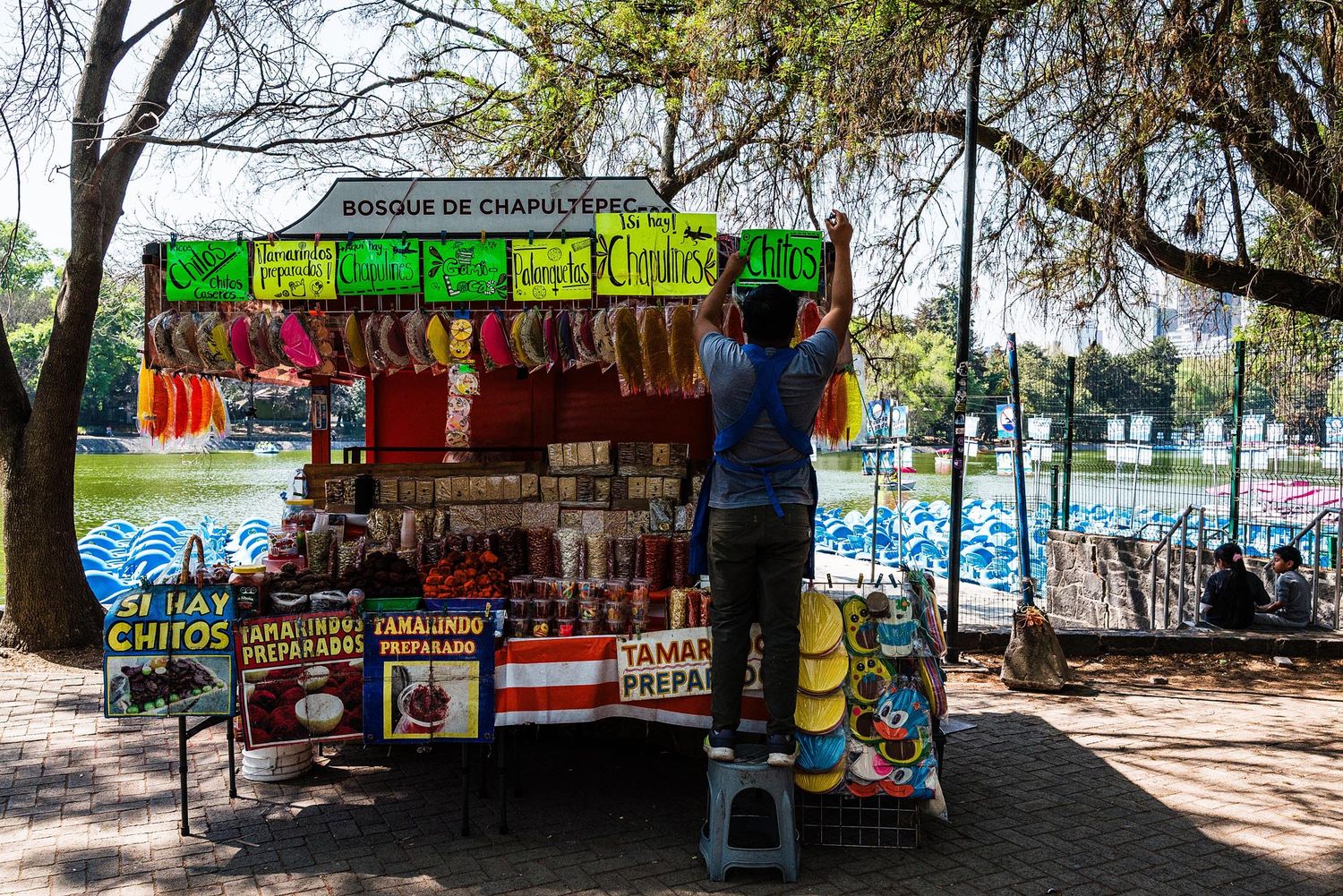
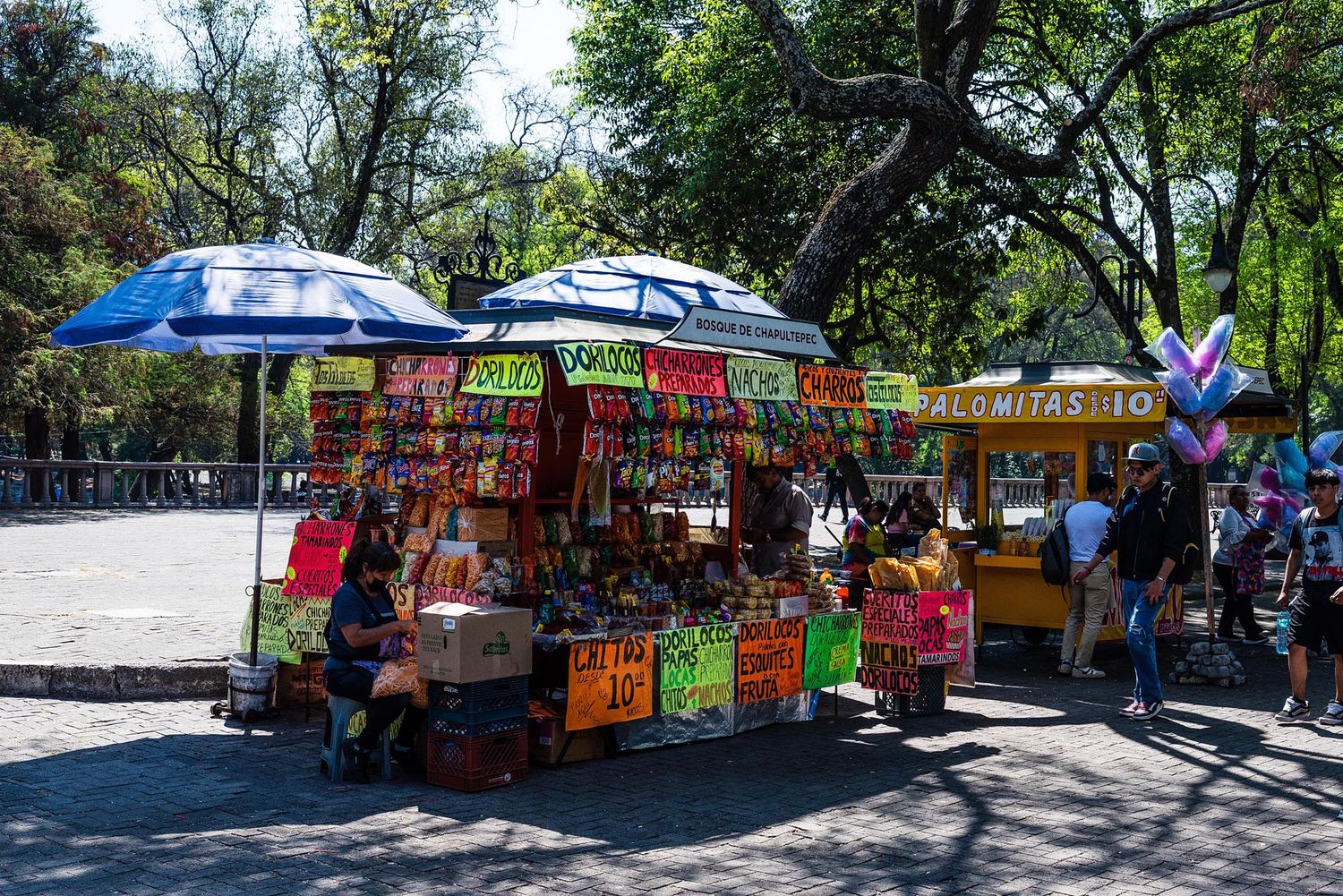
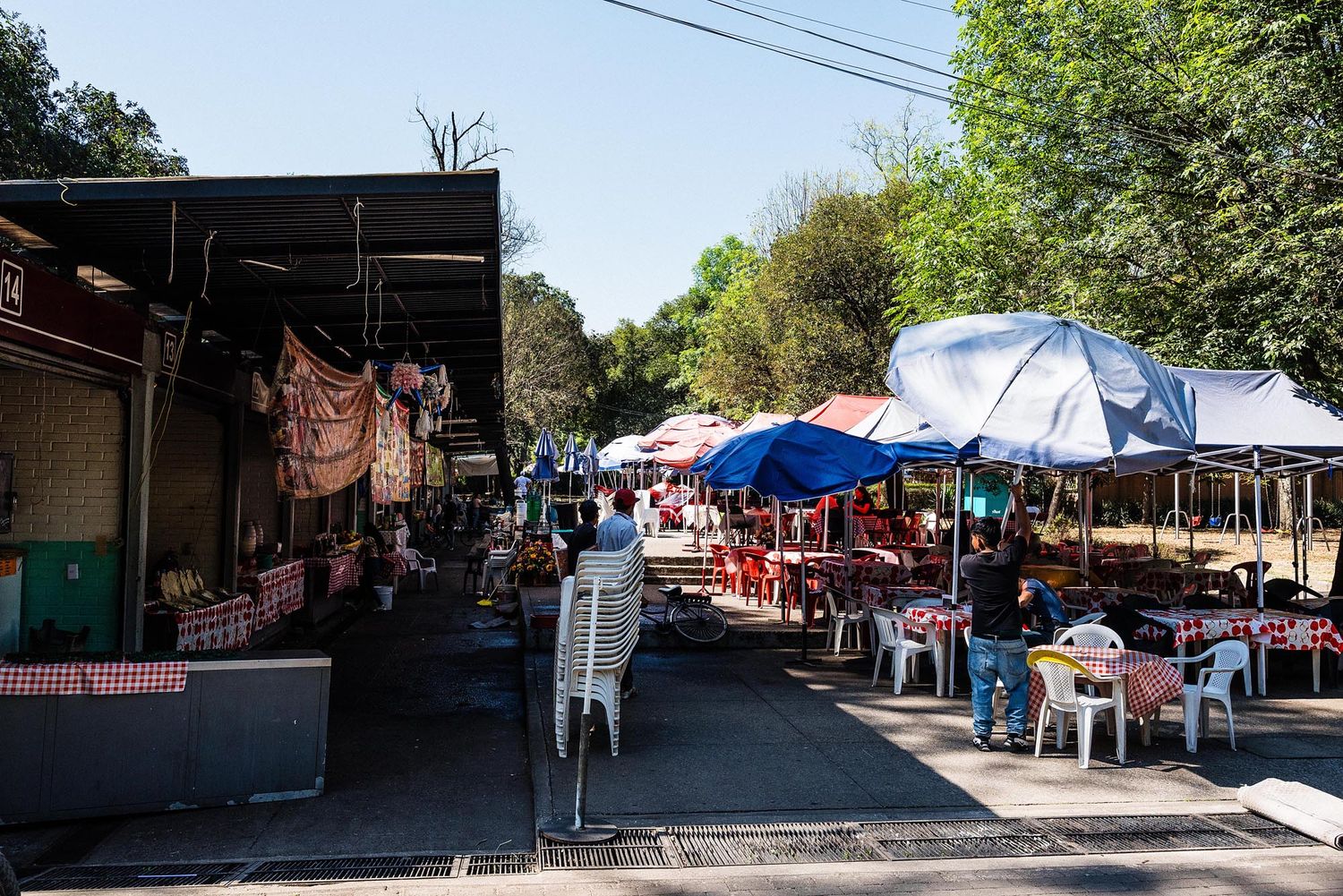
There are plenty of places to grab something to eat while exploring Chapultepec Park, ranging from simple street food stalls to a few sit-down restaurants. The most common option you’ll see throughout the park is street food vendors
Many stalls sell classic Mexican snacks such as tacos, quesadillas, churros, elotes (corn on the cob), fresh fruit, and aguas frescas. Prices are generally affordable, with most snacks costing between 30 and 80 MXN (around $1.75–$4.70 USD / £1.40–£3.70 GBP).
If you’re looking for a proper sit-down meal, there are also a few restaurants and cafés inside the park. One of the most well-known is Lago Algo, located beside the lake in the park’s second section, offering a more modern dining experience with views over the water. In addition, many of the museums in Chapultepec, including the National Museum of Anthropology, have cafés where you can grab coffee, snacks, or light meals.
One of my favourite places to eat in Chapultepec Park is Antojitos Mexicanos GABY, located at Kiosko 2 – Local 77 in the first section of the park. It’s a little tucked away from the main food areas, which means many visitors walk straight past it, but it’s definitely worth seeking out.
The food here is excellent and feels very local compared to some of the busier stalls around the lake. When I visited, they were also playing some great modern Mexican music, the kind you hear in places locals actually hang out, although frustratingly I’ve never been able to find the songs again since.
It’s also just a really nice spot to stop for a break. There are shaded seating areas nearby, toilets close by, and the whole place has a relaxed local feel that gives it plenty of character. If you’re exploring the park and want somewhere slightly quieter to grab some good Mexican food, Antojitos Mexicanos GABY is well worth checking out.
Top Things to Do in Chapultepec Park
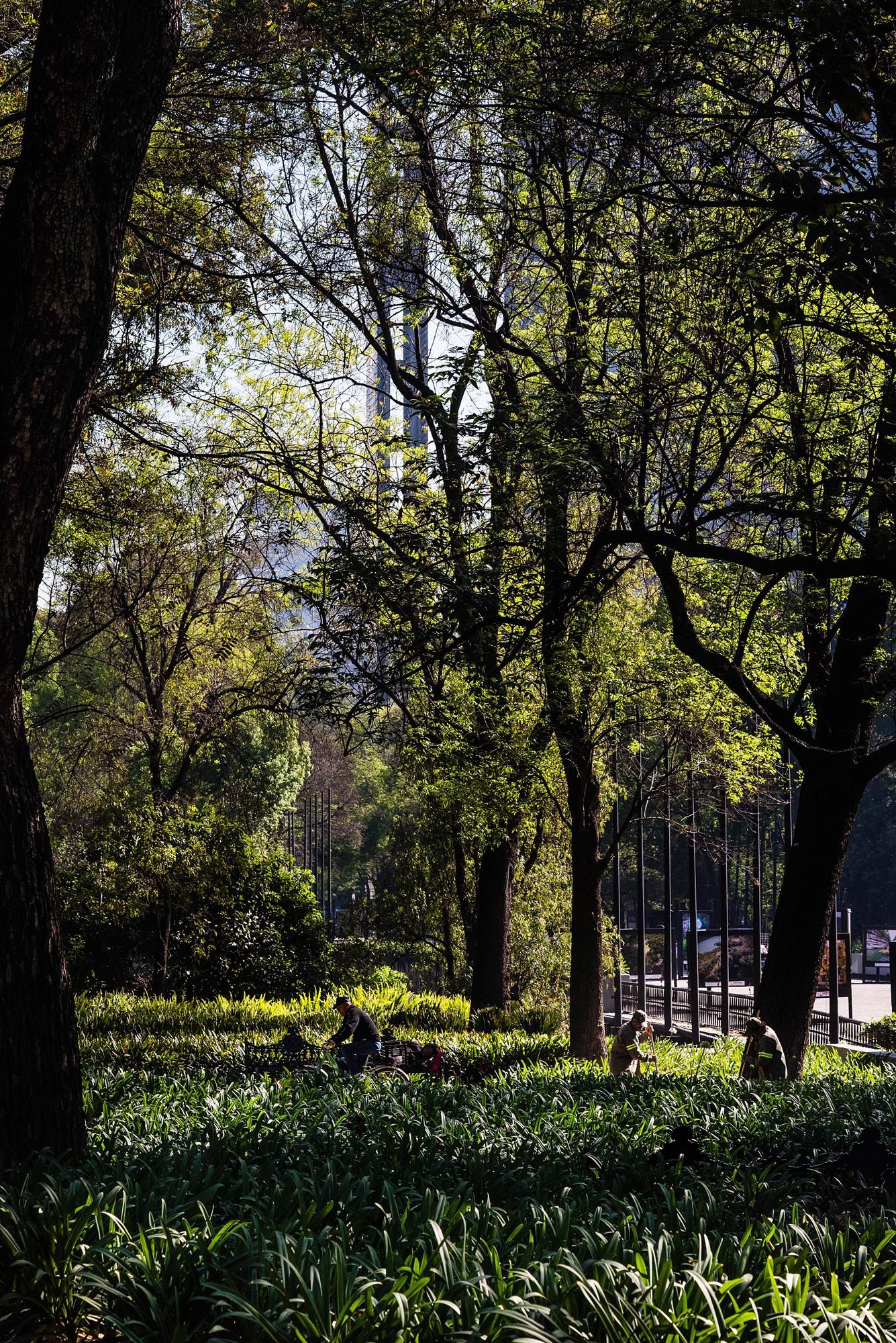
Because the park is so large, most visitors focus on the First Section (Sección Primera), where many of the most famous attractions are located. But even if you only spend a few hours here, you’ll quickly realise why Chapultepec is considered one of the best places to visit in Mexico City.
Visit Chapultepec Castle
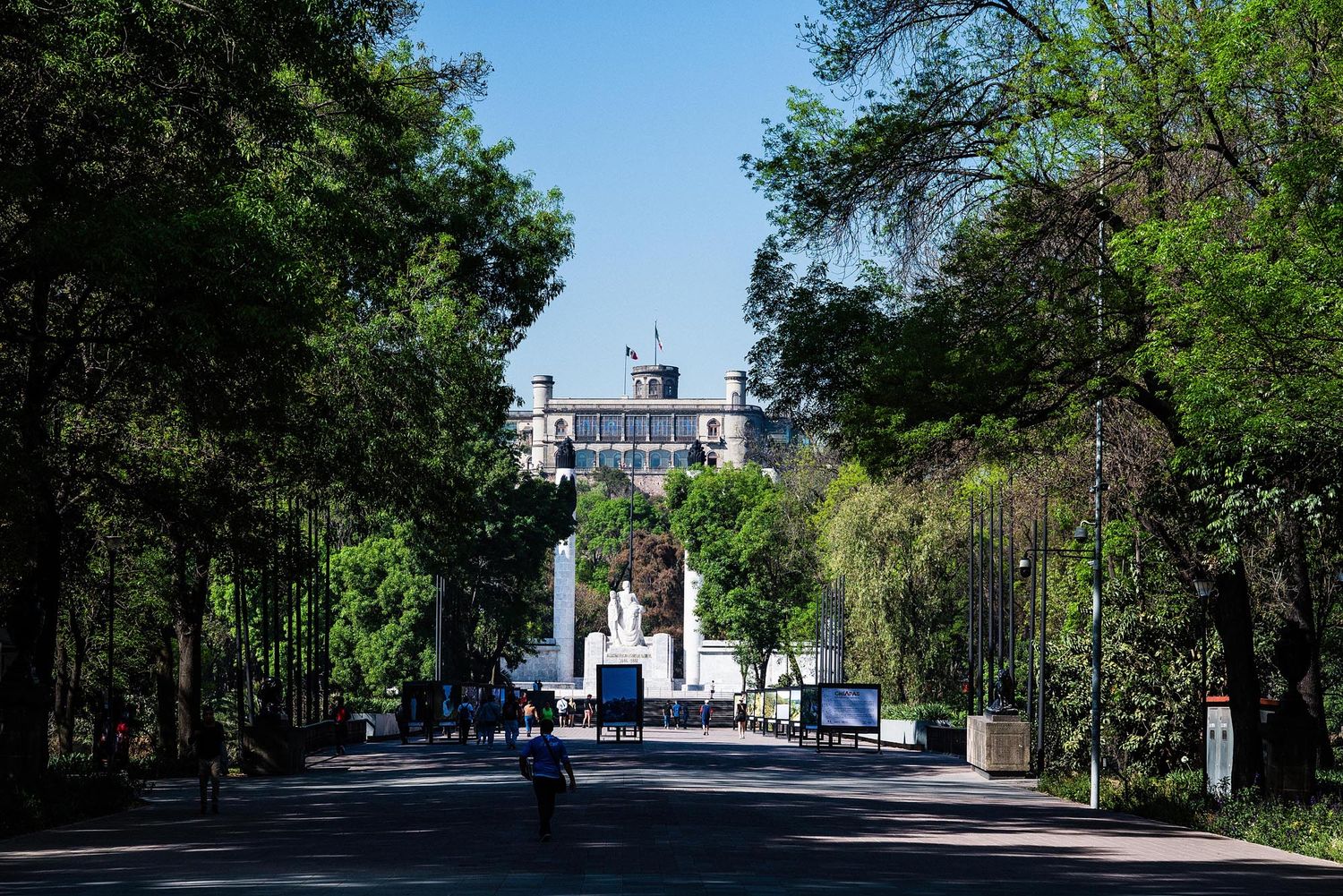
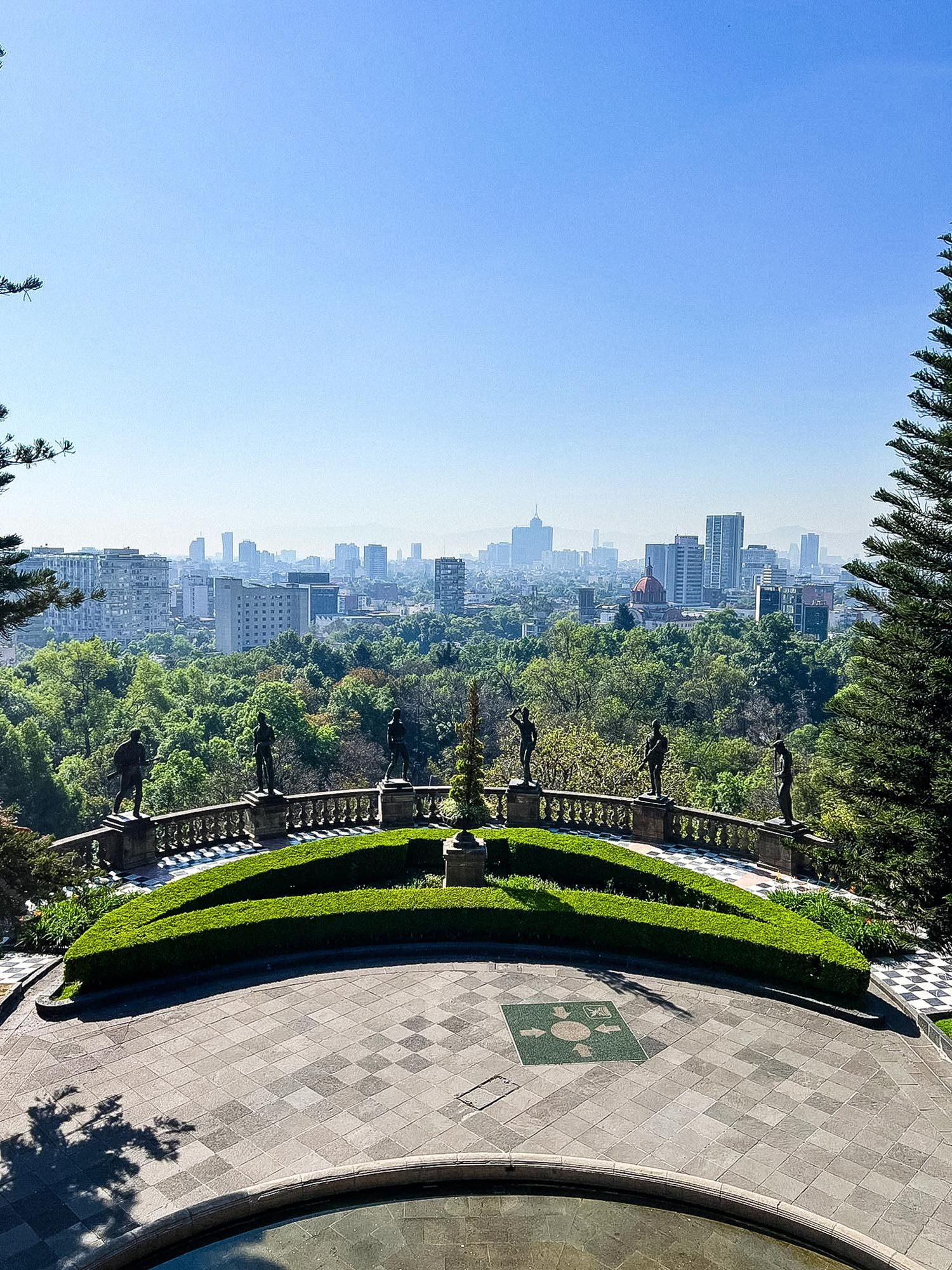
One of the most iconic landmarks in Mexico City, Chapultepec Castle sits on top of Chapultepec Hill, offering impressive views over the park and down the long boulevard of Paseo de la Reforma.
The castle was originally built in 1785 as a summer residence for Spanish viceroys. In the 1860s it became the home of Emperor Maximilian I, making it one of the only royal castles in North America. Later, several Mexican presidents also lived here before it was converted into the National Museum of History in 1939.
Inside the castle, visitors can explore beautifully preserved imperial rooms, historic murals, and exhibits covering major moments in Mexican history. Even if you’re not particularly interested in museums, the views from the castle terraces are worth the walk up the hill alone.
Entry to Chapultepec Castle costs 95 MXN, which is roughly £4.30 GBP or $5.50 USD. The castle is typically open Tuesday to Sunday from 9:00 AM to 5:00 PM, with the last entry usually around 4:30 PM, and it is closed on Mondays like many museums in Mexico City.
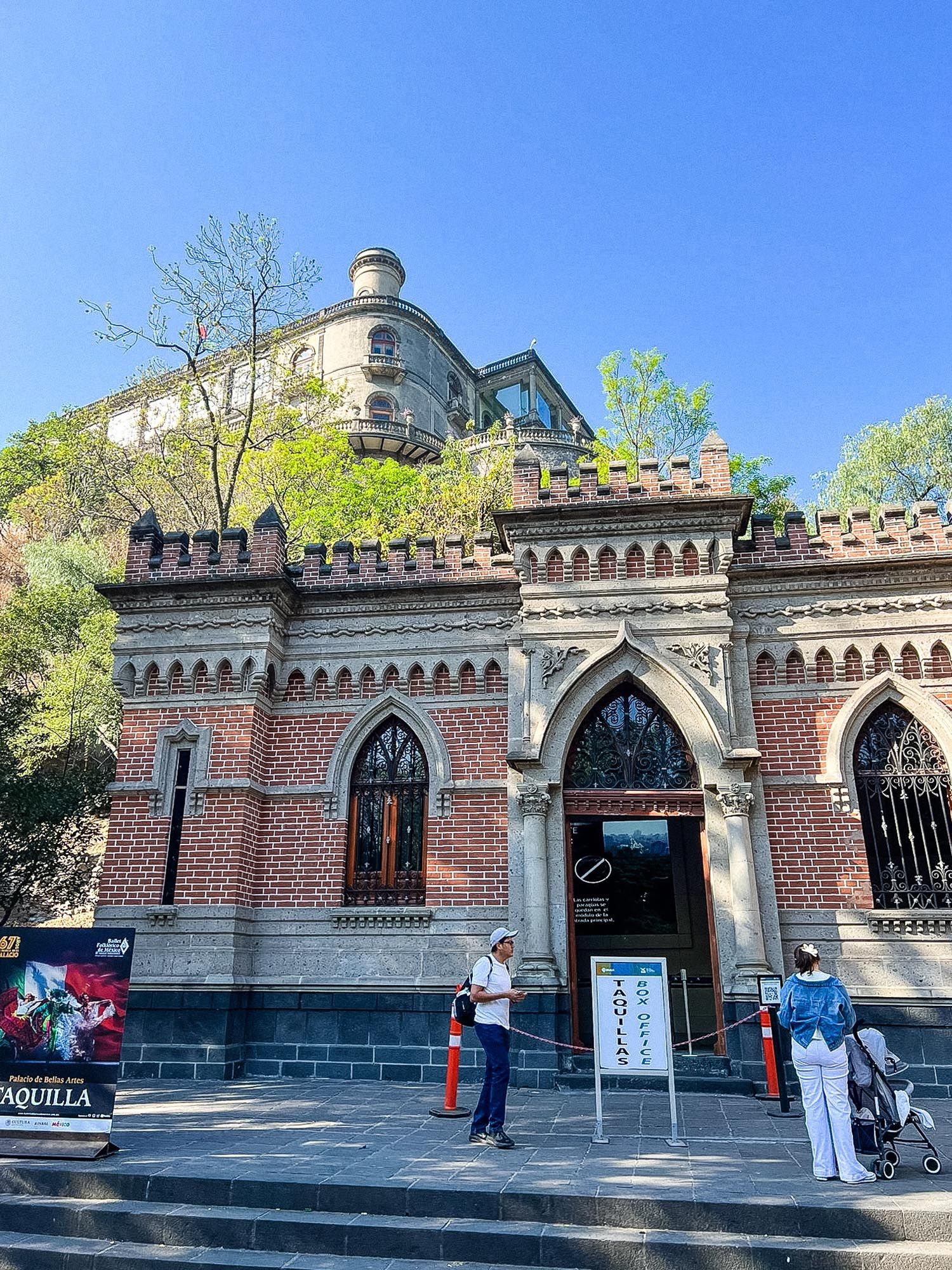
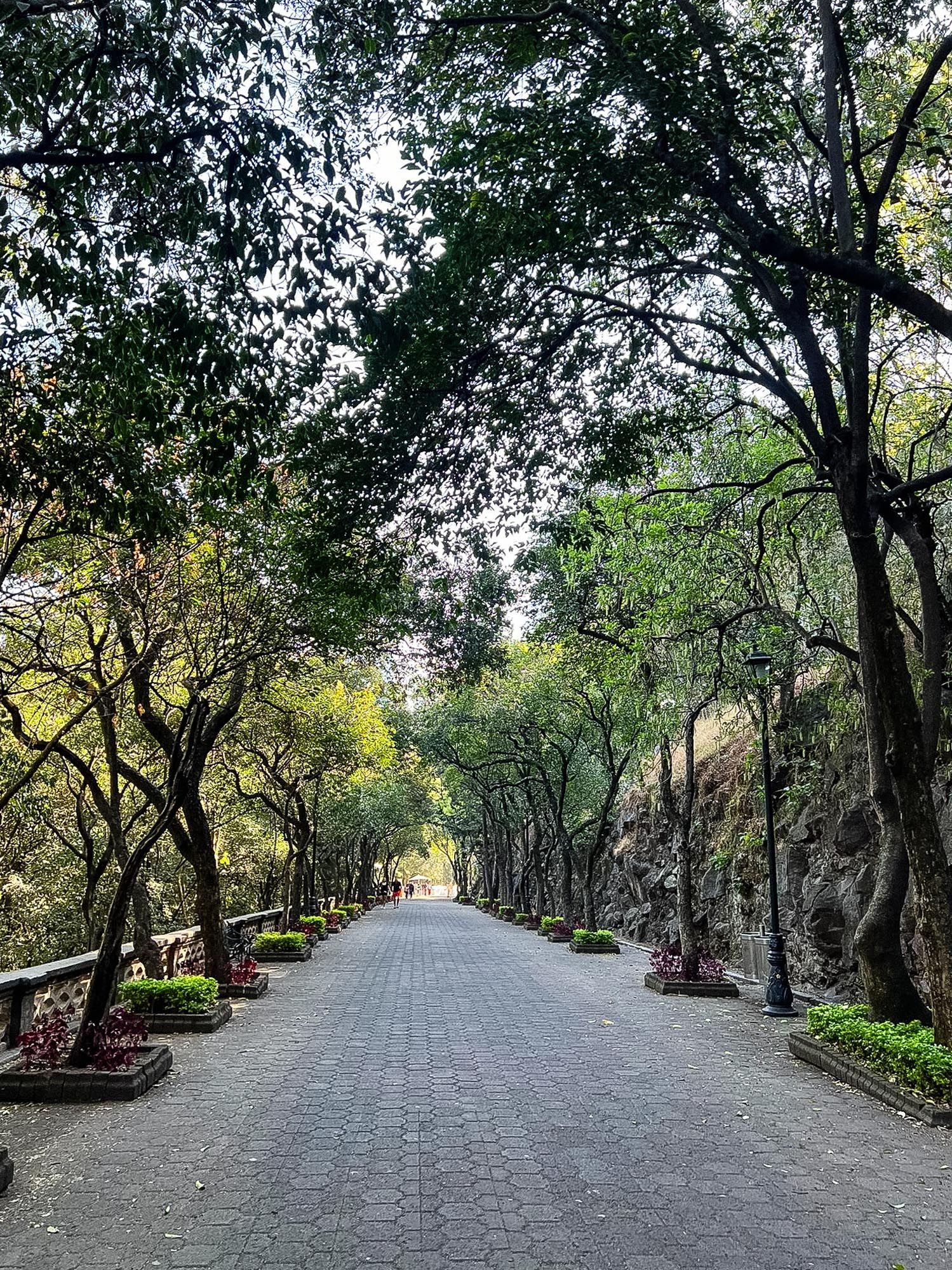
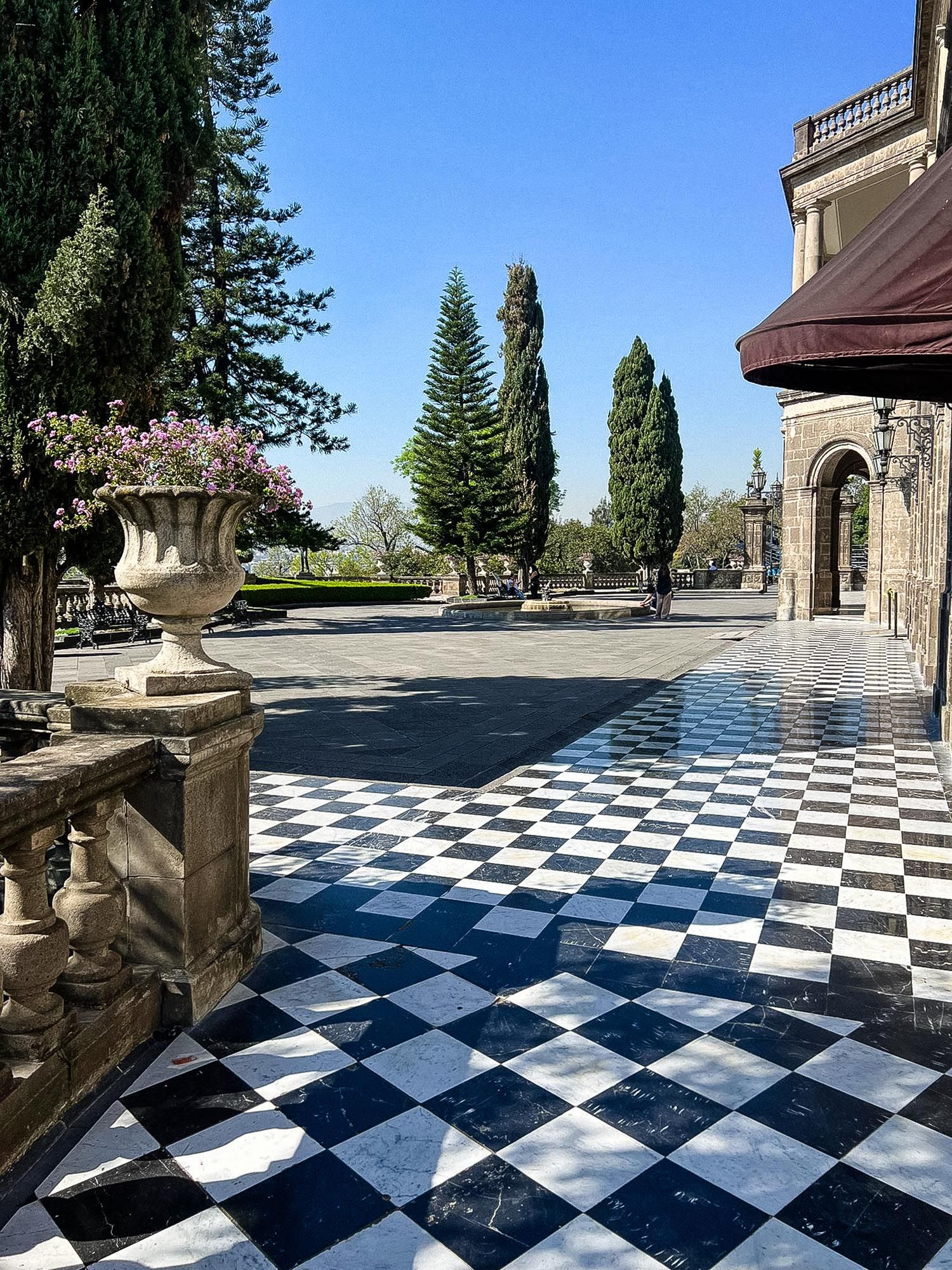
If you want to visit for free, entry is free on Sundays for Mexican citizens and residents, although this also means it tends to be much busier. For most visitors, the best time to go is early in the morning right after opening on a weekday, when crowds are smaller and temperatures are cooler for the walk up Chapultepec Hill.
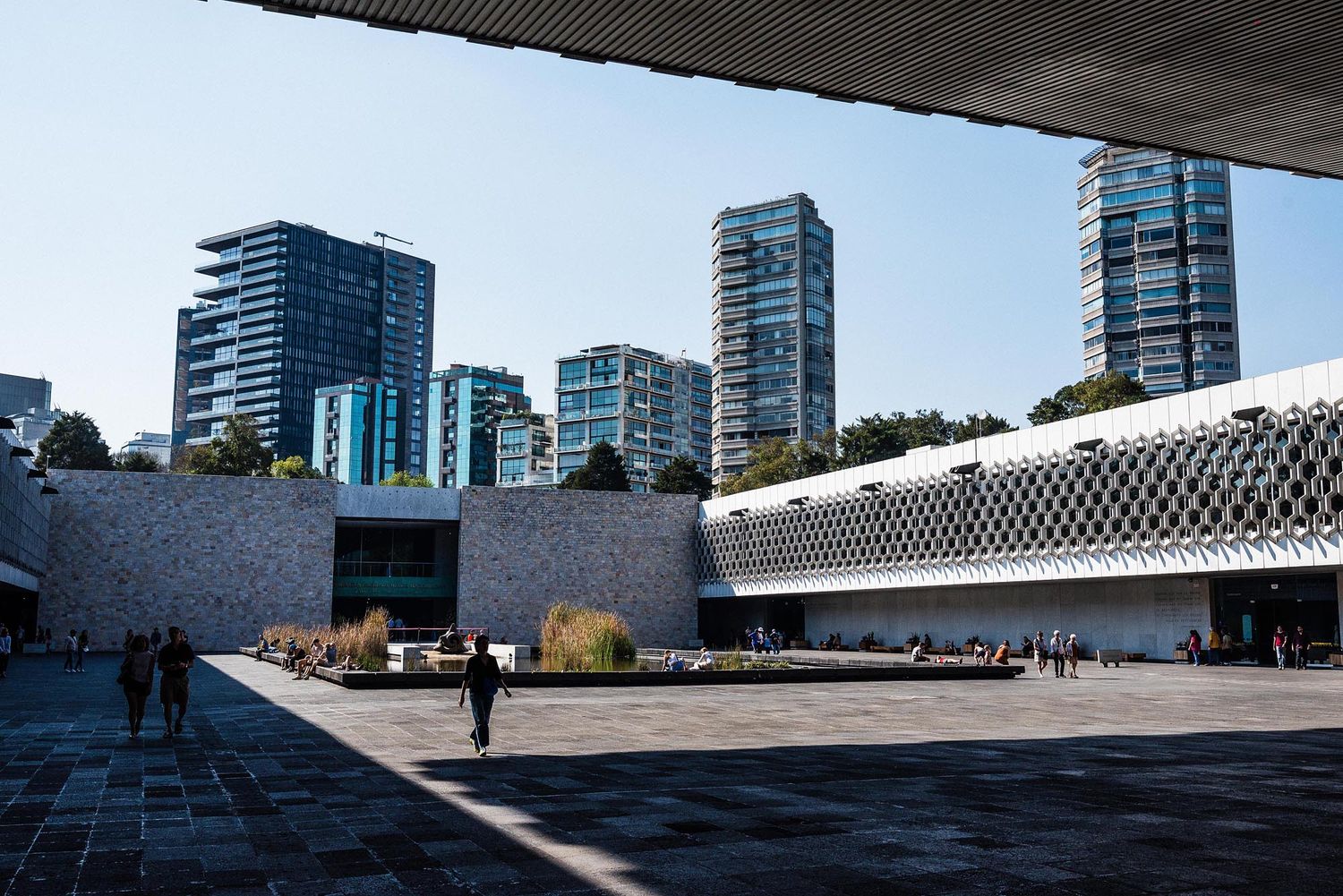
The museum is enormous, and even a quick visit can easily take two to three hours. Entrance is around 95 MXN, making it one of the best-value museums in the city.
Explore the National Museum of Anthropology
If there’s one museum you shouldn’t miss in Mexico City, it’s the National Museum of Anthropology. Located just next to the park along Paseo de la Reforma, it’s widely considered one of the best anthropology museums in the world.
The museum focuses on Mexico’s pre-Hispanic civilizations and contains an extraordinary collection of artefacts from the Aztec, Maya, Olmec, and many other cultures. One of the most famous exhibits is the Aztec Sun Stone, often mistakenly called the Aztec Calendar.
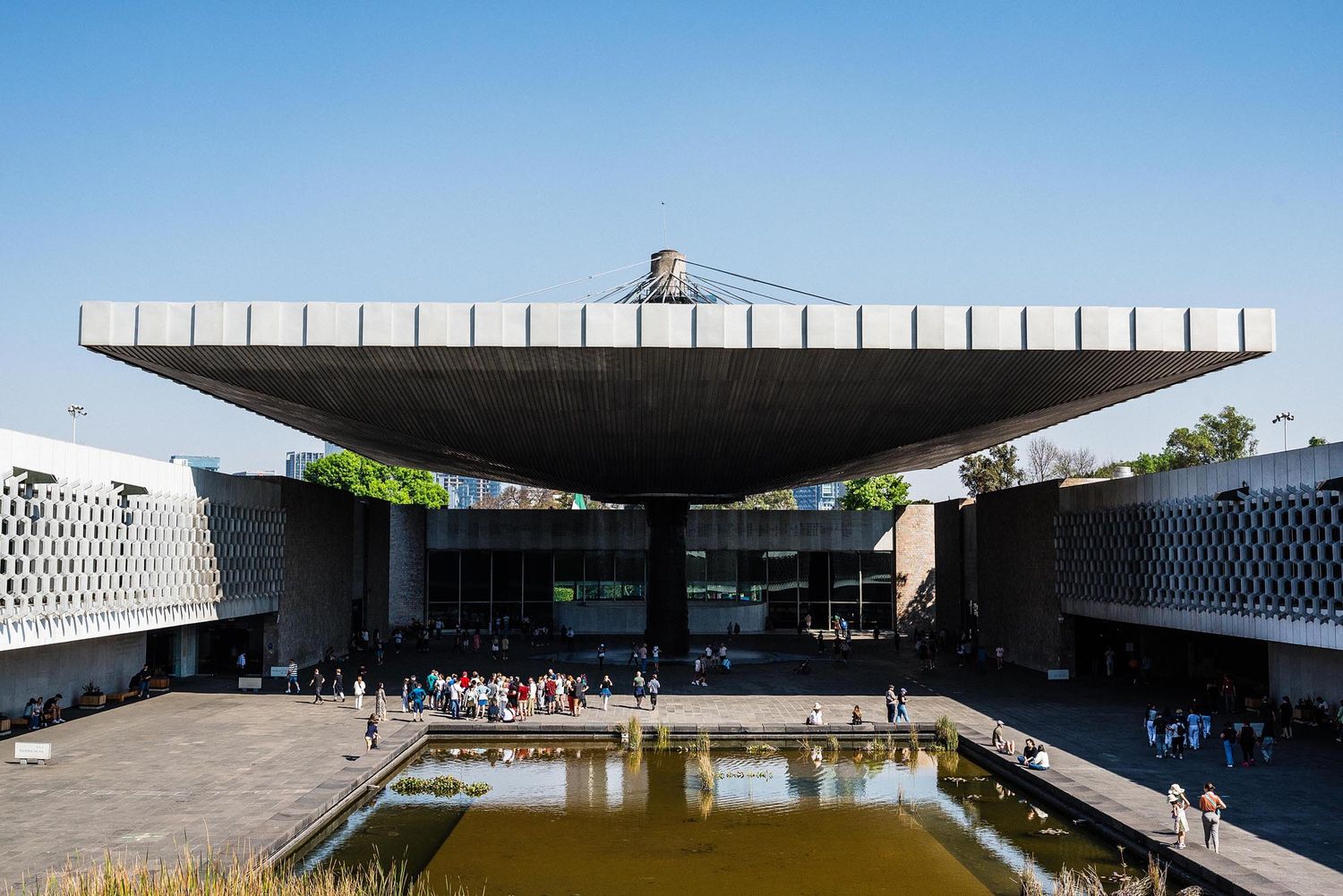
The building itself is also impressive. The museum is arranged around a large central courtyard with the famous giant concrete “umbrella” fountain supported by a single sculpted column.
Renting a Boat on the Chapultepec Lake
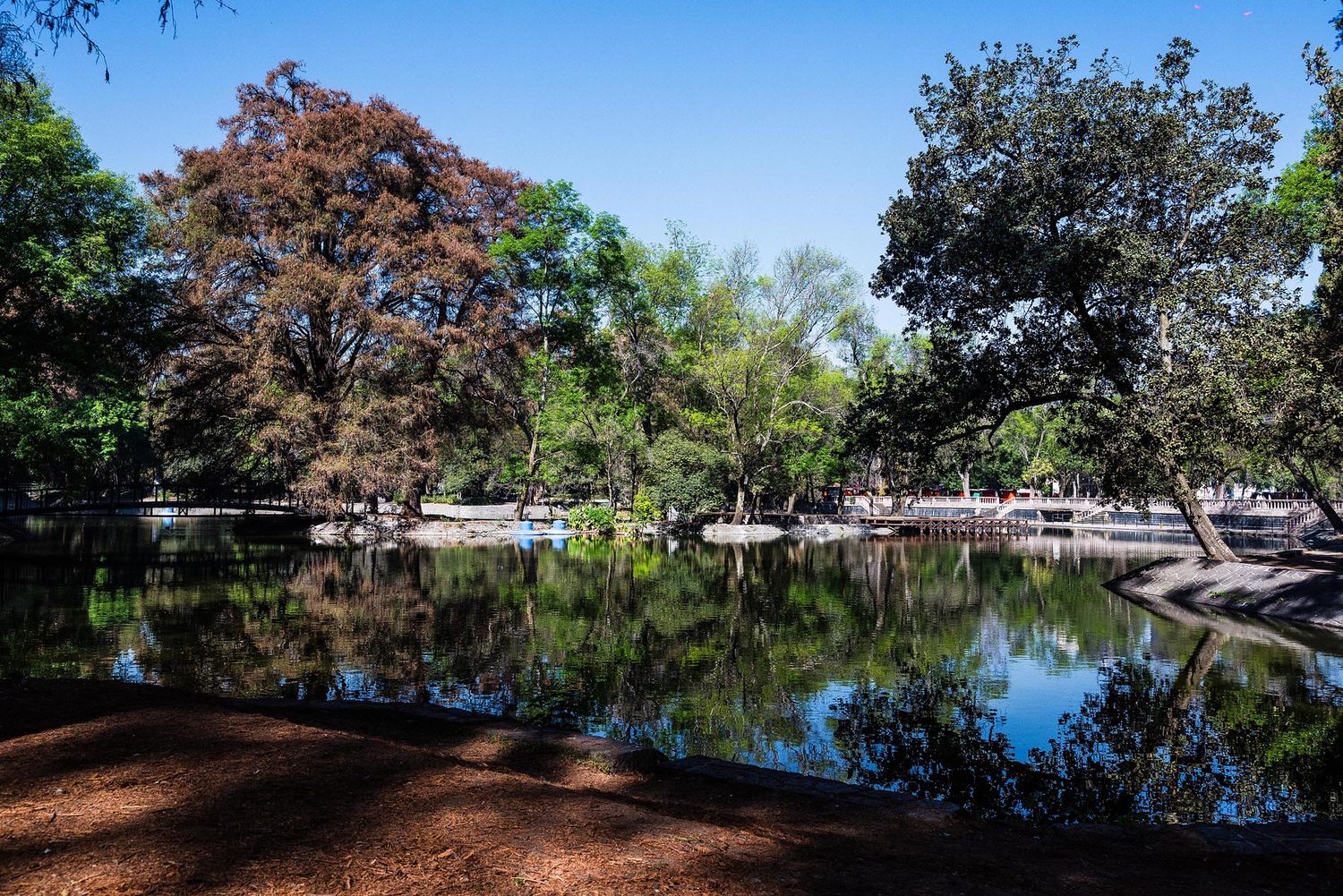
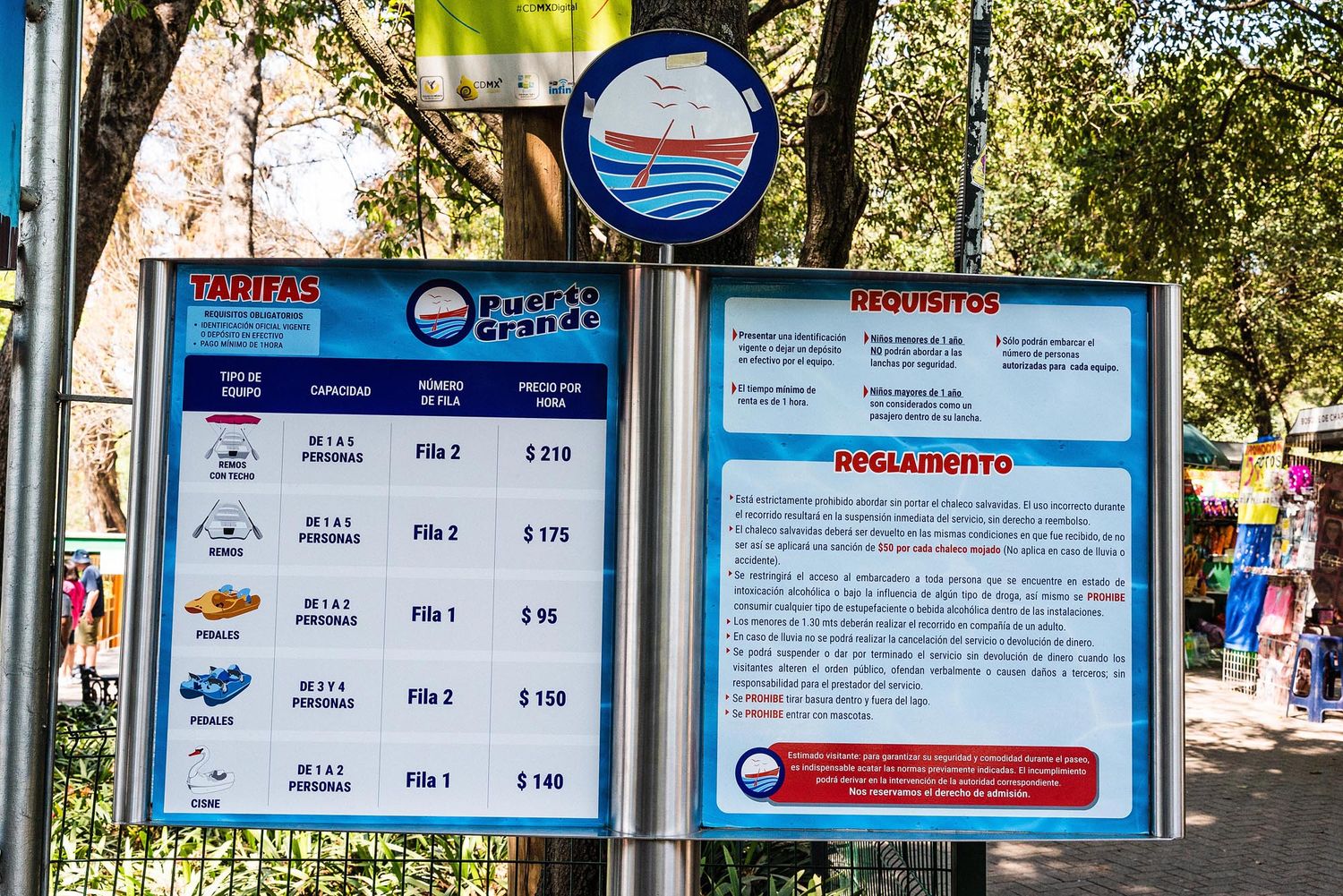
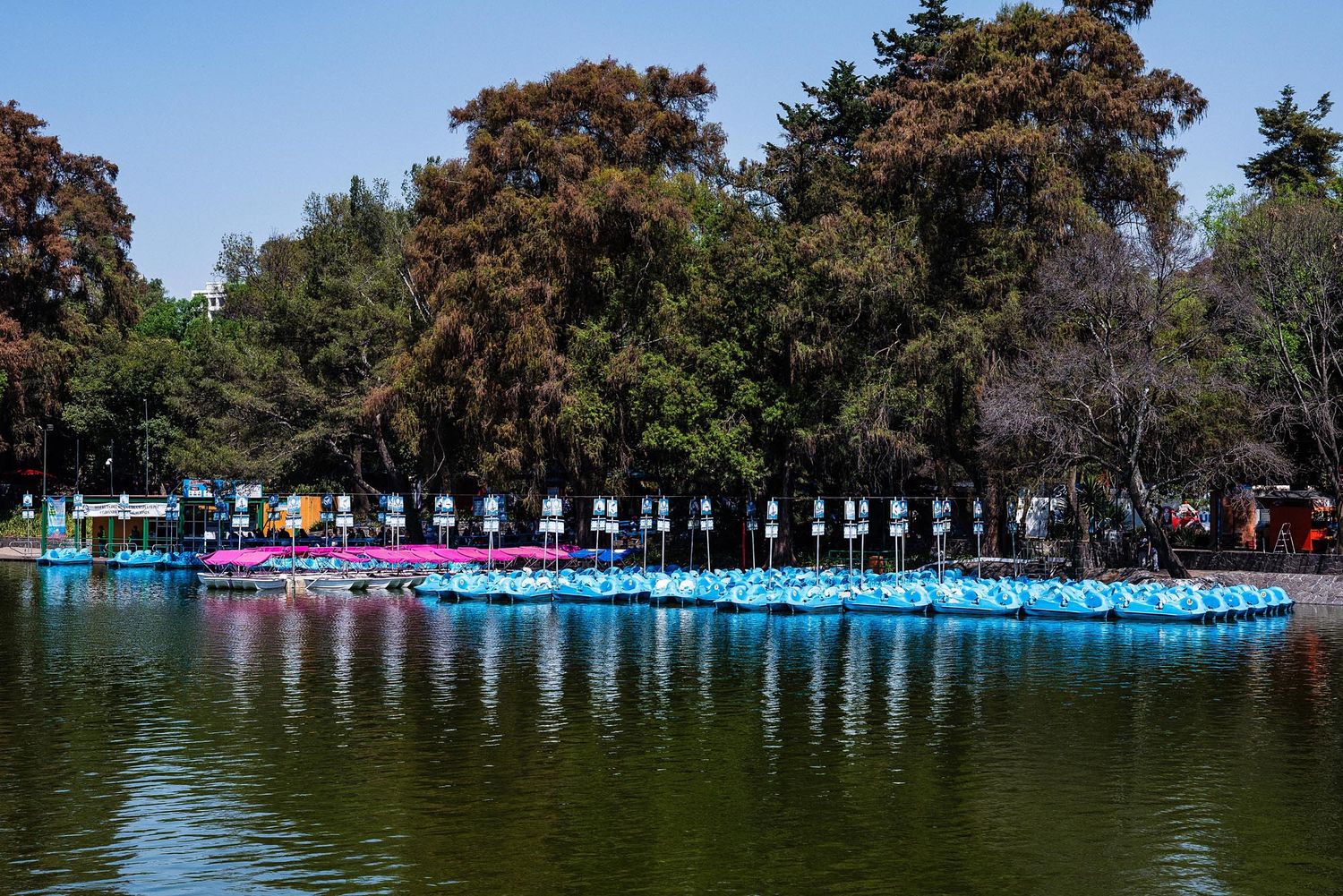
One of the most enjoyable things to do in Chapultepec Park is renting a boat and heading out onto the lake. Around Lago Mayor, you’ll find the main boat rental area (often labelled Puerto Grande), where visitors can hire several different types of boats. It’s a simple and relaxing activity that gives you a different perspective of the park, especially on a sunny afternoon.
According to the official price board at the dock, rentals are charged per hour, and the type of boat determines the price and capacity.
The most traditional option is a rowing boat with a canopy (remos con techo), which can hold 1–5 people and costs 210 MXN per hour (about $12.35 USD or £10.00 GBP). These are a great choice if you want some shade while rowing around the lake.
If you’re happy without the roof, the standard rowing boats (remos) are slightly cheaper. They also hold 1–5 people and cost 175 MXN per hour (around $10.30 USD or £8.35 GBP).
For something a little easier, you can rent a pedal boat (pedales). These are popular with couples and families since you don’t need to row. A two-person pedal boat costs 95 MXN per hour (about $5.60 USD or £4.50 GBP), while the larger 3–4 person pedal boats cost 150 MXN per hour (around $8.80 USD or £7.15 GBP).
Another fun option is the swan boat (cisne), which holds 1–2 people and costs 140 MXN per hour (roughly $8.25 USD or £6.65 GBP). These are shaped like swans and are a popular choice for photos.
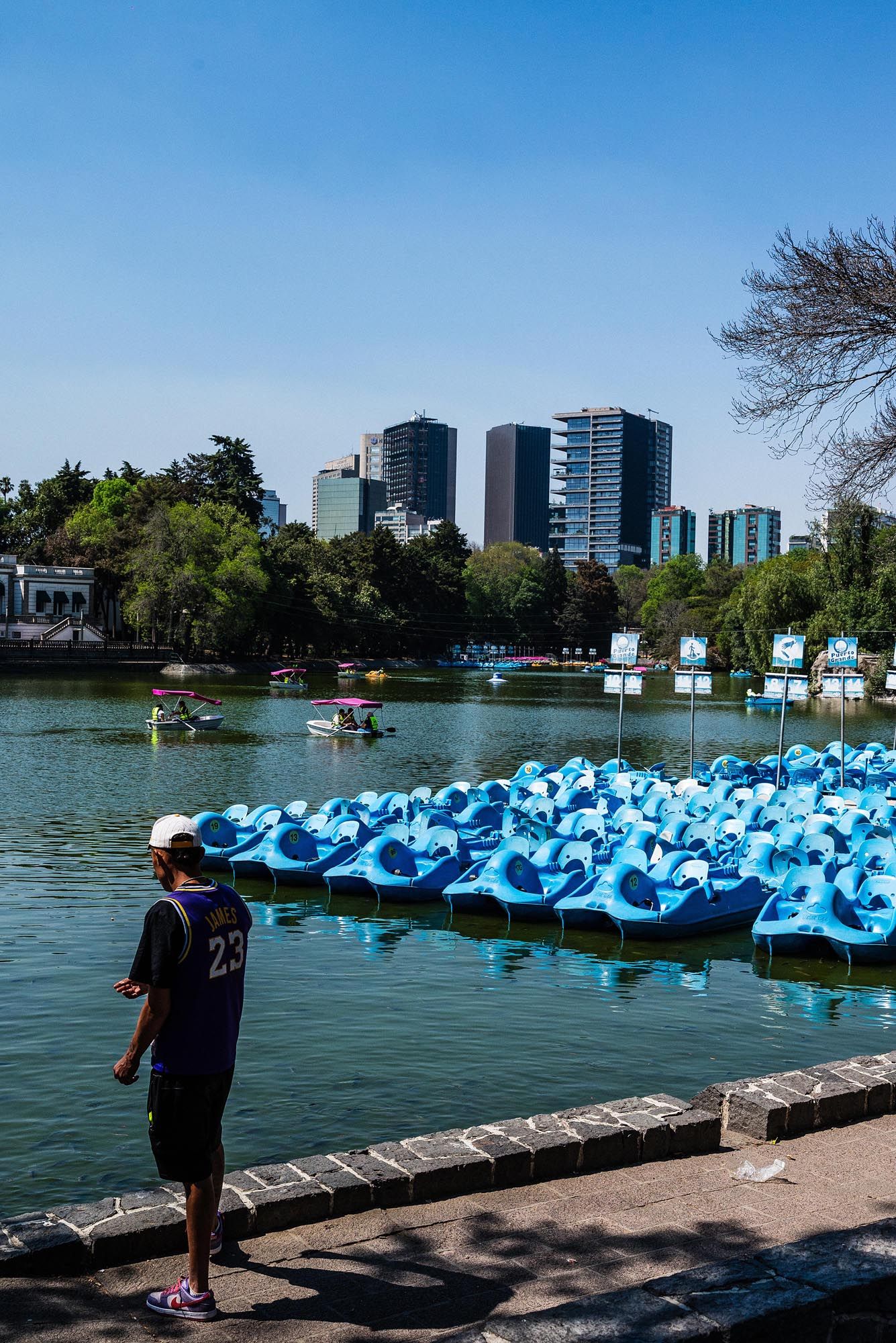
To rent a boat, visitors typically need to present a valid ID or leave a cash deposit, and the minimum rental time is one hour. Life jackets are provided and must be worn while on the water.
Even if you only have a few hours in Chapultepec Park, renting a boat is a nice way to slow down, enjoy the scenery, and experience one of the park’s most classic activities.
Discover the Park’s Monuments
Chapultepec Park is filled with monuments and memorials linked to important moments in Mexican history.
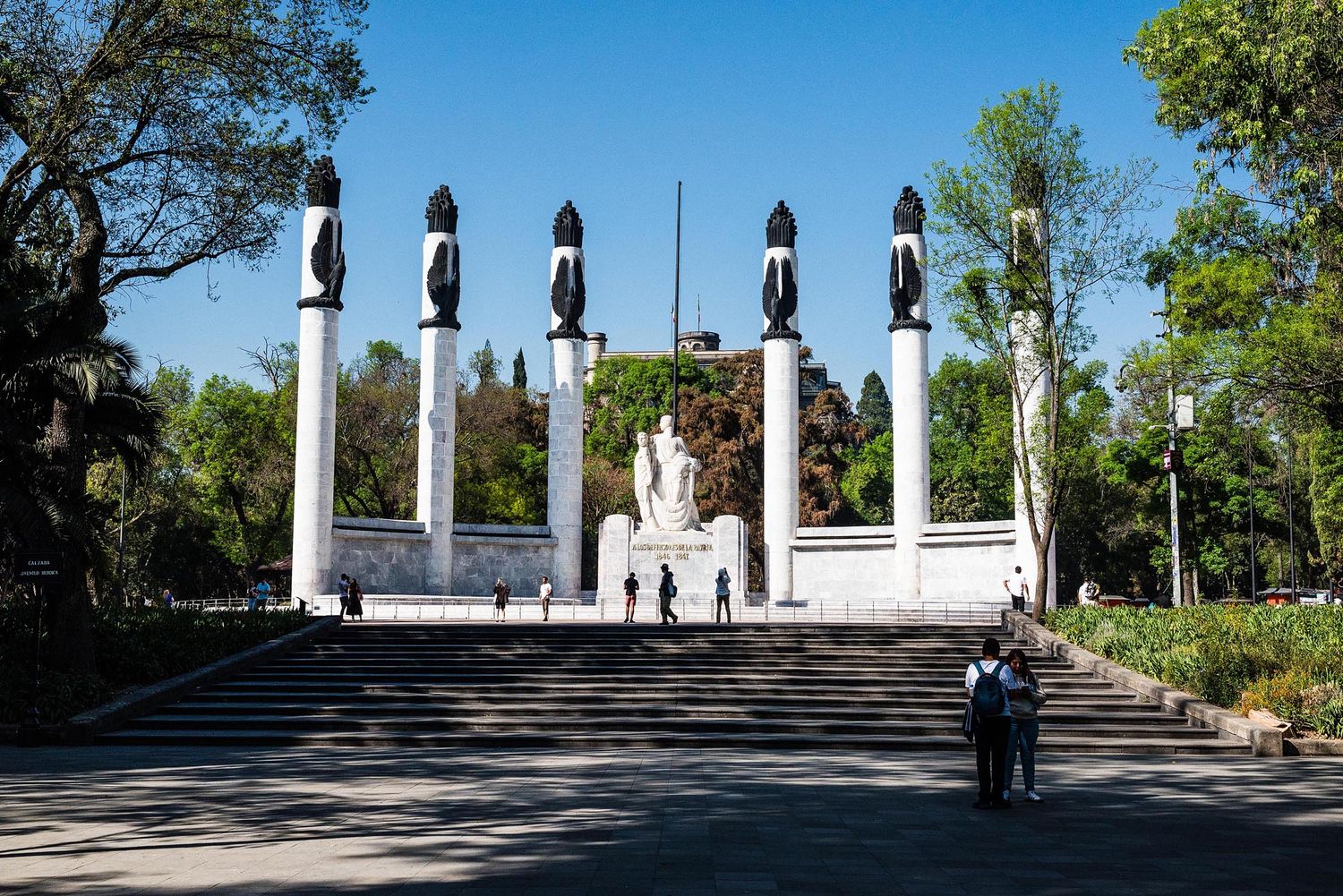
One of the most striking is the Monumento a los Niños Héroes, also known as the Altar a la Patria. This large white monument honours six young military cadets who died defending Chapultepec Castle during the Battle of Chapultepec in 1847 during the Mexican-American War.
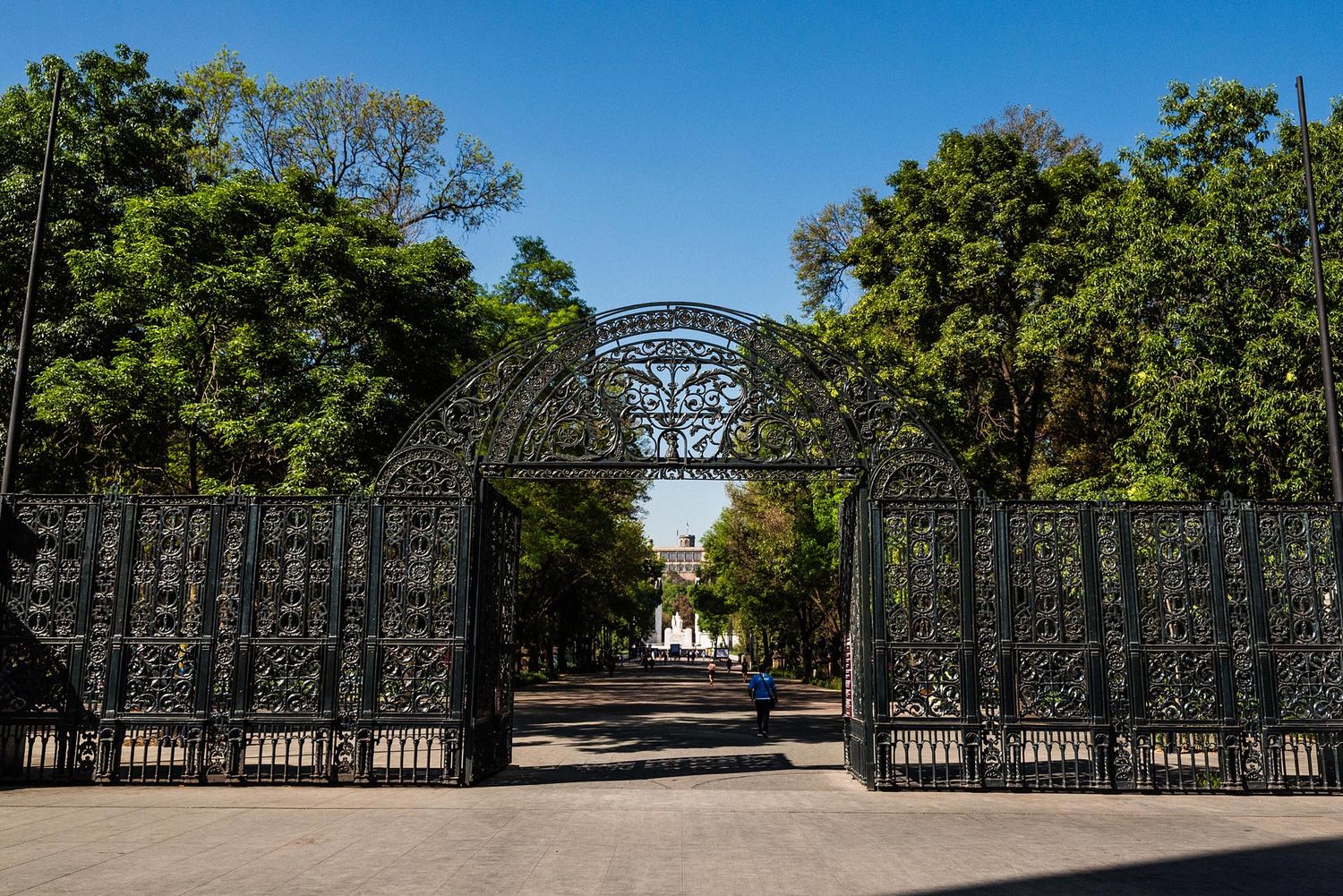
Another notable landmark is the Puerta de los Leones (Gate of the Lions), the grand entrance to the park from Paseo de la Reforma. This impressive gate, guarded by two large lion statues, is one of the most common entry points for visitors and a good place to start exploring the park.
Bike rental in Chapultepec Park
For many locals, Chapultepec Park is simply the best place in Mexico City to get outside and enjoy some fresh air. The park has countless walking and cycling paths that wind through forested areas, around lakes, and past historic landmarks.
Joggers, cyclists, and families enjoying a casual stroll are a common sight here, particularly in the early morning and evening when the weather is cooler.
If you don’t want to walk everywhere, you can also rent a bike near the main entrances or use Mexico City’s EcoBici bike-sharing system, which has several stations close to the park.
Renting a Bike at La Casa de la Bici
If you want to explore more of Chapultepec Park without walking everywhere, renting a bike is a great option. One of the most popular places to do this is La Casa de la Bici, located in the first section of the park near the Constituyentes entrance (Gate 5). From here, you can quickly access many of the park’s main cycling paths.
The rental process is simple. You’ll need to leave a form of ID as a deposit, although some visitors report that they may also accept a phone or car keys instead. Once you return the bike, your item is given back.
Bike rental prices are very affordable:
30 minutes – 60 MXN (about $3.50 USD / £2.75 GBP)
1 hour – 80 MXN (about $4.70 USD / £3.65 GBP)
2 hours – 120 MXN (about $7.05 USD / £5.50 GBP)
Unlimited time – 270 MXN (about $15.90 USD / £12.35 GBP)
La Casa de la Bici is typically open from 10:00 AM to 6:30 PM, Tuesday to Sunday, and they accept both cash and card payments, which is convenient for visitors.
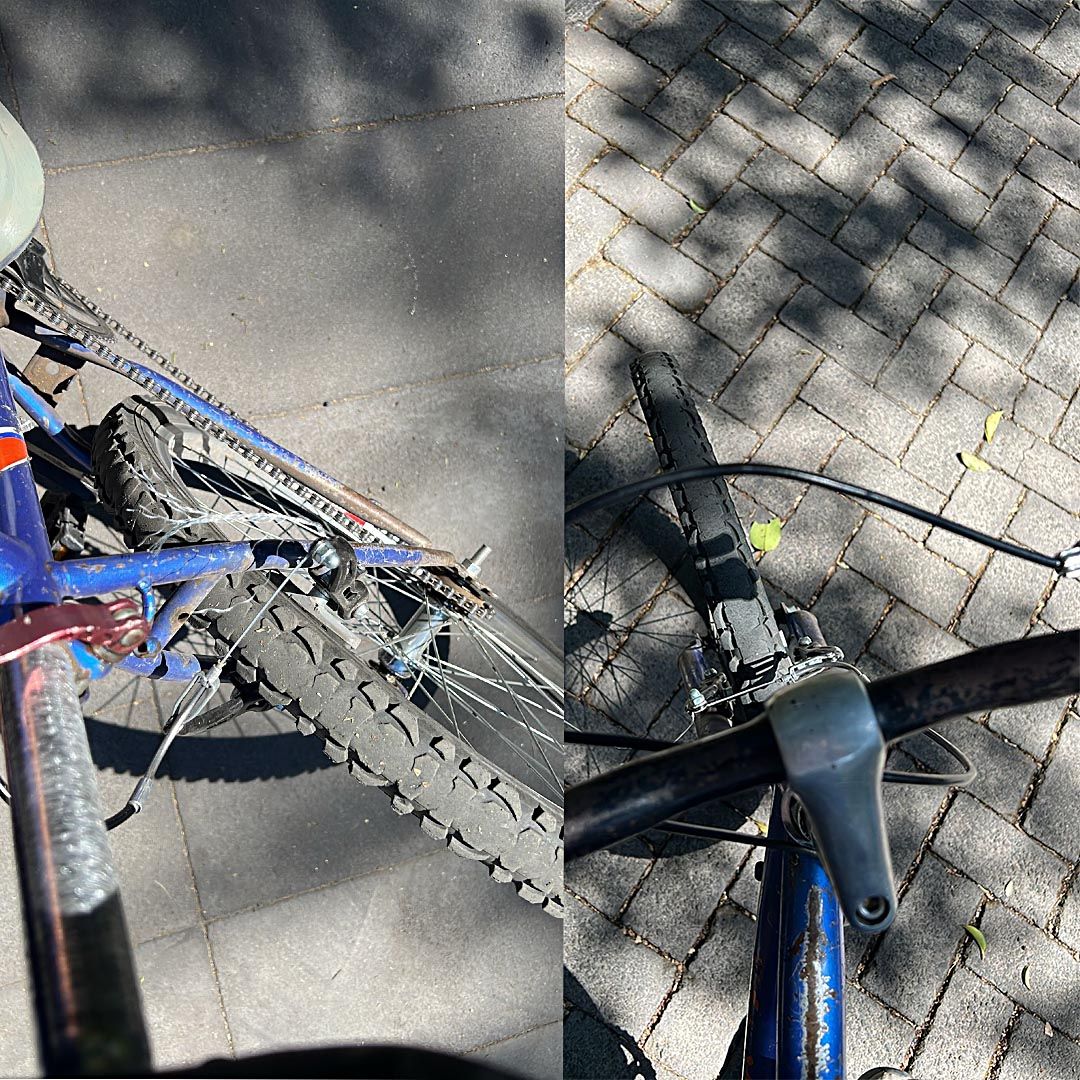
Based on reviews and my own experience, the bikes are generally a bit old and could use some maintenance, but they are still perfectly usable for riding around the park. Many visitors recommend checking the bike quickly before leaving, just to make sure the brakes and gears are working properly.
Overall, it’s an easy and inexpensive way to explore Chapultepec, especially if you want to see more of the park without spending hours walking. With wide paths, plenty of shade, and relatively flat terrain, Chapultepec is actually one of the best places in Mexico City to go for a relaxed bike ride. 🚲
Explore the Botanical Garden
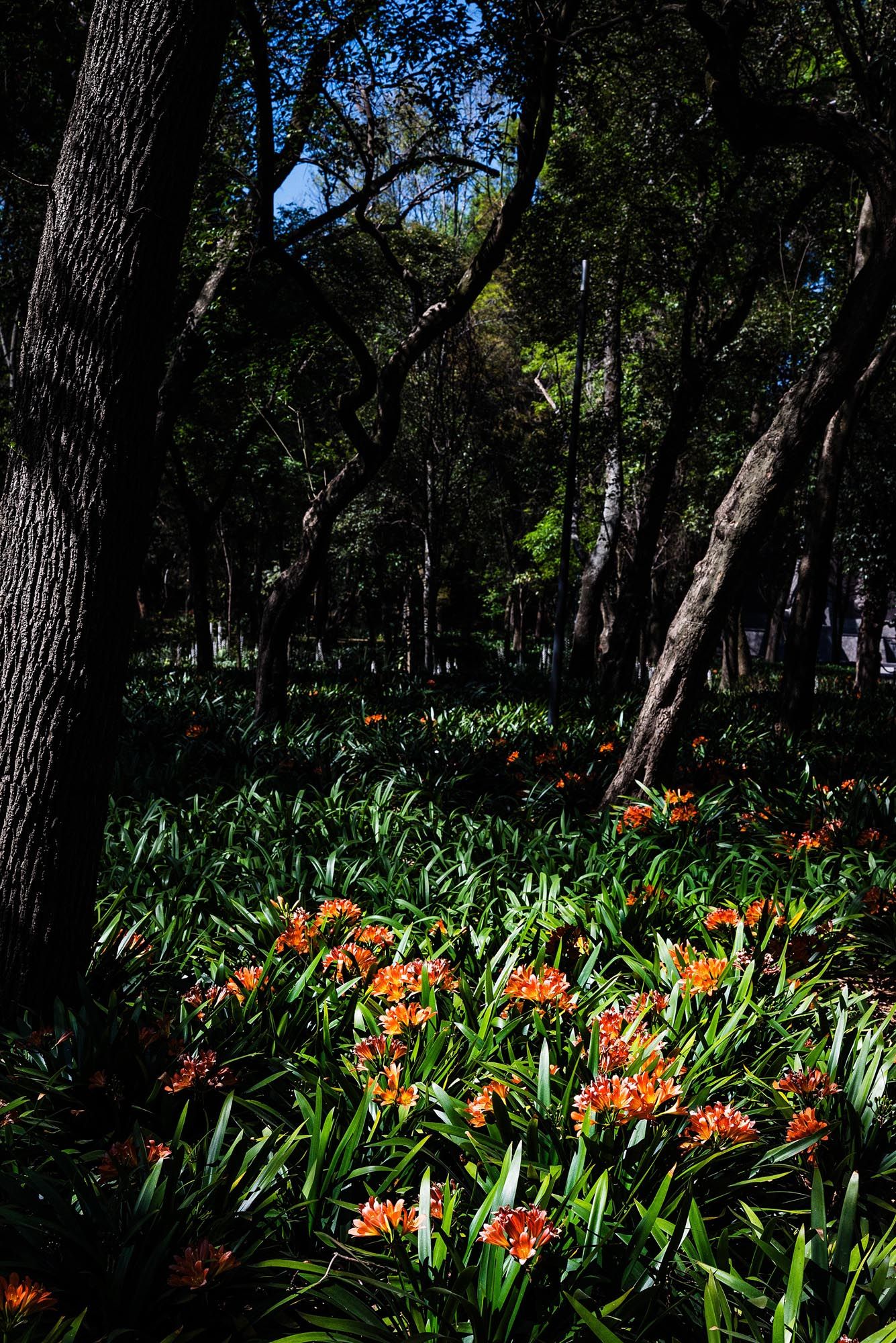
If you’re looking for a quieter part of Chapultepec Park, the Botanical Garden is a nice place to visit. Located in the First Section of the park, the garden features a variety of plant species native to Mexico.
You’ll find several displays of cacti, desert plants, and other native flora, along with small greenhouse areas that showcase orchids and tropical plants. It’s not a huge botanical garden, but it’s still an interesting place to learn about Mexico’s diverse ecosystems.
Like many attractions in Chapultepec Park, entry is free.
Visiting Chapultepec Zoo
One of the most popular attractions inside Chapultepec Park is Chapultepec Zoo, officially known as Zoológico de Chapultepec. Located in the first section of the park near the Chapultepec Castle hill, it’s an easy stop to add while exploring the museums, lakes, or walking paths nearby. The zoo entrance is roughly a 10–15 minute walk from the main Puerta de los Leones (Lions Gate) entrance.
Entrance Price
One of the best things about Chapultepec Zoo is that general admission is completely free.
Zoo entrance: 0 MXN ($0 USD / £0 GBP)
However, there are several optional indoor exhibits and experiences that require a ticket. Prices mentioned by visitors include:
Single special exhibit: about 79 MXN (≈ $4.60 USD / £3.60 GBP)
Two exhibits: about 139 MXN (≈ $8.10 USD / £6.30 GBP)
All four exhibits: about 199 MXN (≈ $11.60 USD / £9.00 GBP)
Popular paid exhibits include the butterfly house, reptile house, insect and arachnid displays, and other themed attractions.
Visitors also mention that restrooms inside the zoo usually require a small fee, so it’s worth carrying some loose change.
Opening Hours
Chapultepec Zoo is generally open:
Tuesday – Sunday: 9:00 AM – 4:30 PM
Closed: Mondays
The last entry is typically around 4:00 PM, so it’s best to arrive earlier if you want enough time to explore.
What to Expect
Based on visitor reviews, Chapultepec Zoo is much larger than many people expect and can easily take several hours to walk through. The pathways are wide and shaded, making it a pleasant place to stroll, especially on a warm day.
The zoo houses a wide range of animals, including giraffes, antelopes, monkeys, wolves, reptiles, and birds. It’s also known for showcasing native Mexican species, such as the Mexican wolf and the famous axolotl, a unique amphibian native to central Mexico. The zoo was also historically famous for its giant pandas, one of the few places outside China where they were successfully bred.
Most visitors say the zoo is well organised and easy to navigate, with large maps posted around the park. Some people recommend buying a printed map for about 10 MXN (≈ $0.60 USD / £0.45 GBP) at the entrance to help plan your route.
Facilities Inside the Zoo
Reviews frequently mention several useful facilities:
Food courts and snack vendors throughout the zoo
Lockers available if you bring food (outside food is generally restricted)
Stroller rentals for families
Restrooms (usually a small fee)
Plenty of shaded walking paths
Because the zoo is so large, many visitors recommend wearing comfortable shoes and bringing water, especially if you plan to explore most of the exhibits.
Tips From Visitors
From the reviews, a few common tips stand out:
Visit on a weekday if possible — weekends can get very busy.
Animals are more active earlier in the day, especially before the midday heat.
The zoo is bigger than expected, so allow 2–3 hours minimum if you want to see most areas.
Bring small change for maps and restrooms.
Overall, Chapultepec Zoo is considered one of the best free attractions in Mexico City. Even if you only spend an hour wandering through a few exhibits, it’s an easy and worthwhile stop while exploring Chapultepec Park.
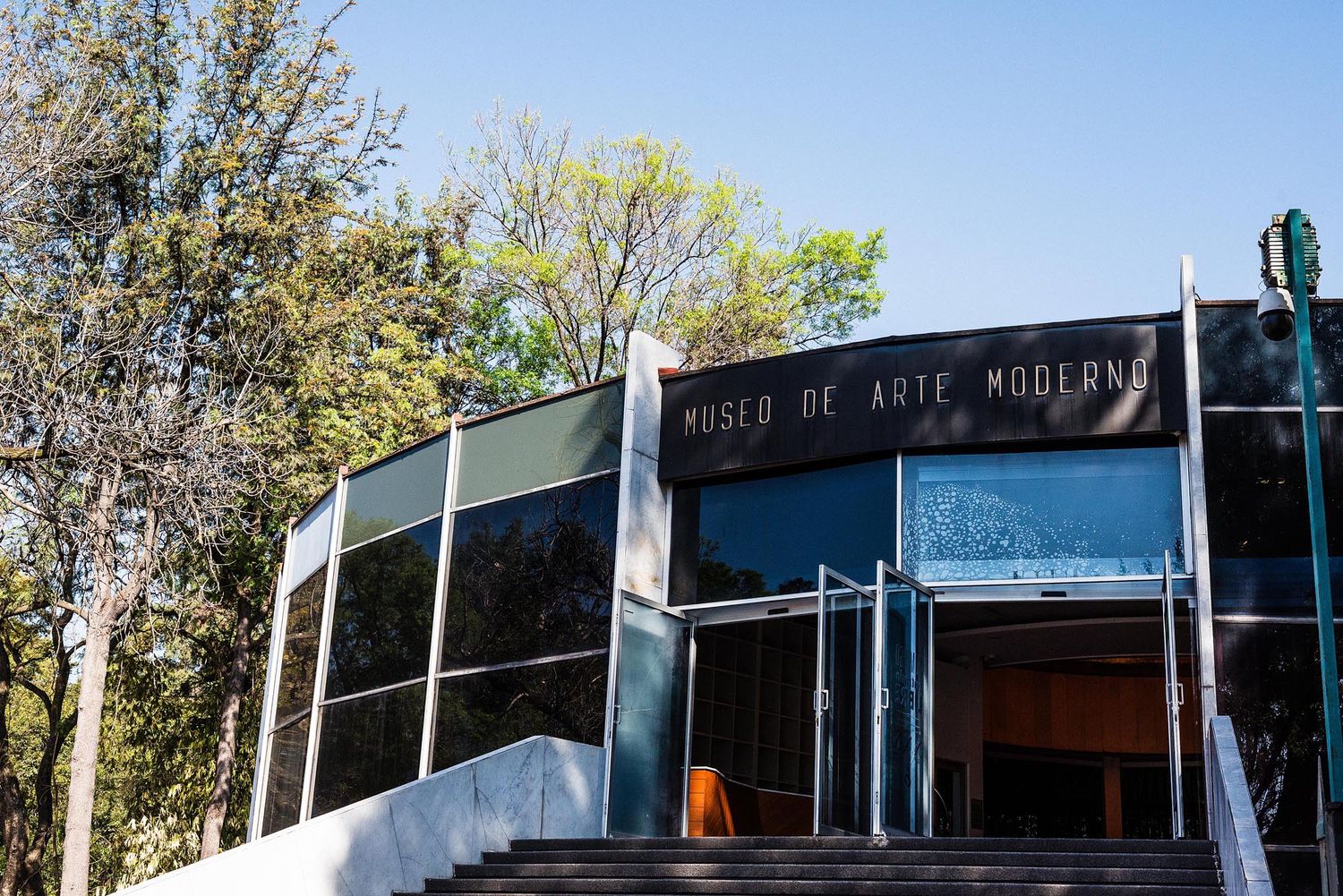
Visit the Museum of Modern Art (Museo de Arte Moderno)
If you enjoy art, the Museum of Modern Art (Museo de Arte Moderno) is another great stop while exploring Chapultepec Park. Located along Paseo de la Reforma near the park’s main entrances, it’s only a short walk from the National Museum of Anthropology, making it easy to combine the two in the same visit.
The museum focuses on Mexican modern and contemporary art, with works from the early 20th century through to more recent periods. Inside, you’ll find pieces by some of Mexico’s most important artists, including Frida Kahlo, Diego Rivera, and Rufino Tamayo. The museum isn’t huge, but the rotating exhibitions and sculptures make it a worthwhile cultural stop if you’re already spending time in the park.
Outside the museum, there’s also a small sculpture garden with several interesting modern artworks displayed among trees and greenery, which makes for a peaceful break from the busier areas of Chapultepec.
Entrance costs around 95 MXN (approximately $5.50 USD / £4.30 GBP). The museum is typically open Tuesday to Sunday from 10:15 AM to 5:45 PM and closed on Mondays, like many museums in Mexico City.
Even if you’re not a huge art fan, it’s a nice place to stop for an hour while exploring this part of the park.
Take the Cable Car (Cablebús) Near Los Pinos
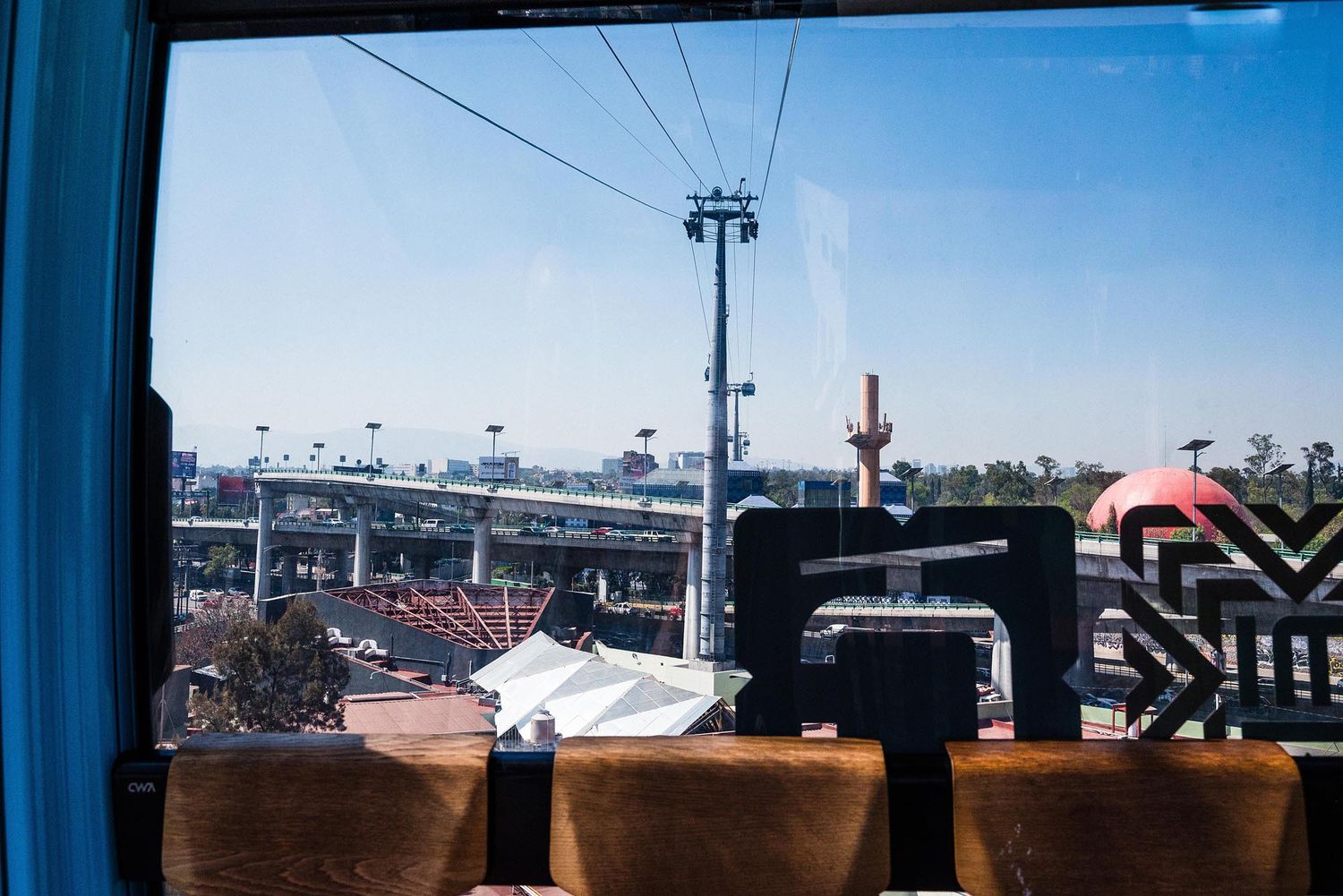
At the western end of Chapultepec Park near Los Pinos and the Constituyentes entrance, you can ride one of Mexico City’s most interesting forms of public transport — the Cablebús cable car system.
While it’s primarily designed for commuters rather than tourists, it’s still a fun and affordable way to see the city from above. The cable cars glide quietly over parts of the city, offering unexpected aerial views of neighbourhoods, hills, and green spaces around Chapultepec.
A ride costs just 7 MXN (around $0.40 USD / £0.30 GBP), making it one of the cheapest scenic transport experiences you’ll find in Mexico City.
The Cablebús generally operates from around 5:00 AM until 11:00 PM on weekdays, with slightly shorter hours on weekends. Because it’s part of the public transport network, you’ll need a Mexico City mobility card (Tarjeta de Movilidad Integrada) to use it.
While it’s not as famous as attractions like Chapultepec Castle or the Anthropology Museum, riding the cable car can be a unique way to see a different side of Mexico City, especially if you’re already exploring the western edge of the park near Los Pinos Cultural Complex.
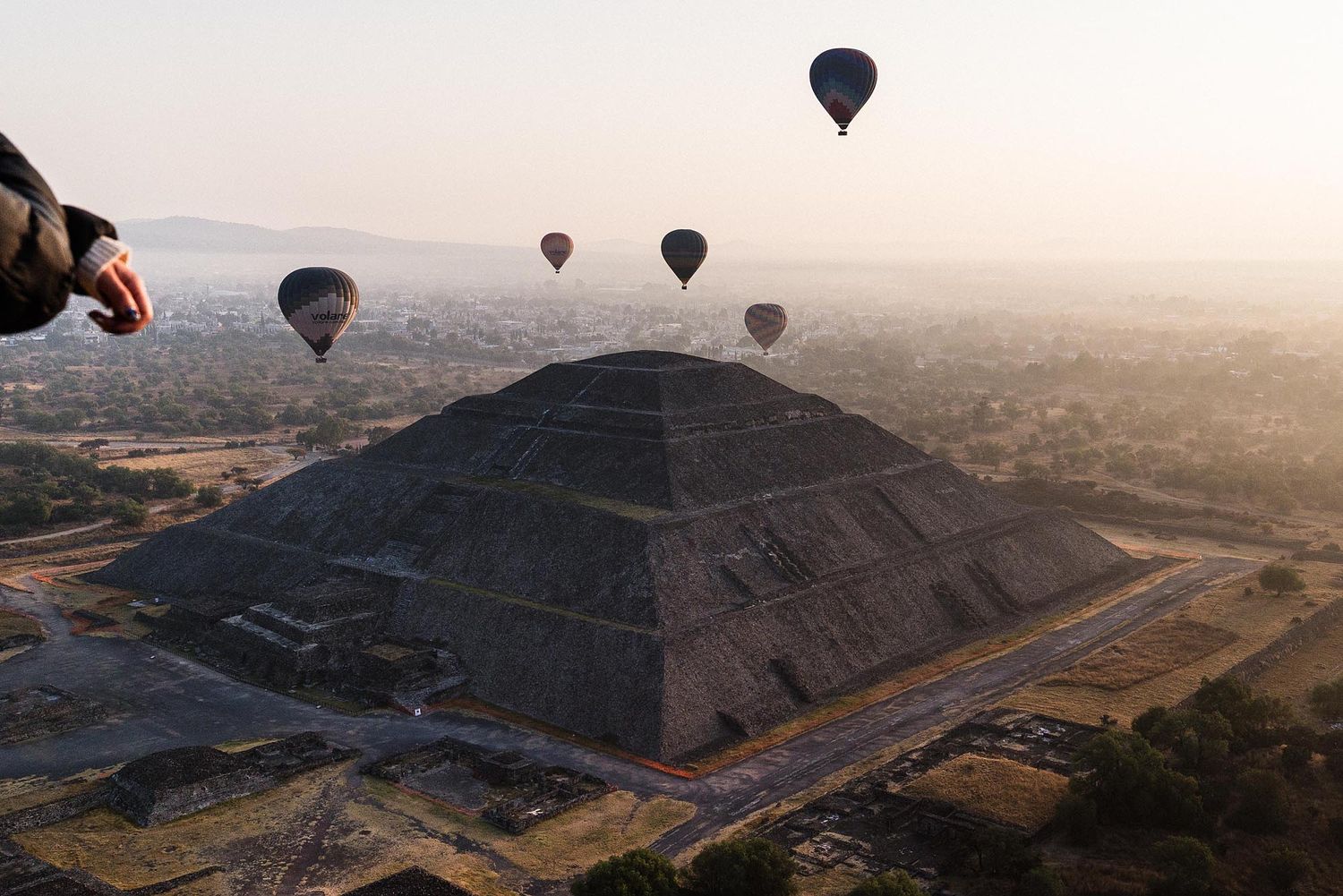
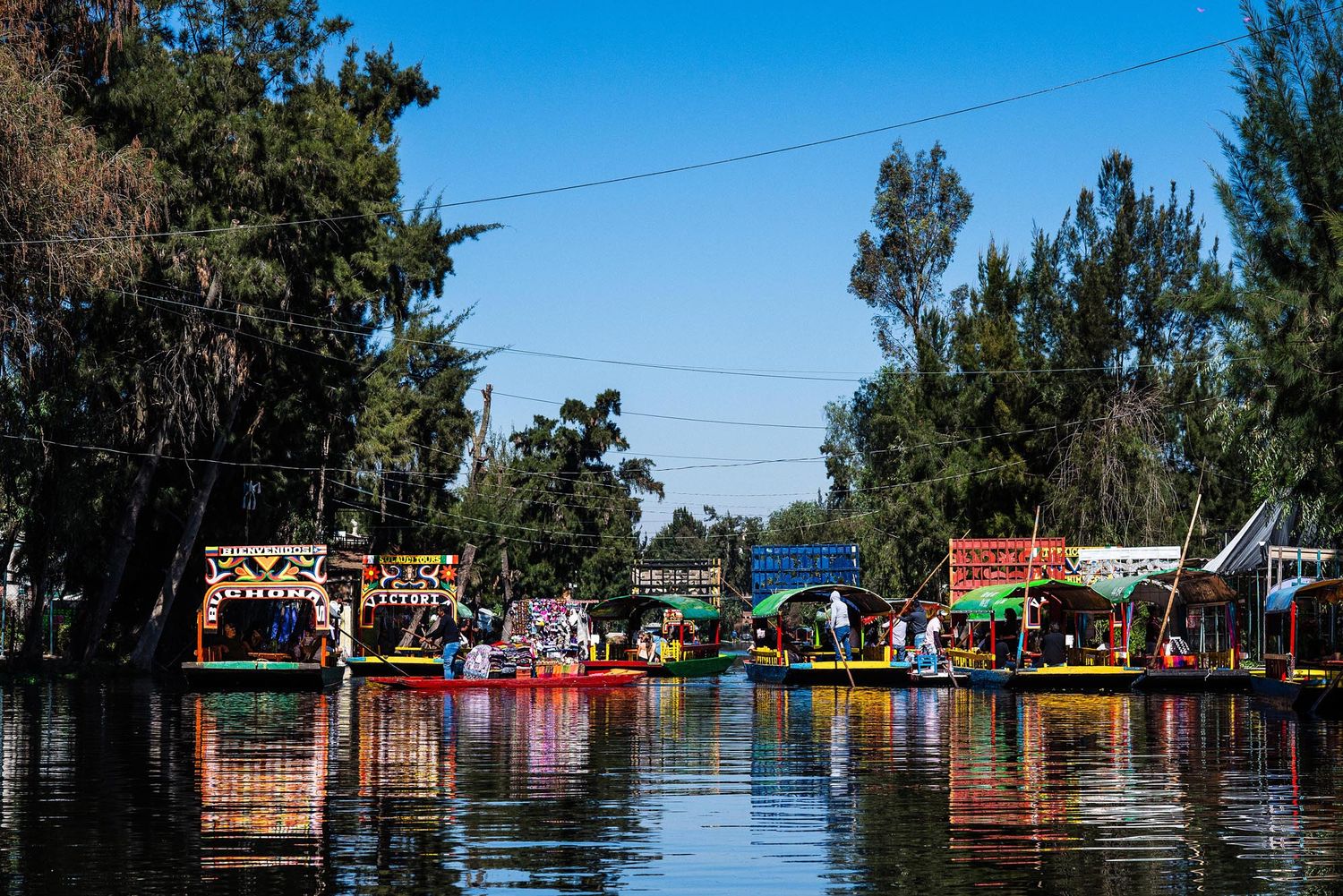
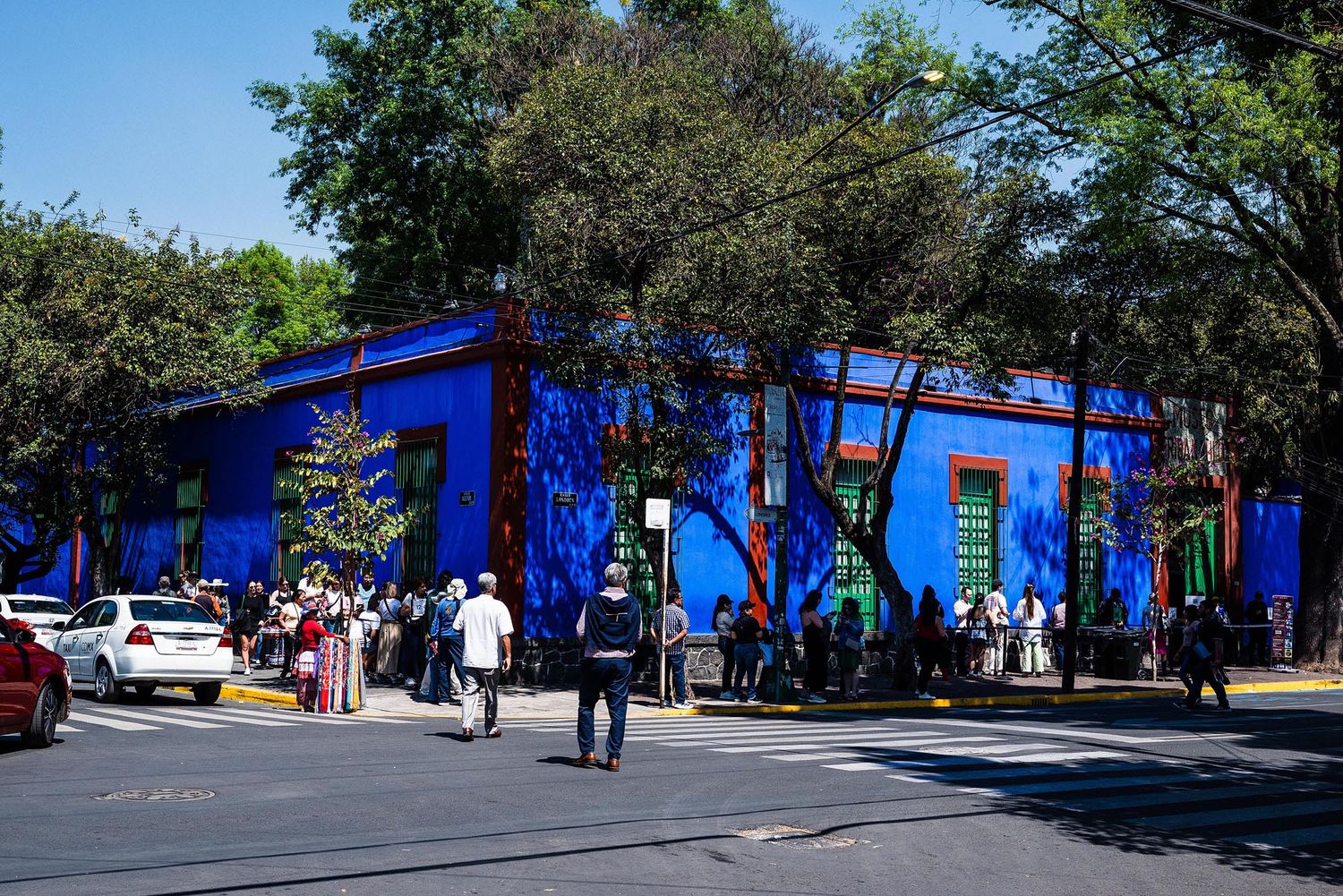
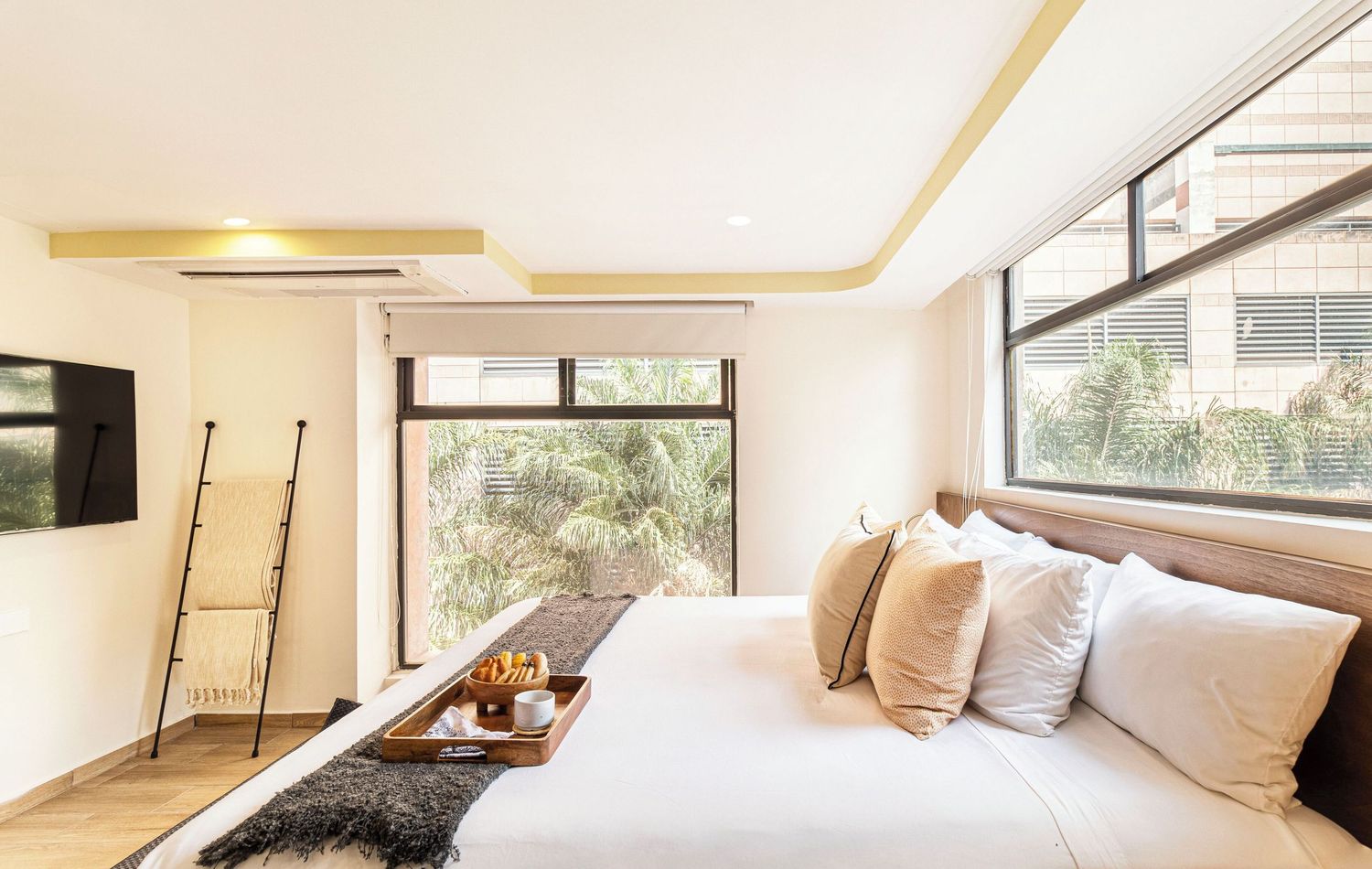

Colonia Cuauhtémoc, Mexico City is a central neighborhood just east of Paseo de la Reforma and within walking distance of Chapultepec Park. In this guide, I share my experience exploring the area, including what to do, where to eat, where to stay, and whether it’s a good base for visiting Mexico City. It’s a practical, well-located neighborhood that offers convenience and easy access to many of the city’s top attractions.
within walking distance of Chapultepec Park is Colonia Cuauhtémoc
Final Thoughts on Chapultepec Park
Chapultepec Park is much more than just a green space in the middle of Mexico City — it’s a place where history, culture, nature, and everyday life all come together. From exploring world-class museums like the National Museum of Anthropology, walking up to Chapultepec Castle, or relaxing by the lakes, there’s an incredible amount to see and do here.
What makes the park especially enjoyable is the mix of experiences. You can rent a bike, visit the zoo, stop for street food, discover historic monuments, or simply take a break from the busy city streets under the shade of the trees. Despite its size, the park is surprisingly easy to explore, with good signage, plenty of facilities, and lots of places to stop along the way.
In short, Chapultepec Park is one of the most interesting and enjoyable places to visit in Mexico City. Whether you spend a couple of hours wandering the main attractions or dedicate an entire day to exploring its museums and quieter corners, it’s a place that offers something for almost every type of traveller.